The tradition & historical record
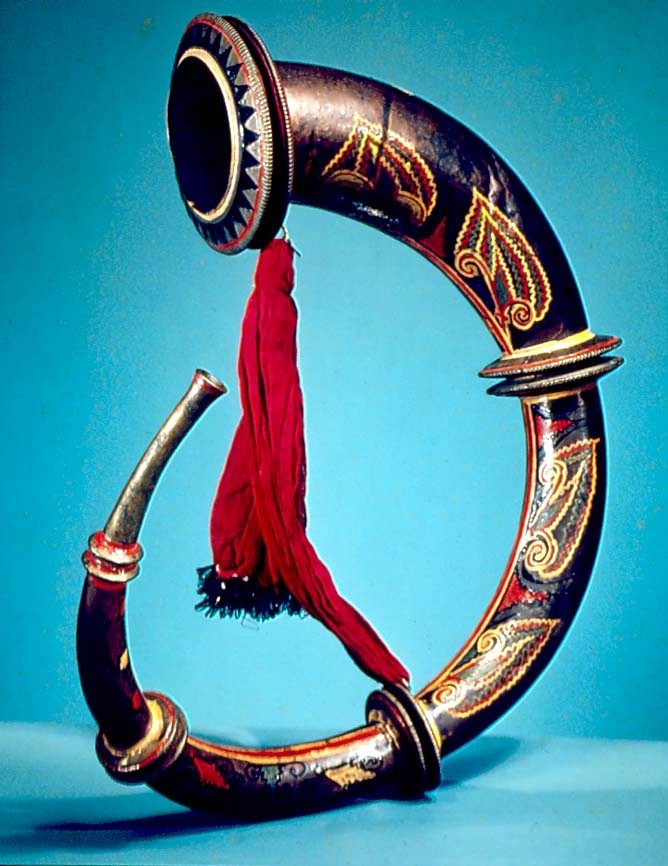
1 min read · 2 sourcesThe Sringa, also known as tutari, ranasringa, blowhorn, sig, singa, kurudutu, gaali-kommu or kombu, is an ancient Indian musical instrument. It is a type of horn wind instrument. 1
Construction
There are two shape types of bugles, one made in "S" shape, and the other in "C" shape. Material was originally made of animal horn, and of metal. 1
Playing
The tutari in Maharashtra, has survived not just because of its connections to royal traditions, but as a current political symbol. The instrument is also executed in South India, in Sri Lanka, and Nepal. It is played for festivals, and in ritual performances known as kshetram vadyam. It is also played for marriages and in military music. 1
The text above is adapted from the Wikipedia article “Sringa”, available under the Creative Commons Attribution-ShareAlike 4.0 licence. 1
sringa is ancient Indian musical instrument, according to the structured record cited below. This entry was generated automatically from that record and has not yet been reviewed by a person familiar with the tradition. 2
The source record links this tradition to 2 external registers, which can be verified through the citation. 2