The tradition & historical record
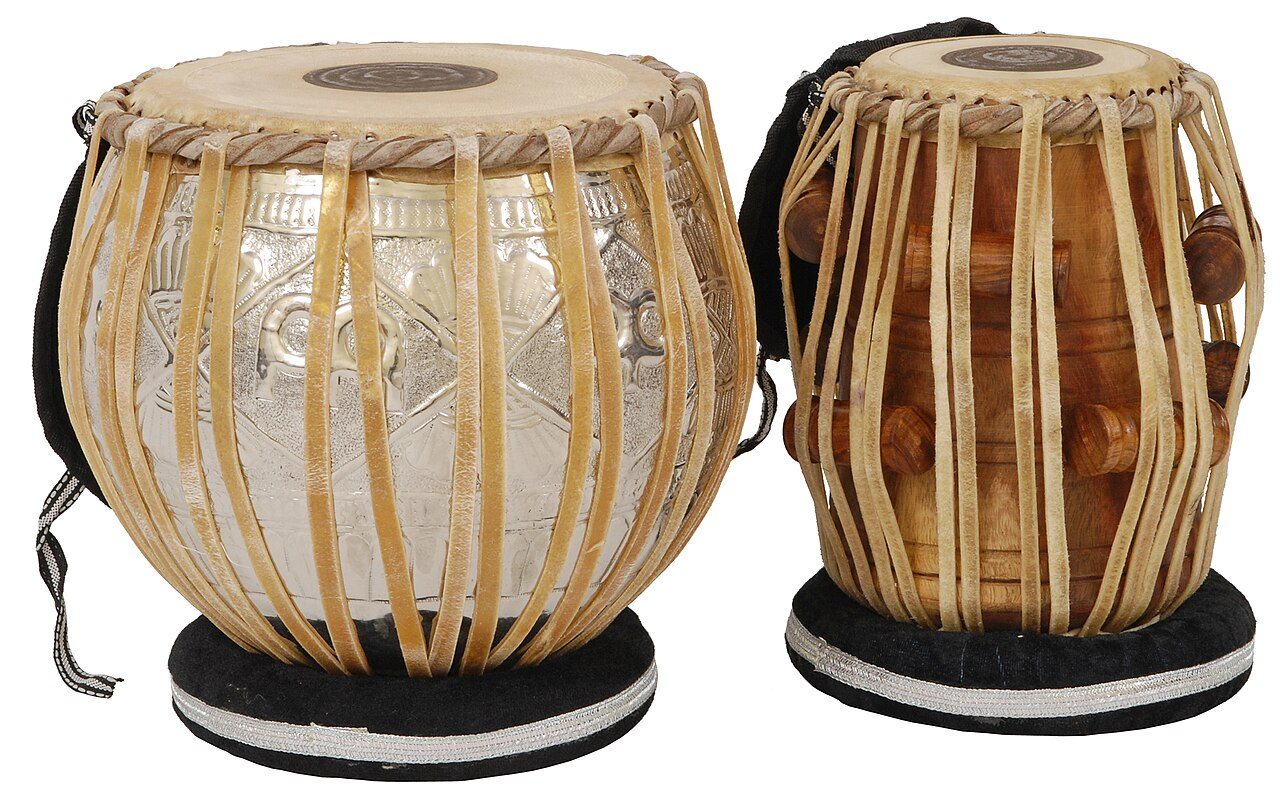
6 min read · 2 sourcesThe tabla is a pair of hand drums from South Asia, particularly the Indian subcontinent. Since the 18th century, it has been the principal percussion instrument in Hindustani classical music, where it may be played solo, as an accompaniment with other instruments and vocals, or as a part of larger ensembles. It is frequently played in traditional, popular and folk music performances in India, Bangladesh, Afghanistan, Pakistan, Nepal, and Sri Lanka. The tabla is an essential instrument in the bhakti devotional traditions of Hinduism and Sikhism, such as during bhajan and kirtan singing. It is one of the main qawwali instruments used by Sufi musicians. The instrument also features in dance performances such as kathak. The word tabla likely comes from tabl, the Arabic word for drum. The ultimate origin of the musical instrument is contested by scholars, though the earliest evidence traces its evolution from indigenous musical instruments of the Indian subcontinent; drum-like structure is mentioned in Vedic-era texts. The tabla consists of two small drums of slightly different sizes and shapes. Each drum is made of hollowed-out wood, clay, or metal. The smaller drum (dayan / tabla) is used to create treble and tonal sounds, while the larger drum (baya / dagga) primarily produces bass. 1
Traditions
According to legend, the tabla was derived from the ancient barrel drum known as mridana, which the deity Krishna is said to have cut in half to create the tabla. The history of the tabla is unclear and there are multiple theories regarding its origin. There are two groups of theories; the first theorizes that the instrument had indigenous origins while the other traces its origins to the Muslim and Mughal invaders of the Indian subcontinent. While the 2nd-century BCE carvings in Bhaja Caves support the theory that the instrument had indigenous origins, clear pictorial evidence of the drum emerges only from about 1745; the drum continued to develop in shape until the early 1800s. 1
Indian origins
According to one theory, the origin of the tabla is traced to an ancient indigenous civilization. The stone carvings in the Bhaja Caves depict a woman playing a pair of drums, which have been cited as evidence of the tabla's ancient origin in India. A different version of this theory states that the tabla acquired a new Arabic name during the Islamic rule, having evolved from ancient Indian puśkara drums. Evidence of the hand-held puśkara appears in many temple carvings, such as at the 6th- and 7th-century Muktesvara and Bhuvaneswara temples in India. These carvings show seated drummers, with two or three separate small drums, with their palm and fingers positioned as if they are playing those drums. However, it is not apparent in any of these ancient carvings that those drums were made of the same material and skin, or played the same music, as the modern tabla. Sanskrit texts provide textual evidence of instruments of similar material and construction methods as the tabla. The earliest discussion of tabla-like musical instrument building methods is found in the Hindu text Natyashastra. This text also includes descriptions of paste-patches (syahi) such as those found on a tabla. The Natyashastra also discusses how to play these drums. The South Indian text Silappatikaram, likely composed in the early centuries of the 1st millennium CE, describes thirty types of drums along with many other instruments. These are, however, called pushkara; the name tabla appears in later periods. 1
Muslim and Mughal origins
This theory is based on the etymological link between the word tabla and the Arabic word tabl, which means "drum". Beyond the root of the word, this proposal points to the documentary evidence that the Muslim armies had hundreds of soldiers on camels and horses carrying paired drums as they invaded the Indian subcontinent. They would beat these drums to scare the residents, the non-Muslim armies, their elephants and chariots, whom they intended to attack. However, the war drums did not look or sound anything like tabla; they were large, paired drums called naqqara ('noise, chaos makers'). Another version states that Amir Khusraw, a musician patronized by Sultan Alauddin Khalji, invented the tabla by cutting a hourglass-shaped awaj drum in half. However, no painting, sculpture, or document dated to his period supports this claim, nor was it found in the list of musical instruments recorded by Muslim historians. For example, Abul Fazi included a long list of musical instruments in his Ain-i-akbari written during the time of the 16th-century Mughal Emperor Akbar, the generous patron of music. Abul Fazi's list makes no mention of tabla. The third version credits the invention of the tabla to the 18th-century musician with a similarly sounding name, Amir Khusru, who is said to have cut a pakhavaj in half to create a tabla. Miniature paintings of this era depict instruments that somewhat resemble the tabla. This theory implies that tabla emerged from within the Muslim community of Indian subcontinent and were not an Arabian import. However, scholars such as Neil Sorrell and Ram Narayan state that this legend of cutting a pakhawaj drum into two to make tabla drums "cannot be given any credence". 1
History
Drums and talas are mentioned in Vedic-era texts. A percussion musical instrument with two or three small drums, held with strings, called pushkara (also spelled pushkala) existed in the pre-5th century Indian subcontinent, along with other drums such as the mridang; however, these were not called 'tabla' at the time. The pre-5th century paintings in the Ajanta Caves, for example, show a group of musicians playing small tabla-like upright seated drums, a kettle-shaped mridang drum, and cymbals. Similar artwork with seated musicians playing drums is found carved in stone at the Ellora Caves and elsewhere. 1
A type of small Indian drum, along with many other musical instruments, is also mentioned in Tibetan and Chinese memoirs written by Buddhist monks who visited the Indian subcontinent in the 1st millennium CE. The pushkala are called rdzogs pa (pronounced 'dzokpa') in Tibetan literature. The pushkara drums are also mentioned in many ancient Jainism and Buddhism texts, such as Samavayasutra, Lalitavistara, and Sutralamkara. Tabla-like drums were spread widely across ancient India. Various Hindu and Jain temples—such as the Eklingji in Udaipur, Rajasthan—feature stone carvings of a person playing a small pair of tabla-like drums; some of these temple carvings date back to 500 BCE. A Hoysaleshwara temple in Karnataka features a carving of a woman playing the tabla during a dance performance. Small drums were popular during the Yadava rule (1210–1247) in the south, at the time when the Sangita Ratnakara was written by Sarangadeva. 1
Construction and features
The tabla consists of two single-headed, barrel-shaped small drums of slightly different sizes and shapes: the baya and daya for the left and right drums, respectively. 1
The smaller drum, played with the dominant hand, is called dayan (liter… 1
The text above is adapted from the Wikipedia article “Tabla”, available under the Creative Commons Attribution-ShareAlike 4.0 licence. 1
tabla is musical instrument, according to the structured record cited below. This entry was generated automatically from that record and has not yet been reviewed by a person familiar with the tradition. 2
The source record links this tradition to 34 external registers, which can be verified through the citation. 2