The tradition & historical record
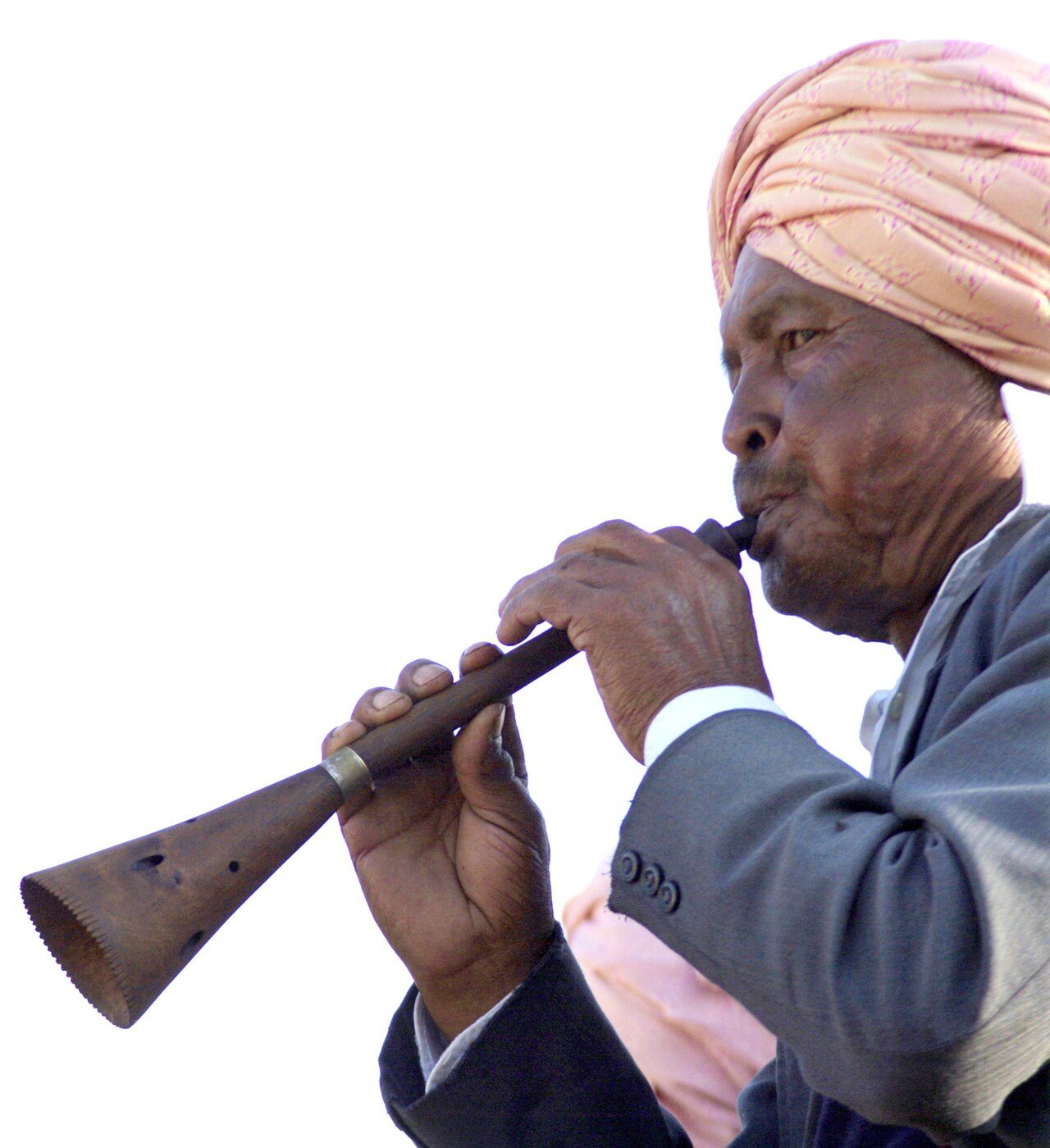
1 min read · 2 sourcesThe tangmuri, ka tangmuri in the Khasi language, is a double-reed conical-bore wind-instrument used by the Hynniew Trep people of Meghalaya State in North-East India. 1
The tangmuri is used by musicians playing for traditional dances, and for other traditional rituals, such as cremations performed according to the indigenous religion, Niam Khasi. The tangmuri delivers a very high pitched sound when played by the musician. 1
Description
The instrument consists of a turned conical-bore wooden chanter, about 20 cm long, with seven finger-holes on the front, and a separate flared turned 15 cm long wooden bell which is attached to the chanter by a push-fit. The double-reed is tied onto a thin conical-bore metal tube around 3 cm long, which is wound with thread to hold it in place in the chanter. 1
The text above is adapted from the Wikipedia article “Tangmuri”, available under the Creative Commons Attribution-ShareAlike 4.0 licence. 1
tangmuri is double-reed wind instrument, according to the structured record cited below. This entry was generated automatically from that record and has not yet been reviewed by a person familiar with the tradition. 2
The source record links this tradition to 1 external register, which can be verified through the citation. 2