The tradition & historical record
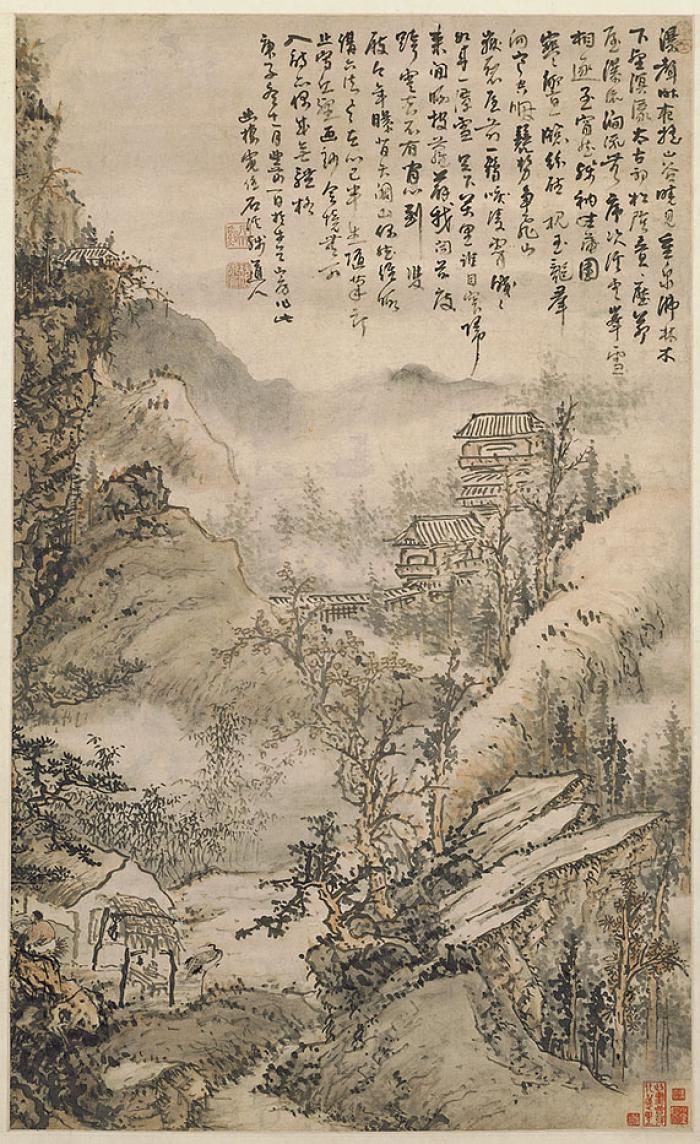
2 min read · 2 sourcesThe three perfections (Chinese: 三絕; pinyin: sānjué) is a term referring to Chinese poetry, painting, and calligraphy understood and practiced as related endeavors. The earliest recorded mention known of "the three perfections" is found in The New Book of Tang, where the term is used to describe the work of poet-painter Zheng Qian, who, as described by calligrapher Qi Gong, "excelled in poetry, calligraphy, and painting." Legend holds that the Tang dynasty poets Du Fu and Li Bai were the first to introduce the combination of painting and poetry into one artwork. Several hundred years later, Su Shi, a poet and painter, promoted the use of poetry and painting together. Instruction of artists at the Northern Song Imperial Painting Academy included the integration of poetry and painting. 1
Examples
Anchorage on a Rainy Night, Shen Zhou, Chinese, 1427–1509 Illustration to the Second Prose Poem on the Red Cliff, Qiao Zhongchang, Chinese, late 11th or early 12th century Landscape after Li Bo's poem, Ike Taiga, Japanese, Edo period, 18th century 1
The text above is adapted from the Wikipedia article “Three perfections”, available under the Creative Commons Attribution-ShareAlike 4.0 licence. 1
Three perfections is recorded in open cultural data. The structured record cited below does not describe the practice, and this entry has not yet been reviewed by a person familiar with the tradition. 2
The source record links this tradition to 2 external registers, which can be verified through the citation. 2