The tradition & historical record
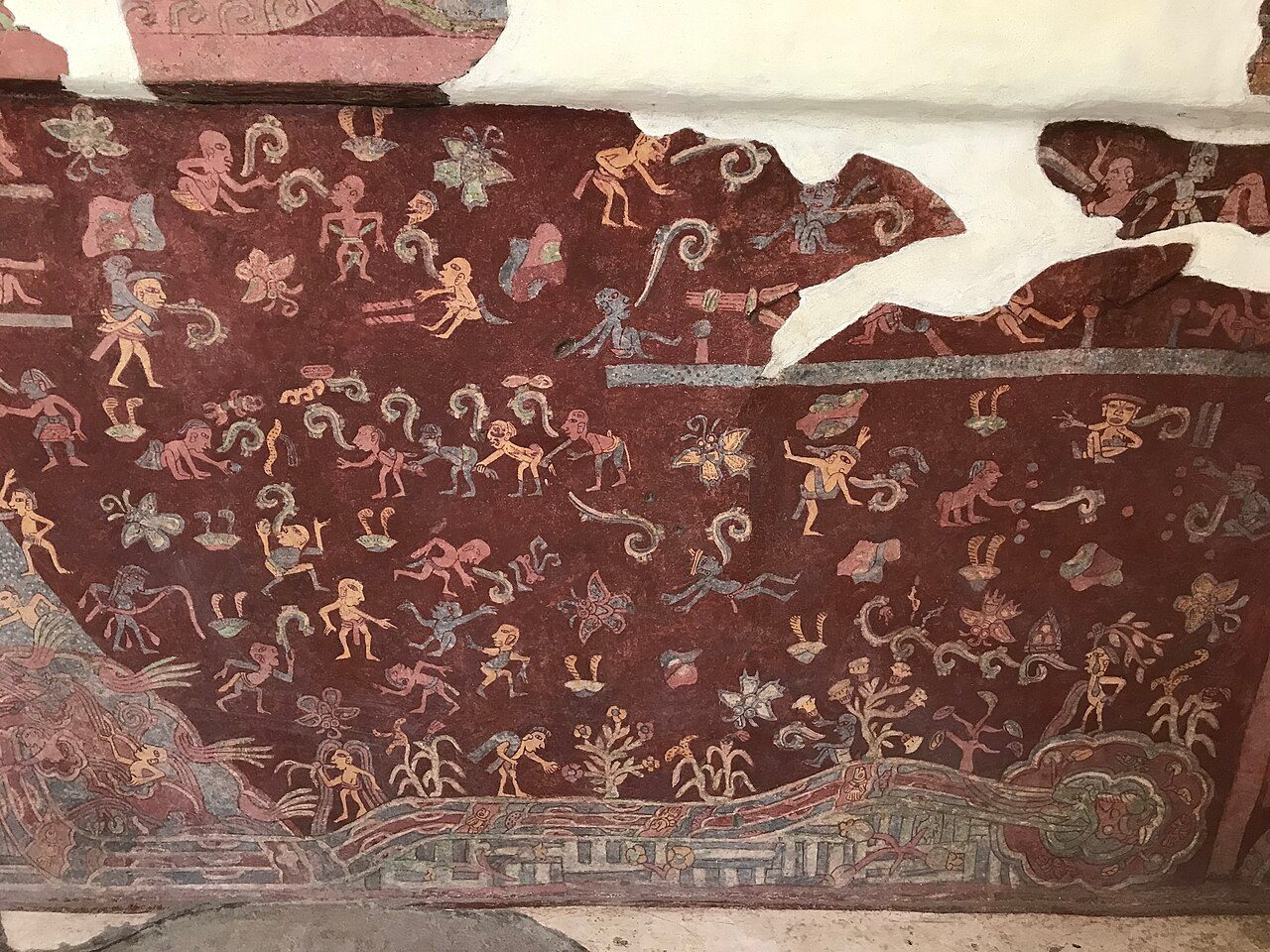
4 min read · 2 sourcesTlālōcān (Nahuatl pronunciation: [t͡ɬaːˈloːkaːn̥]; "place of Tlāloc") is described in several Aztec codices as a paradise, ruled over by the rain deity Tlāloc and his consort Chalchiuhtlicue. It absorbed those who died through drowning or lightning, or as a consequence of diseases associated with the rain deity. Tlālōcān has also been recognized in certain wall paintings of the much earlier Teotihuacan culture. Among modern Nahua-speaking peoples of the Gulf Coast, Tlālōcān survives as an all-encompassing concept embracing the subterranean world and its denizens. 1
Aztecs
In the Florentine Codex, a set of sixteenth-century volumes which serve as one of the prime sources of information about the beliefs and history of postclassic central Mexico, Tlālōcān is depicted as a realm of unending Springtime, with an abundance of green foliage and edible plants of the region. Tlālōcān is also the first level of the upper worlds, or the Aztecs' Thirteen Heavens, that has four compartments according to the mythic cosmographies of the Nahuatl-speaking peoples of pre-Columbian central Mexico, noted particularly in Conquest-era accounts of Aztec mythology. To the Aztec there were thirteen levels of the Upper Worlds, and nine of the Underworld; in the conception of the Afterlife the manner of a person's death determined which of these layers would be their destination after dying. As the place of Tlālōc, 9th Lord of the Night, Tlālōcān was also reckoned as the 9th level of the Underworld, which in the interpretation by Eduard Seler was the uppermost underworld in the east. As a destination in the Afterlife, the levels of heaven were reserved mostly for those who had died violent deaths, and Tlālōcān was reserved for those who had drowned or had otherwise been killed by manifestations of water, such as by flood, by diseases associated with water, or in storms by strikes of lightning. 1
Contemporary Nahuas
In areas of contemporary Mexico, such as in the Sierra Norte de Puebla region, some communities continue to incorporate the concept of Tlālōcān as a netherworld and shamanic destination in their modern religious practices. As described by Knab, shamanic entry into Tlālōcān, always achieved during dreams and often with the objective of curing a patient, is via underground waterways, commonly a whirlpool ("the water was whirling there and it took me in and down into the darkness around and around"). Upon awakening, the shaman-dreamer will recount, to the audience during a curing-session, the itinerary traveled in Tlālōcān; to which will be added (only when instructing a trainee or in speaking to other practicing shamans, never to an audience of general public) a description of the itinerary in term of numerically counted rivers, highways, and hills : as counted in series of 14, "There are thus thirteen of each type of feature located between the center and the edges of the underworld and one of each type (p. 120) of feature located in the center of the underworld." Here is a description of the sections of Tlālōcān, as arranged in cardinal directions :- 1
In the North "are the ehecatagat, the lord of the winds, and the miquitagat, the lord of death. They are the ones that care for souls for the first year after death. Both of the lords live in great caves. ... there are two caves, one on top of the other, and ... death lives in the lowest realm. The dead enter the underworld from the cemetery, where the lord death and his minions keep their souls. 1
In popular culture
In the Marvel Studios film Black Panther: Wakanda Forever (2022), which is set in the Marvel Cinematic Universe, the character Namor is the ruler of the underwater city of Talokan, a departure from his Atlantean roots in the comics. 1
Alternative Names
Ilhuicatl-Meztli Ilhuicatl-Tlalocan-Meztli Ilhuicatl-Tlaloc-Meztli 1
The text above is adapted from the Wikipedia article “Tlālōcān”, available under the Creative Commons Attribution-ShareAlike 4.0 licence. 1
Tlalocan is paradise, according to the structured record cited below. This entry was generated automatically from that record and has not yet been reviewed by a person familiar with the tradition. 2
The source record links this tradition to 1 external register, which can be verified through the citation. 2