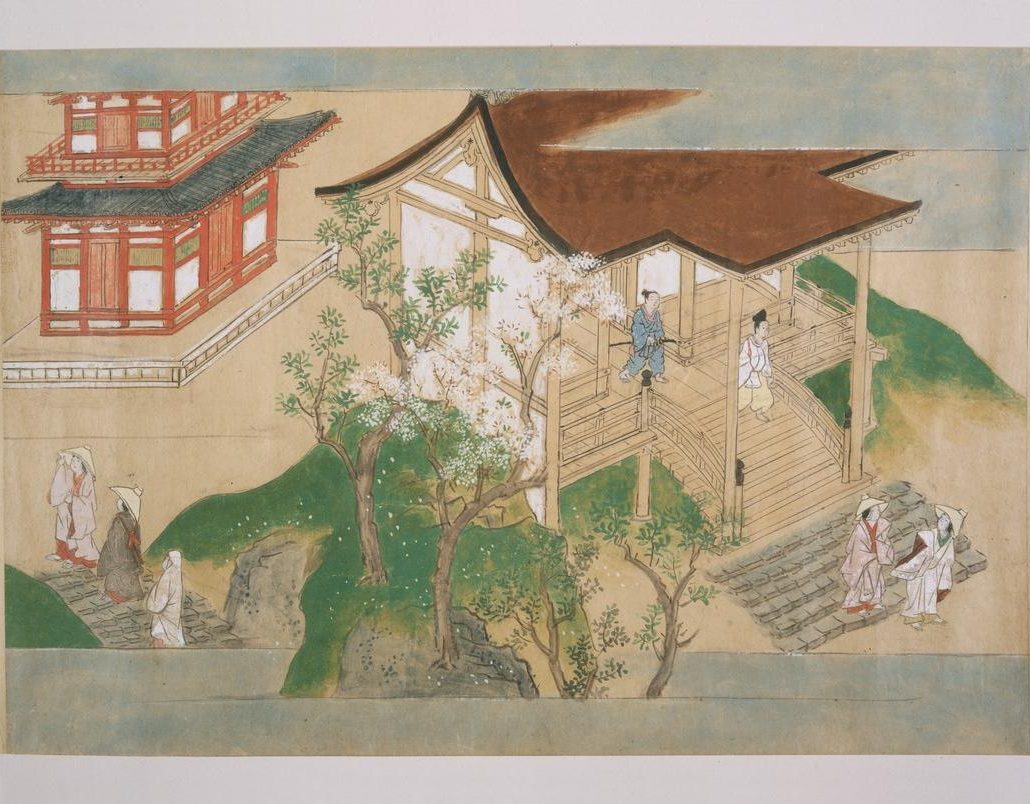
The tradition & historical record
3 min read · 2 sourcesThe Tosa school (土佐派, Tosa-ha) of Japanese painting was founded in the early Muromachi period (14th–15th centuries), and was devoted to yamato-e, paintings specializing in subject matter and techniques derived from ancient Japanese art, as opposed to schools influenced by Chinese art, notably the Kanō school (狩野派). Tosa school paintings are characterised by "areas of flat opaque colour enclosed by simple outlines, where drawing is precise and conventional", with many narrative subjects from Japanese literature and history. However, by the 17th century both Tosa and Kanō artists broadened their range, and the distinction between these and other schools became less clear. The origins of this school of painting can be traced to Tosa Yukihiro (土佐行広) (fl. first half 15th century), who first used the professional name of Tosa, though unverified claims to earlier origins were made later by Mitsunobu (1434?–?1525) who formally founded the school. Mitsunobu served as the official painter (edokoro-azukari) at the imperial court, specializing in courtly subjects painted in the yamato-e (やまと絵) style. The Tosa school under Mitsunobu retained the position of (edokoro azukari (絵所領, "head of the Imperial painting bureau")) for three generations, until 1569, and regained the post 1634 under Mitsunori (See #History below). 1
History
It is starting with Tosa Mitsunobu that a definite art school (atelier, workshop) and family line can be established. But Mitsunobu purports that the origins of the school can be traced back further to Fujiwara Tsunetaka (Yukimitsu) (藤原行光) who held the post of edokoro azukari (絵所領) in 1355–1371. The earliest documentary evidence for an artist using the name Tosa are two early 15th-century references to a man named Fujiwara Yukihiro (藤原 行広) (fl. 1406–1434) who was also known as Tosa Shōgen (土佐 将監), a title derived from his position as governor of Tosa Province. Yukihiro's activity as a painter is known primarily from an inscription on illustrated handscrolls of the Stories of the Origin of Yūzū Nembutsu (融通念仏縁起); 1414, Seiryōji (清涼寺), Kyoto. A bloodline descent from Yukimitsu to Mitsunobu (father-son?) is speculated, but the family document Tosa Monjo (土佐文書)lacks records covering that period. Mitsunobu's daughter married Kanō Motonobu, head of the Kanō school, which increased the tendency of Kanō artists, already using two distinct styles, to work in a Tosa style when occasion demanded. The surviving paintings that can be attributed to Mitsunobu show less quality than his reputation in historical sources would suggest, but many fine works remain from Mitsunobu's hand. Although he painted both Buddhist paintings and portraits in addition to the standard repertoire of courtly themes, he is best known for his illustrated handscrolls, emaki (絵巻), such as The Legends of Kiyomizu-dera (清水寺縁起). 1
Notable Tosa artists
Tosa Yukihiro Tosa Mitsunobu Tosa Mitsuoki Tosa Mitsumochi (1496 – c.1559) Tosa Mitsumoto (fl. 1530–1569) Tosa Mitsuyoshi (1539–1613) Tosa Mitsunori (1583–1638) Tosa Mitsusada (1738–1806) Tosa Mitsuzane (1780–1852) Iwasa Matabei Awataguchi Takamitsu 1
The text above is adapted from the Wikipedia article “Tosa school”, available under the Creative Commons Attribution-ShareAlike 4.0 licence. 1
Tosa school is Japanese art movement, according to the structured record cited below. This entry was generated automatically from that record and has not yet been reviewed by a person familiar with the tradition. 2
The source record links this tradition to 13 external registers, which can be verified through the citation. 2