The tradition & historical record
3 min read · 2 sourcesTraditional Japanese musical instruments, known as wagakki (和楽器) in Japanese, are musical instruments used in the traditional folk music of Japan. They comprise a range of string, wind, and percussion instruments. 1
Percussion instruments
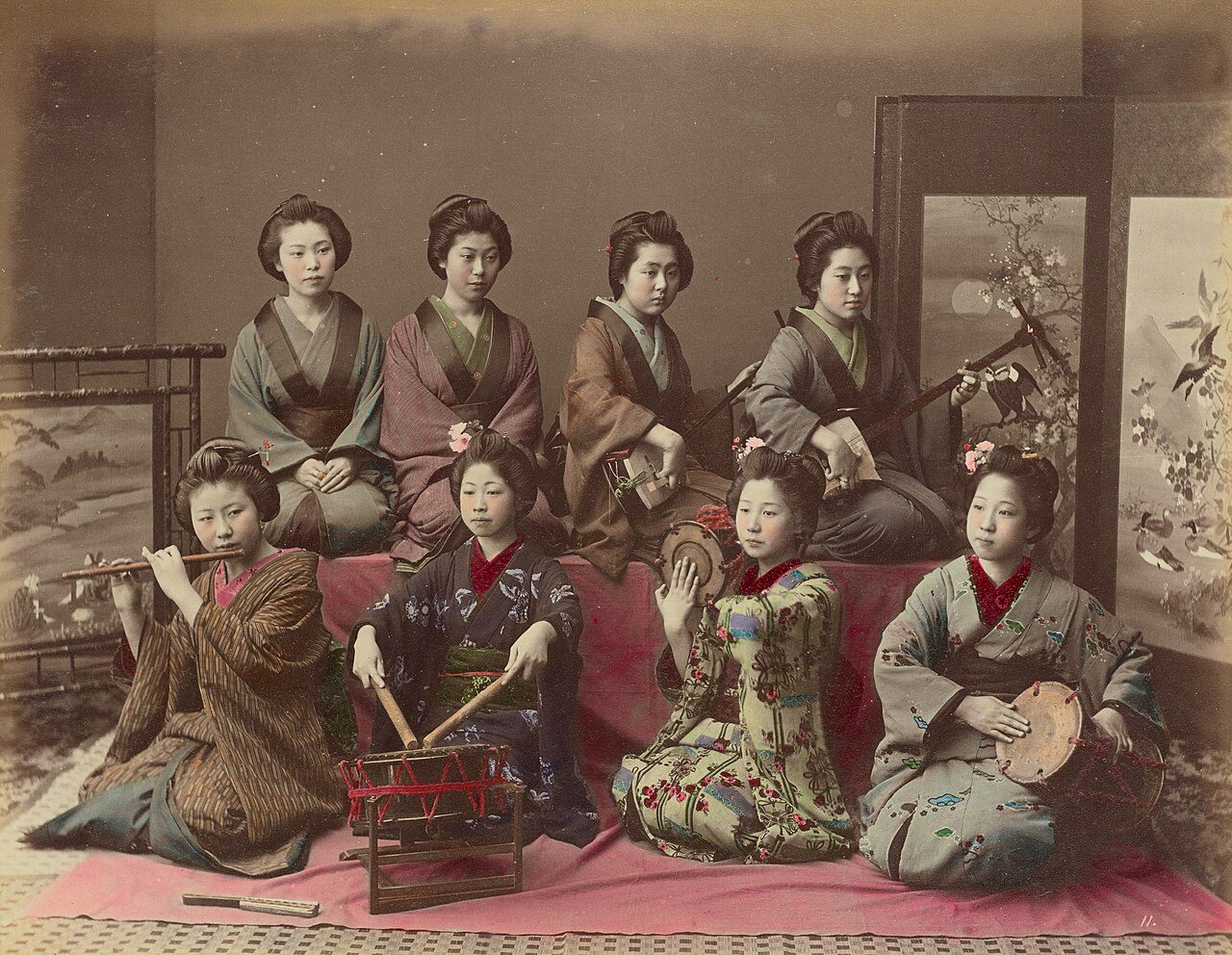
Bin-sasara (編木、板ささら); also spelled bin-zasara – clapper made from wooden slats connected by a rope or cord Chappa (— チャッパ) – Hand cymbals Hyoshigi (拍子木) – wooden or bamboo clappers Denden-daiko (でんでん太鼓) – a children's toy Ikko – small, ornately decorated hourglass-shaped drum Kagura suzu – hand-held bell tree with three tiers of pellet bells Kakko (羯鼓) – small drum used in gagaku Kane (鉦) – small flat gong Kokiriko (筑子、 こきりこ) – a pair of sticks which are beaten together slowly and rhythmically Shakubyoshi (also called shaku) – clapper made from a pair of flat wooden sticks Mokugyo (木魚; also called 'wooden fish') – woodblock carved in the shape of a fish, struck with a wooden stick; often used in Buddhist chanting Ōtsuzumi (大鼓) – hand drum Rin or daikin (大磬) – singing bowls used by Buddhist monks in religious practice or rituals San-no-tsuzumi (三の鼓) – hourglass-shaped double-headed drum; struck only on one side Sasara (ささら) – clapper made from wooden slats connected by a rope or cord Sekkin – a lithophone either bowed or struck Shime-daiko (締太鼓) – small drum played with sticks Shōko (鉦鼓) – small bronze gong used in gagaku; struck with two horn beaters Taiko (太鼓, lit. 'great drum') Tsuri-daiko (釣太鼓) – drum on a stand with ornately painted head, played with a padded stick Tsuzumi (鼓) – small hand drum 1
Zithers
Ichigenkin (一絃琴) – monochord Junanagen (十七絃) – the 17-string koto Koto (琴、箏) – a long zither Yamatogoto (大和琴) – ancient long zither; also called wagon (和琴) 1
Harps
Kugo (箜篌) – an angled harp used in ancient times and recently revived Taishōgoto (大正琴) – a zither with metal strings and keys 1
Lutes
Biwa – a pear-shaped lute 1
Other
Gottan or hako-jamisen Sanshin (三線, lit. 'three strings') – an Okinawan precursor of the mainland Japanese (and Amami Islands) shamisen Shamisen (三味線) – a banjo-like lute with three strings; brought to Japan from China in the 16th century. Popular in Edo's pleasure districts, the shamisen is often used in kabuki theater. Made from red sandalwood and ranging from 1.1 to 1.4 metres (3 ft 7 in to 4 ft 7 in) long, the shamisen has ivory pegs, strings made from twisted silk, and a belly covered in cat or dog skin or a synthetic skin. The strings, which are of different thickness, are plucked or struck with a tortoise shell, ivory or synthetic ivory pick. Tonkori (トンコリ) – a plucked instrument used by the Ainu people of Hokkaidō 1
The text above is adapted from the Wikipedia article “Traditional Japanese musical instruments”, available under the Creative Commons Attribution-ShareAlike 4.0 licence. 1
traditional Japanese musical instrument is instrument used in traditional Japanese music, according to the structured record cited below. This entry was generated automatically from that record and has not yet been reviewed by a person familiar with the tradition. 2
The source record links this tradition to 3 external registers, which can be verified through the citation. 2