The tradition & historical record
3 min read · 2 sourcesTraditional Korean musical instruments comprise a wide range of string, wind, and percussion instruments. 1
String
Korean string instruments include those that are plucked, bowed, and struck. Most Korean string instruments use silk strings, except as noted. 1
Zithers
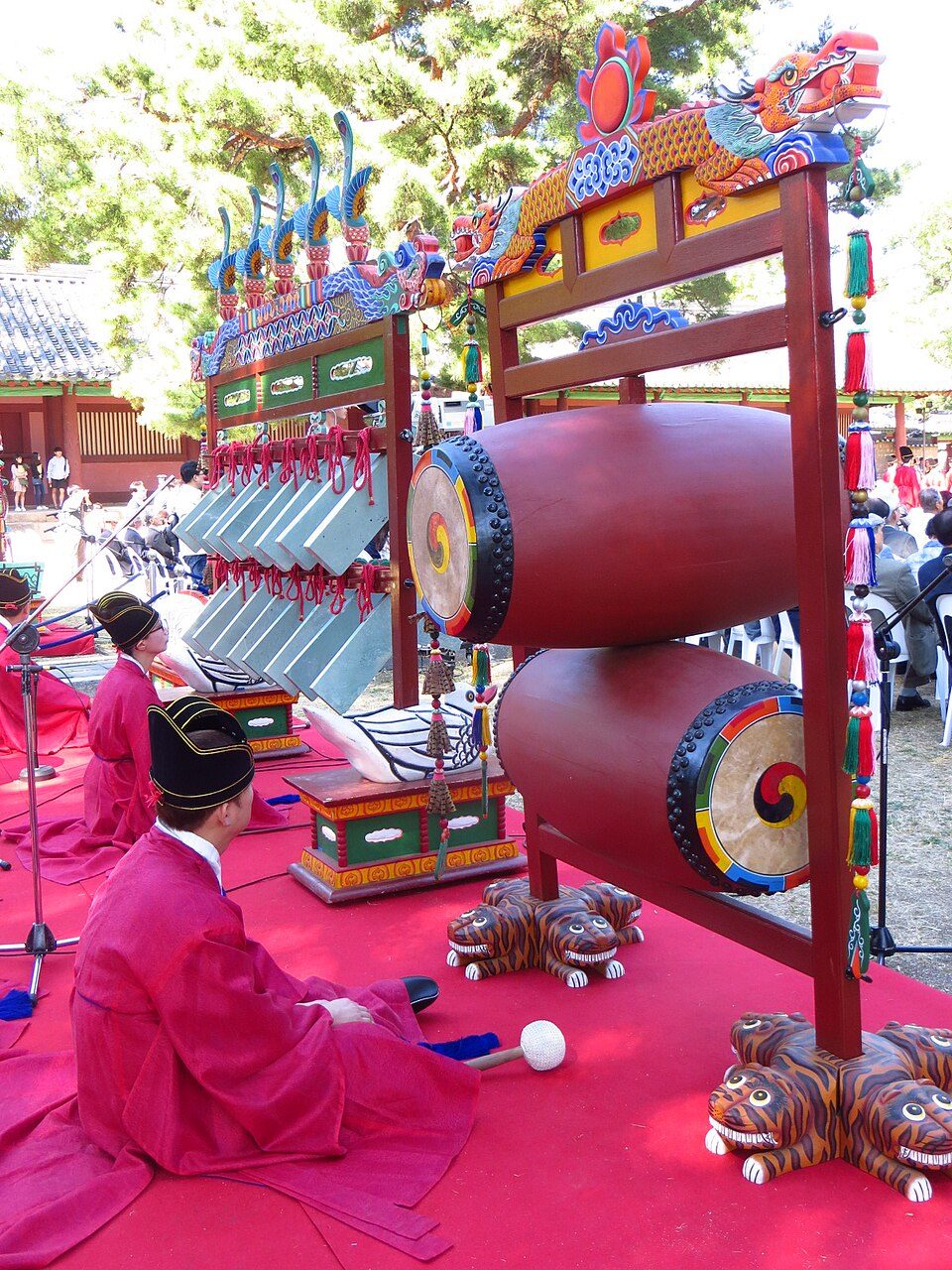
Gayageum (가야금; 伽倻琴) – A long zither with 12 strings; modern versions may have 13, 15, 17, 18, 21, 22, or 25 strings Geomungo (거문고) – A fretted bass zither with six to eleven silk strings that is plucked with a bamboo stick and played with a weight made out of cloth Cheolhyeongeum (철현금; 鐵絃琴) – A geomungo with 8 steel strings plucked with a bamboo stick and played with a slide made out of either glass or metal in the manner of a slide guitar, developed in the 20th centuryphoto 1photo 2 Daejaeng (대쟁; 大筝) – A long zither with 15 strings, slightly larger than the gayageum; (basically a 15 String version of the Ajaeng but played w/ a Plectrum) it was used during the Goryeo period but is no longer usedphoto However it is being revived for song covers. Seul (슬; 瑟) – A long zither with 25 strings, derived from the Chinese se; used today only in Munmyo jeryeak (Korean Confucian ritual music)photo Geum (금; 琴) – A 7-stringed zither, derived from the Chinese guqin; also called chilheyongeum; used today only in Munmyo jeryeak (Korean Confucian ritual music)photo Ongnyugeum (옥류금; 玉流琴) – A large modernized box zither with 33 nylon-wrapped metal strings, developed in 1973; used only in North Korea (pronounced ongryugeum in North Korea)photo 1[link removed]photo 2photo 3 1
Harps
Gonghu (공후; 箜篌) – Harps (no longer used). There were four subtypes according to shape: Sogonghu (소공후; 小箜篌; lit. 'small harp') – harp with angled sound box, 13 strings, and a peg that is tucked into the player's belt Sugonghu (수공후; 豎箜篌; lit. 'vertical harp') – vertical harp without sound box and 21 strings photo Wagonghu (와공후; 臥箜篌; lit. 'lying down harp') – Arched harp with a large internal sound box and 13 strings, similar to Burmese saung gauk photo Daegonghu (대공후; 大箜篌) – large vertical harp with 23-strings 1
Lutes
Bipa (비파; 琵琶) – A pear-shaped lute with five strings (hyangbipa or jikgyeongbipa) or four strings (dangbipa). Uncommon today; most modern recreations are modelled on the Chinese pipa Wolgeum (월금; 月琴) – A lute with a moon-shaped wooden body, four strings, and 13 frets; no longer used Eoeungeum (어은금) – A pear-shaped lute with five strings similar to hyangbipa; used only in North Korea 1
Fiddles
Haegeum (해금; 奚琴) – A vertical fiddle with two strings; derived from the ancient Chinese xiqin Sohaegeum (소해금; 小奚琴) – A modernized fiddle with four strings similar to a modern violin; used only in North Korea Junghaegeum (중해금; 中奚琴) - A modernized fiddle with four strings similar to a modern viola; used only in North Korea Daehaegeum (대해금; 大奚琴) - A modernized fiddle with four strings similar to a modern cello; used only in North Korea Jeohaegeum (저해금; 低奚琴) - A modernized fiddle with four strings similar to a modern double bass; used only in North Korea 1
The text above is adapted from the Wikipedia article “Traditional Korean musical instruments”, available under the Creative Commons Attribution-ShareAlike 4.0 licence. 1
traditional Korean musical instrument is recorded in open cultural data. The structured record cited below does not describe the practice, and this entry has not yet been reviewed by a person familiar with the tradition. 2
The source record links this tradition to 6 external registers, which can be verified through the citation. 2