The tradition & historical record
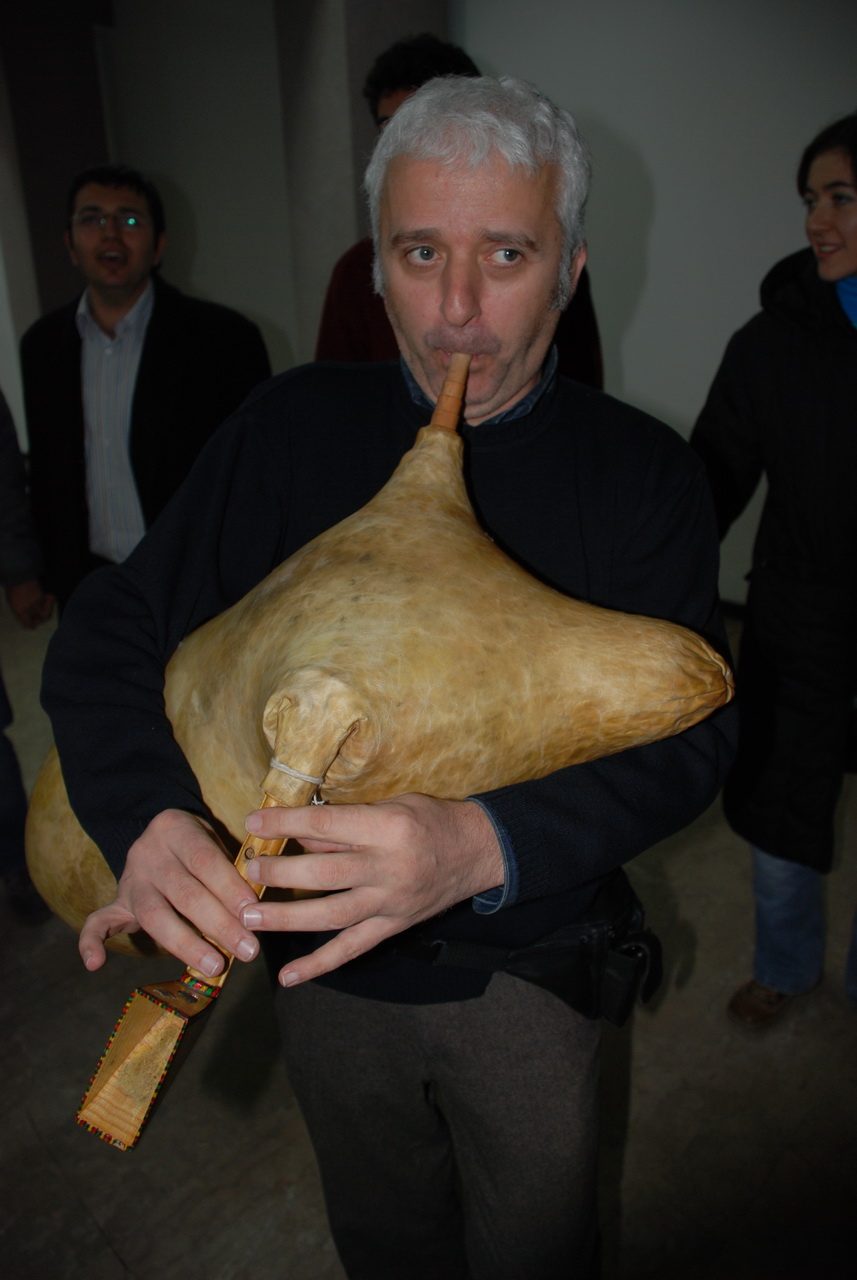
2 min read · 2 sourcesThe tulum (Laz: გუდა, romanized: guda) is a musical instrument, a form of bagpipe from the Black Sea region of Turkey. It is droneless with two parallel chanters, and is usually played by the Laz, Black sea Turks, Hemshin peoples and by Pontic Greeks, particularly Chaldians. It is a prominent instrument in the music of Pazar, Hemşin, Çamlıhemşin, Ardeşen, Fındıklı, Arhavi, Hopa, some other districts of Artvin and in the villages of the Tatos range (the watershed between the provinces of Rize and Trabzon) of İspir. It is the characteristic instrument of the transhumant population of the northeastern provinces of Anatolia and, like the kemençe in its area, the tulum imposes its style on all the dance and entertainment music of those for whom it is "our music". 1
Terminology
Some of the names of bagpipes from the Near East include: 1
Guda (Laz) Gudastvri, გუდასტვირი (Georgian) Ç'ip'oni (Artvin, Adjara, Lazona) Dankiyo (Pontic Greek, Romeika) Parkapzuk, Պարկապզուկ (Armenian) Shuvyr (Mari people), North Circassians) Shabr, Shapar (Chuvash) Tulum (Azerbaijani, Turkish). 1
Etymology
The name tulum comes from the Turkish word tulum, meaning "a skin container", which itself originates from the Proto-Turkic word tōl- ("to be full"). 1
Regional distribution
Source: 1
Rize
The tulum is commonly played in the districts of Pazar, Ardeşen, Çamlıhemşin, Hemşin, Fındıklı, and Güneysu in Rize province. In the past, it was prevalent in the western districts of Rize, but today the tulum culture is not widespread in western Rize. 1
Artvin
The tulum is a common instrument throughout the Artvin province; however, it is more widespread in the inland districts, particularly: Artvin, Borçka, Şavşat, Murgul, Ardanuç, and Yusufeli. 1
The text above is adapted from the Wikipedia article “Tulum (bagpipe)”, available under the Creative Commons Attribution-ShareAlike 4.0 licence. 1
tulum is traditional bagpipe from North Turkey and Macedonia, according to the structured record cited below. This entry was generated automatically from that record and has not yet been reviewed by a person familiar with the tradition. 2
The source record links this tradition to 8 external registers, which can be verified through the citation. 2