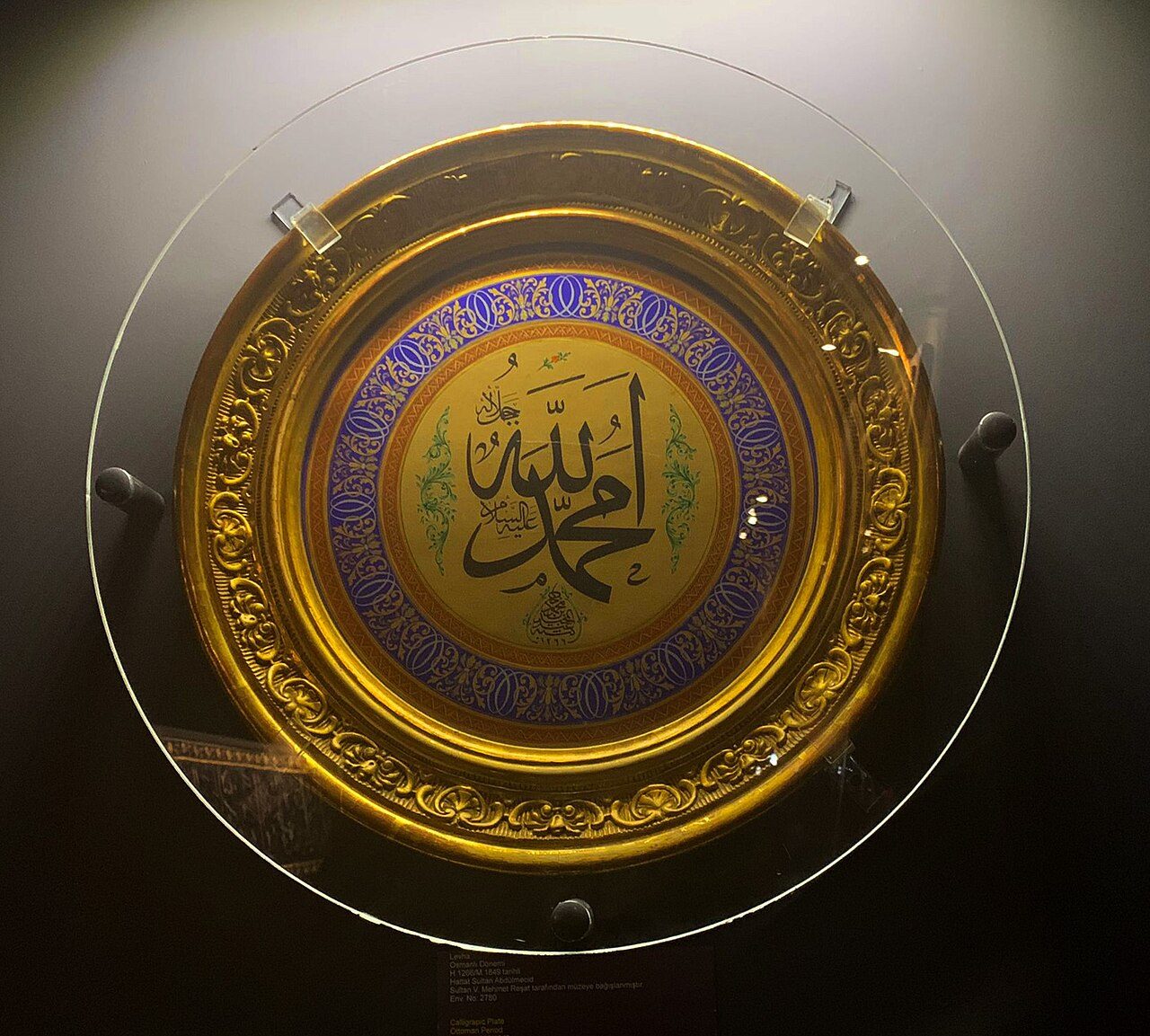
The tradition & historical record
5 min read · 2 sourcesThe art of Turkish calligraphy dates back to the seventh century. The Ottoman Turks migrated from Central Asia to establish an empire in Anatolia by 1299, and conquered Constantinople in 1453. The Ottoman Empire became a major European power. After the fall of the Mamluk Sultanate (1517), the Ottomans began to exert great influence over Islamic art and placed great emphasis on calligraphy. They collaborated with Egyptian and Persian calligraphers, adopting the naskh and thuluth scripts. While other traditional Turkish art forms declined due to the influence of European techniques, styles, tastes, and imports, calligraphy has continued to flourish in Turkey until the present day. In 1928, the Arabic script was replaced with an altered version of the Latin alphabet in the Turkish Republic. However, with assistance from the Centre for Islamic Art and Culture IRCICA in Istanbul, new generations of Turkish calligraphers have continued to emerge. These include Ahmed Kâmil Akdik (1861–1941), Ismail Hakki Altunbezer (1873–1946), and Necmeddin Okyay (1883–1976). 1
Ottoman period
Mustafa Râkim (1757–1826) Ünye, Turkey Sheikh Hamdullah (1436–1520) Amasya, Turkey Hâfiz Osman (1642–1698) Istanbul, Turkey Hamid Aytaç (1891–1982) Diyarbakır, Turkey 1
Contemporary
Hasan Çelebi (1937–2025) Erzurum, Turkey Mehmed Özçay (1944–) was born in Istanbul and began studying calligraphy at the age of 16 under the guidance of several renowned calligraphers, including Süleyman Saim Tekcan and Hamid Aytaç. He later studied at the Mimar Sinan Fine Arts University and went on to exhibit his calligraphy work in many countries around the world. He has won several awards for his work, including the Grand Prize at the International Calligraphy Competition, held in Tehran in 1997. In addition to his work as a calligrapher, he is also a teacher and has trained many students in the art of calligraphy. Rafet Güngör has been a calligrapher and leather craftsman since 1969. He was inspired by the works of Hamid Aytaç and has worked in the Süleymaniye Library in Istanbul for 25 years. Güngör went on to create more than 50,000 calligraphic paintings in various fonts ranging, from Osman font to Arabic calligraphy. 1
Modern Ottoman female calligraphers
Female calligraphers first gained prominence in the modern period of the Ottoman Empire, when a rich and well-preserved tradition of calligraphic biography emerged. A renowned historian of Ottoman calligraphy, Mustakimzade (d. 1788/89), describes eleven women calligraphers in his account. These women were trained by their fathers and brothers and excelled in their art. One female calligrapher, Emine Servet Hanim, wrote nine hilyas for her ijaza in the year AH 1291 (1874 CE), at around the age of eighteen. An ijaza is a certificate of authorization to copy and reproduce calligraphy and is a vital part of the Ottoman calligraphy tradition. Hanim's nine hilyas, written in exquisite and intricate detail, were considered a significant achievement for a female calligrapher of the time. At present, it is kept in a private collection. Hafiza Khatun (d. 1830), who memorized and recited the Hadith, was proficient in both the Thuluth and Naskh scripts. In Baghdad, Al Hafiza Saliha al-Naqshali was a widely recognized calligrapher and scholar. She was the first female calligrapher of note in Arabic calligraphy. Among her calligraphic works was her Quran; Each page had ten lines: three lines of thuluth script, four lines of naskh below, and three lines of thuluth at the end. 1
Tools
Calligraphy is a form of writing that requires a specific type of pen made from a special kind of reed, ink made from soot, and special papers in order to practice. The reed is split lengthwise and divided into thin strips. The strips are next fused together to create the pen. The nib of the pen is angled so that it slants toward the calligrapher, who holds the pen so that the nib's edge completely rests on the paper. The most important component in calligraphy's aesthetic quality is the pen, since the pen produces the subtle effects and designs. In calligraphy, black lines are generally produced with lampblack ink on a light background. For Ottoman calligraphy, the most common colors were yellow (zırnık); red, white, and gold. The pigments were made with a variety of chemicals and substances, including orpiment, tulips and white lead. In previous centuries, paper purchased from the factory was not immediately usable. The raw paper was first colored, since it was typically white and strained the eyes. The surface was then sized with ‘âhâr,’ and lastly burnished with a tool known as a ‘çakmak mühre’ to smooth the surface and stabilize the ‘âhâr’ coating. This method continues to be used in modern calligraphy, resulting in glossy and smooth paper. 1
Styles
There are several classical styles of Islamic calligraphy, which are known in Turkish as sulus, reyhani, rika, muhakkak, and tevki. The Turkish Calligraphers adapted these classical styles of Arab calligraphy and created their own new styles. Sheikh Hamdullah (1429–1520) was the first notable calligrapher in the period of the Ottoman Empire. He was urged by his pupil Bayezid II (1481–1512) to develop his own distinctive style. Hamdullah's style later inspired Hâfiz Osman (1642–1688) a renowned calligrapher who went on to produce work that may be described as quintessential. İsmail Zühdi (died in 1806) and Mustafa Râkim (1758–1826) were both significant calligraphers. Mustafa Rakim's greatest contribution to Turkish calligraphy is the cel stilus style advancement. Additionally, Rakim developed the tugra, which served as the king's seal. Another stylist, Sami Efendi, specialized in creating memorable vowel indicators and reading aids. 1
The text above is adapted from the Wikipedia article “Turkish calligraphy”, available under the Creative Commons Attribution-ShareAlike 4.0 licence. 1
Turkish calligraphy is history of calligraphy in Turkey, according to the structured record cited below. This entry was generated automatically from that record and has not yet been reviewed by a person familiar with the tradition. 2
The source record links this tradition to 3 external registers, which can be verified through the citation. 2