The tradition & historical record
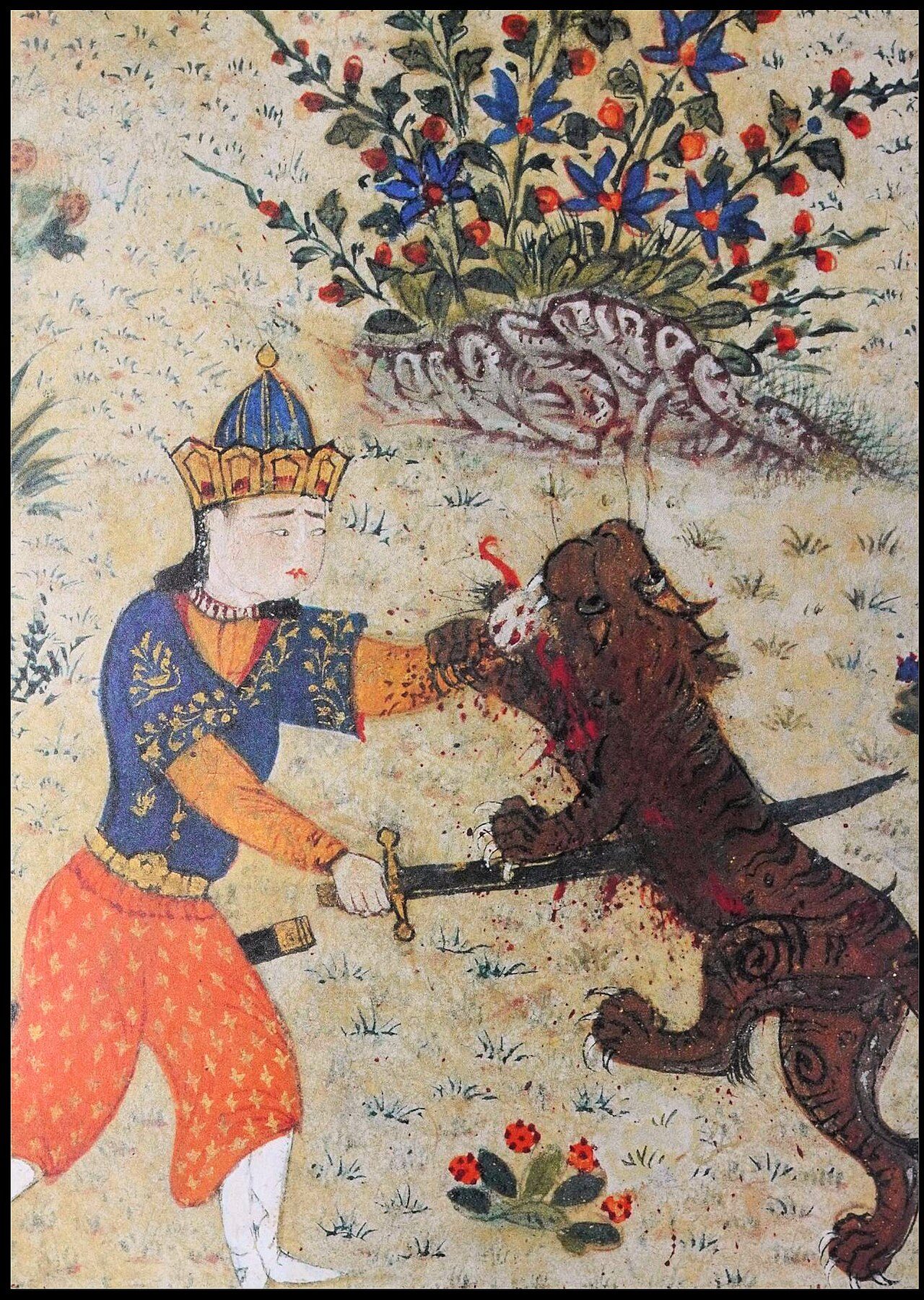
6 min read · 2 sourcesTurkman style is a style in Persian miniature painting that emerged in the 15th century. The British art scholar Basil William Robinson coined the term in the 1950s to differentiate this style from a more polished style made in courts of Timurid and Turkman rulers. It was given the name "Turkman" because the Qara Qoyunlu and Aq Qoyunlu tribes, known as Turkoman, ruled western Iran in the second half of the 15th century, where the Turkman style was centered. The quality of Turkman style was wide-ranging, with many fine early illustrations and some outstanding works belonging to the late 15th-century "metropolitan or royal Turkman styles", while there were also many creations of lesser quality, belonging to the so-called "commercial Turkman style". 1
Definition
In an effort to differentiate a specific painting style that flourished in Iran during the 15th century in the paintings created under the Timurid Empire, Western historians coined the notion of Turkman style in the middle of the 20th century. When Persian miniature painting was initially periodized in the 1930s, there were initial attempts to identify Turkman paintings. The German art scholar Ernst Kühnel used published samples from significant collections of Persian painted manuscripts to categorize the paintings of each era. 1
He included the paintings made under the Qara Qoyunlu in the division of the "Tabriz School," and considered them as an evolution of the styles developed under their predecessors, particularly the Jalayirids, in his article in Pope and Ackerman's Survey of Persian Art (1938–1939). With the publication of a study in 1954 by Basil William Robinson that offered stylistic standards for identifying what he termed "Turkman Commercial" and described its evolution up to 1505, the term became firmly established. Between the 1480s and the 1490s, the Turkman style thrived. 1
Inception
The capital city of Tabriz already had a strong and highly sophisticated miniature tradition from the time of the preceding Turco-Mongol Jalayirid Sultanate. Historically, the Tabriz school of miniatures was founded in the 14th century (before the Shiraz and Herat schools), and was based on the Mongol Ilkhanid and Uighur pictorial traditions. Tabriz was the center of origin of the kitabkhana system of ateliers, which then spread through the Orient at a scale comparable to the European Renaissance. The creations of Tabriz in the 14th century can be seen in exquisite works such as Kalila and Dimna (1370-74) created under Shaykh Uvays at the peak of the Jalayirid school, a later Kalila and Dimna (MS Topkaki H.362) created in Tabriz in 1375–1385, or one of the very first Khamsa of Nizami (1386-88). Already in the 14th century, Tabriz was a cultural hub functioning as the center of many Turkic states in the region, and already incorporated elements of Turkic art and culture. The expressive quality of these creations in a sense surpasses anything that came before of after. At the time of his conquest of Tabriz in 1386 (which he would hold until 1405), the Turco-Mongol invader Timur relocated many of the Tabriz artists to Samarkand, influencing the styles in the Timurid realm, in Samarkand, Herat, and Shiraz. The Jalayirids finally recovered Tabriz in 1405, and a remarkable illustrated manuscript was still created there in the last years of Sultan Ahmad Jalayir's rule in 1405–1410, the Khosrow and Shirin (Freer Gallery of Art). The style of this work had much in common with the productions of Baghdad, the other Jalayirid capital, but with a higher degree of finition. 1
Qara Qoyunlu creations (1419–1468)
The Qara Qoyunlu captured Tabriz as their new capital in 1410, killing the last major Jalayirid ruler Ahmad Jalayir. Some of the first recorded instances of "Turkman style" go back to 1419-1420 in Tabriz. Arguably the first identifiable Turkman style miniatures go back to the 1419-1420 creation by the Qara Qoyunlu of the Mihr u Mushtari illustrated manuscript by Assar. This copy was likely created following the Qara Qoyunlu occupation of Tabriz in 1410-1420. The manuscript was undoubtedly created by a scribe from Tabriz named Ja'far al-Tabrizi, but the actual production may have alternatively taken place somewhere else, possibly in Yazd under Timurid dominion, where Mohammad-Darvish, maternal uncle of Shah Rukh, was Timurid Governor from 1415. The manuscript is still considered as highly representative of early Turkoman style. This style displays the early stages of what is now defined as "Turkman". Still, the Mihr u Mushtari miniatures seem to be highly indebted to earlier Jalayirid manuscripts, such as the 1386-88 Khamsa of Nizami (British Library, Or.13297), or the 1396 Khamsah of Khvaju Kirmani (British Library, Add 18113), both created in Baghdad: the depictions of Faridun on horseback in Or.13297 (fol. 19a), or the attitude of the Payk groom looking backward in Add 18113 (fol. 85r), are almost exactly reproduced in the 1420 Mihr u Mushtari manuscript. In 1421, the Timurid ruler Shah Rukh defeated the Qara Qoyunlu ruler Qara Iskander, and briefly occupied the Qara Qoyunlu capital of Tabriz. Baysunghur, the son of Shah Rukh, brought back to Herat a group of Tabrizi artists and calligraphers, formerly working for the Jalayirid Sultan Ahmad Jalayir and in the workshops of Tabriz, whom he installed in Herat to add to his existing artists from Shiraz. 1
Development
The 15th century century represents a key period for the development of pictorial style in the Orient, as the Tabriz school further assimilated and expanded upon the Tabriz-Baghdad Jalayirid tradition of the 14th century, and the Herat Timurid tradition of the 15th century. This hybrid style became an established tradition. From around 1450, the Turkman style started to use more vibrant palette and dynamic compositions, while at the same time the Herat style evolved towards more structured designs and subtle color palettes. Among the main Qara Qoyunlu rulers, Jahan Shah (r. 1438–1467), unlike his ancestors, cultivated an interest in the arts. He commissioned monuments in a number of Persian cities, notably the Blue Mosque in Tabriz. He was an accomplished poet, writing under the pen name of Haqiqi. His poetry, produced in both Turkish and Persian, demonstrates the divine quality of the word. His son Pir Budaq, accompanied his father in the 1458 campaign to capture the Timurid capital of Herat. Following the successful Herat campaign, Pir Budaq brought back manuscripts with him, including an unfinished, illustrated manuscript of a famous poem, Khamsa, by Nezami, formerly in the possession of the Herat's deposed ruler. Thereafter, Qara Qyunlu works exhibit a strong influence of Herat painting. Pir Budaq became Governor of Shiraz from 1458 and later Baghdad from 1460, and commissioned many manuscripts, establishing libraries of high quality works in both places. Under his patronage, a flourishing arts industry developed there. 1
Turkman style in Egypt
After the death of Pir Budaq in 1465, Turkoman style started to appear in Cairo, capital of the Mamluk Sultanate. 1
The text above is adapted from the Wikipedia article “Turkman style”, available under the Creative Commons Attribution-ShareAlike 4.0 licence. 1
Turkman style is A style in Persian miniature painting that emerged in the late 15th-century., according to the structured record cited below. This entry was generated automatically from that record and has not yet been reviewed by a person familiar with the tradition. 2