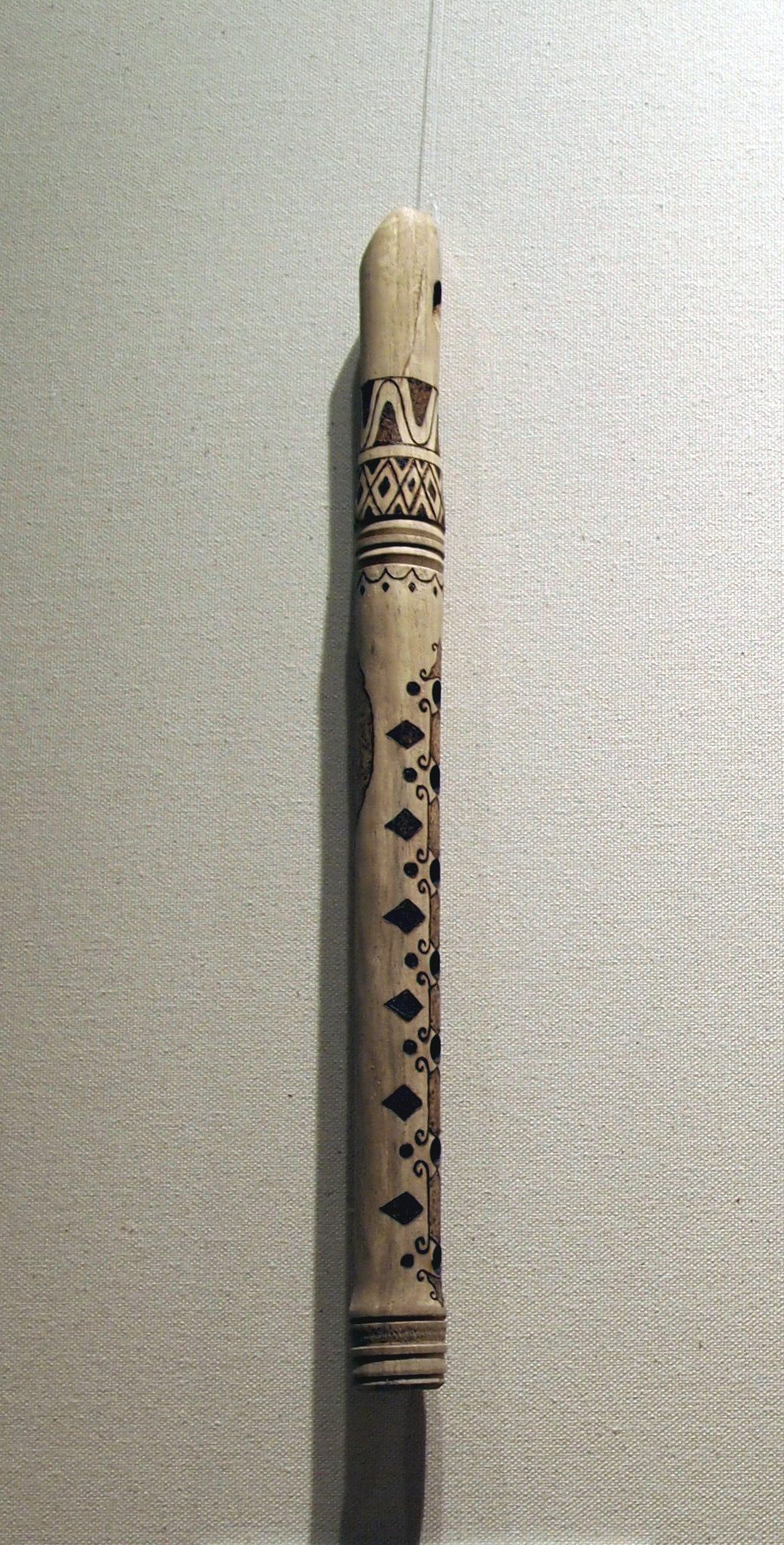
The tradition & historical record
2 min read · 2 sourcesThe dilli kaval (Azerbaijani: Tütək) is a traditional fipple flute from Turkey and Azerbaijan. It is typically made of plum, ebony, or apricot wood. It has seven holes on the front and a thumb hole on the back. The lowest hole on the front is rarely, if ever, covered while playing. Similar to a penny whistle, the register can be controlled by the force of breath. The word "dilli" is Turkish for "tongued" and alludes to the fact that this flute has a duct or "fipple" rather than being rim-blown like a conventional kaval. The soprano dilli kaval in C and the alto version in A are handmade. Both types were patented by Burhan Tarlabaşı. All 12 chromatic tones from Low A to High G# can be played on them. Custom-made ebony-reed kavals in C# and F#, also designed by Burhan Tarlabaşı, are very rare. Their sound is very crisp and similar to tin whistles, but the wood adds a breathy softness. 1
The text above is adapted from the Wikipedia article “Dilli kaval”, available under the Creative Commons Attribution-ShareAlike 4.0 licence. 1
Tutek is Musical instrument, according to the structured record cited below. This entry was generated automatically from that record and has not yet been reviewed by a person familiar with the tradition. 2
The source record links this tradition to 3 external registers, which can be verified through the citation. 2