The tradition & historical record
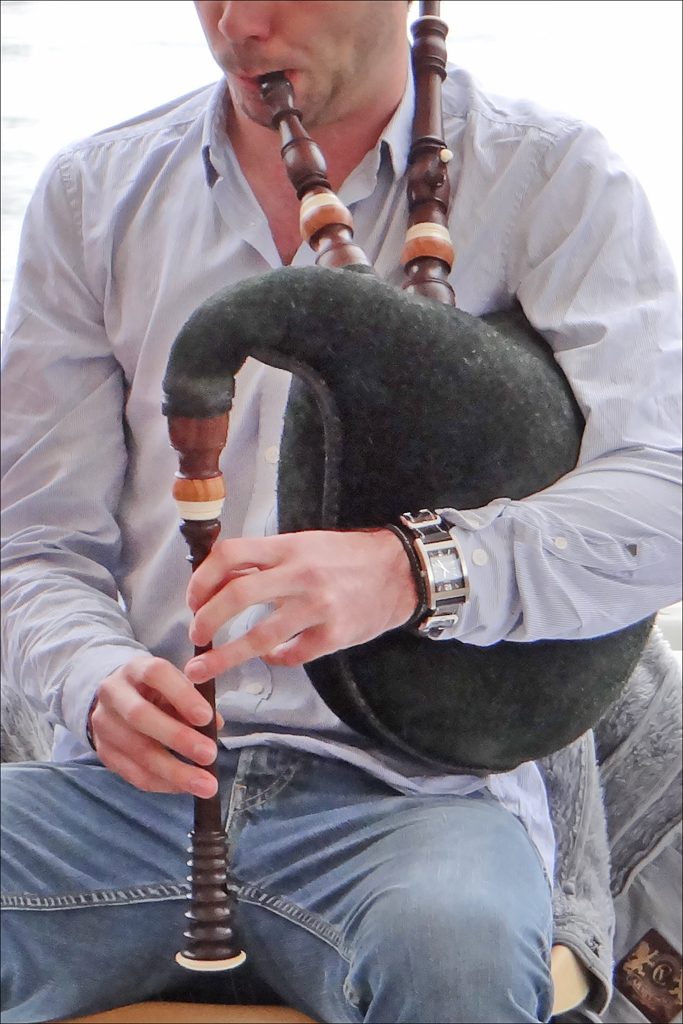
1 min read · 2 sourcesThe veuze is a Breton bagpipe found traditionally in southeastern Brittany and in the northern part of the Vendée, particularly around Nantes, the Guérande peninsula, and Basse-Vilaine. The veuze has been mentioned in writing dating to the 16th century, and is thought to be the oldest of the Breton bagpipes. The veuze is thought to be the antecedent of the biniou. The Association Sonneurs de Veuzes (French: "Association of Veuze [bagpipe] Players") was formed in Nantes in 1976. 1
Construction
The veuze consists of a bag (poche), blowpipe (sutell), a double-reeded chanter (levriad), and a single-reeded drone or drones (bourdon). The levriad is generally pitched in A or G , but can also be found in D, B♭ and C . 1
The text above is adapted from the Wikipedia article “Veuze”, available under the Creative Commons Attribution-ShareAlike 4.0 licence. 1
Veuze is recorded in open cultural data. The structured record cited below does not describe the practice, and this entry has not yet been reviewed by a person familiar with the tradition. 2
The source record links this tradition to 3 external registers, which can be verified through the citation. 2