The tradition & historical record
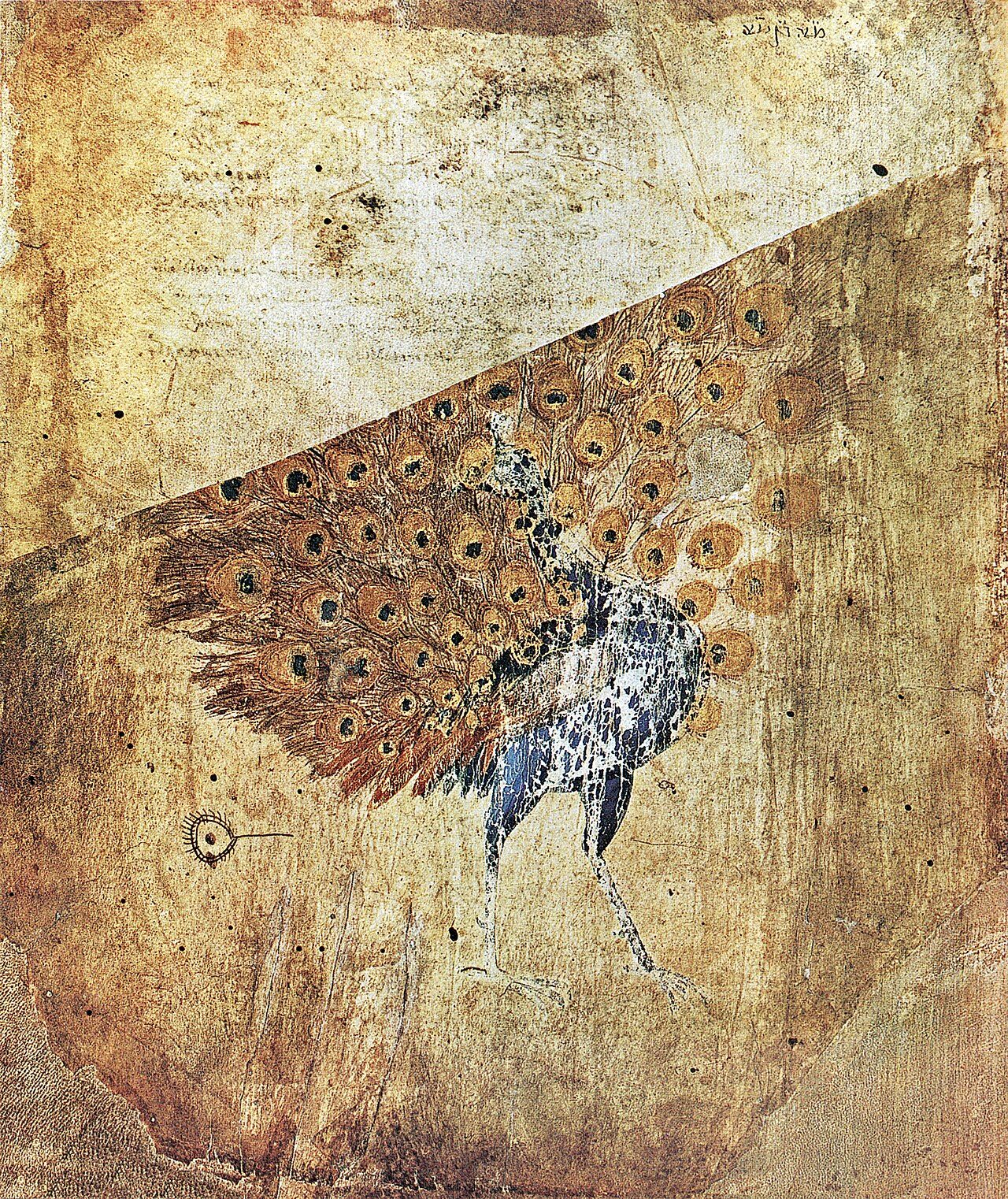
4 min read · 2 sourcesThe Vienna Dioscurides or Vienna Dioscorides is an early 6th-century Byzantine Greek illuminated manuscript of an even earlier 1st century AD work, De materia medica (Ancient Greek: Περὶ ὕλης ἰατρικῆς, romanized: Perì hylēs iatrikēs) by Pedanius Dioscorides in uncial script. It is an important and rare example of a late antique scientific text. After residing in Constantinople for just over a thousand years, the text passed to the Holy Roman Emperor in Vienna in the 16th century, a century after the city fell to the Ottoman Empire. The 491 vellum folios measure 37 cm (15 in) by 30 cm (12 in) and contain more than 400 pictures of animals and plants, most done in a naturalistic style. In addition to the text by Dioscorides, the manuscript has appended to it, the Carmen de herbis attributed to Rufus, a paraphrase of an ornithological treatise by a certain Dionysius, usually identified with Dionysius of Philadelphia, and a paraphrase of Nicander's treatise on the treatment of snake bites. 1
History
The manuscript was created in about 515 AD in the Byzantine (Eastern Roman) Empire's capital, Constantinople, for a resident Byzantine imperial princess, Anicia Juliana, the daughter of Anicius Olybrius (one of the last of the Western Roman Emperors). The manuscript is accordingly now called the Juliana Anicia Codex by scholars. Although it was created as a luxury copy, in later centuries it was used daily as a textbook in the imperial hospital of Constantinople, and a medieval note records that a Greek nurse there, named Nathanael, had it rebound in 1406. Throughout the Byzantine period the manuscript was used as the original for copies of the work that were given to foreign leaders, including the Arabic edition of Abd al-Rahman III of Spain for the creation of which the Byzantine Emperor Constantine VII sent a Greek copy and a translator. A note recording the name of one Michael of the Varangian Guard is also found in the text. The manuscript was restored and a table of contents and extensive scholia added in Byzantine Greek minuscule, by the patriarchal notary John Chortasmenos in 1406. In the mid-15th century, it was used to create the Pope Alexander VII Dioscorides, now in the Vatican Library, by the monks of St. John the Baptist Greek orthodox monastery in Constantinople. After the fall of Constantinople in 1453 a subsequent owner handwrote each plant's name in Arabic and Hebrew. The manuscript, still in Istanbul a century after the fall of the city, was purchased from Moses Hamon, the Arabic-speaking, Jewish physician to Sultan Suleiman the Magnificent, by the Flemish diplomat Ogier Ghiselin de Busbecq, who was in the employ of Emperor Ferdinand I of the Austrian Habsburgs. 1
Illustrations
The manuscript has 383 extant full-page illustrations of plants out of the original 435 illustrations. The illustrations fall into two groups. There are those that faithfully follow earlier classical models and present a quite naturalistic illustration of each plant. There are also other illustrations that are more abstract. The majority of the illustrations were painted in a naturalistic style so as to aid a pharmacologist in the recognition of each plant. However, it is believed that these illustrations were made as copies of an earlier herbal and were not drawn from nature. 1
In addition to the illustrations of the text, the manuscript contains several frontispieces in the form of a series of full-page miniatures. Of special note is the dedication miniature portrait of Anicia Juliana on folio 6 verso. The manuscript was presented to Anicia out of gratitude for her funding the construction of a church in the suburbs of Constantinople. This portrait is the oldest extant dedication portrait. The portrait has Anicia seated in a ceremonial pose distributing alms. She is flanked by personifications of Megalopsychia (magnanimity) and Phronesis (prudence). At her feet, another personification, labeled "Gratitude of the Arts", kneels. A putto holds a dedication copy up to Anicia. Anicia and her attendants are enclosed within an eight-point star within a circle all formed of intertwined rope. Within the outer spandrels of the star are putti, done in grisaille, working as masons and carpenters. 1
The text above is adapted from the Wikipedia article “Vienna Dioscurides”, available under the Creative Commons Attribution-ShareAlike 4.0 licence. 1
Vienna Dioscurides is 6th-century Byzantine illuminated manuscript of Dioscorides' De materia medica, according to the structured record cited below. This entry was generated automatically from that record and has not yet been reviewed by a person familiar with the tradition. 2
The source record links this tradition to 6 external registers, which can be verified through the citation. 2