The tradition & historical record
6 min read · 2 sourcesVisual art of the United States or American art is visual art made in the United States or by U.S. artists. Before colonization, there were many flourishing traditions of Native American art, and where the Spanish colonized, Spanish Colonial architecture and the accompanying styles in other media were quickly established. Early colonial art on the East Coast initially relied on artists from Europe, with John White the earliest example. In the late 18th and early 19th centuries, artists primarily painted portraits and some landscapes in a style based mainly on English painting. Furniture makers imitating English styles and similar craftsmen were established in the major cities, but in the English colonies locally made pottery remained resolutely utilitarian until the 19th century, with fancy products imported. In the late 18th century two U.S. artists, Benjamin West and John Singleton Copley, became the most successful painters in London of history painting, then regarded as the highest form of art, giving the first sign of an emerging force in Western art. American artists who remained in the U.S. became increasingly skilled, although there was little awareness of them in Europe. In the early 19th century the infrastructure to train artists began to be established, and from 1820 the Hudson River School began to produce Romantic landscape painting that were original and matched the huge scale of U.S. landscapes. 1
Beginnings
One of the first European artists to visit North America was John White, who made important watercolor records of Native American life on the Eastern seaboard (now in the British Museum). White first visited America as the artist and map-maker for an expedition of exploration, and in the early years of the Colonial period most other artists trained in Western styles were officers in the army and navy, whose training included sketching landscapes. Eventually the English settlements grew large enough to support professional artists, mostly portrait-painters, often largely self-taught. Among the earliest was John Smybert, a trained artist from London who emigrated in 1728 intending to be a professor of fine art but instead became a portrait painter and printseller in Boston. His friend Peter Pelham was a painter and printmaker. Both needed other sources of income and had shops. Meanwhile, the Spanish territories later to be American could see mostly religious art in the late Baroque style, mostly by Native artists, and Native American cultures continued to produce art in their various traditions. 1
18th century
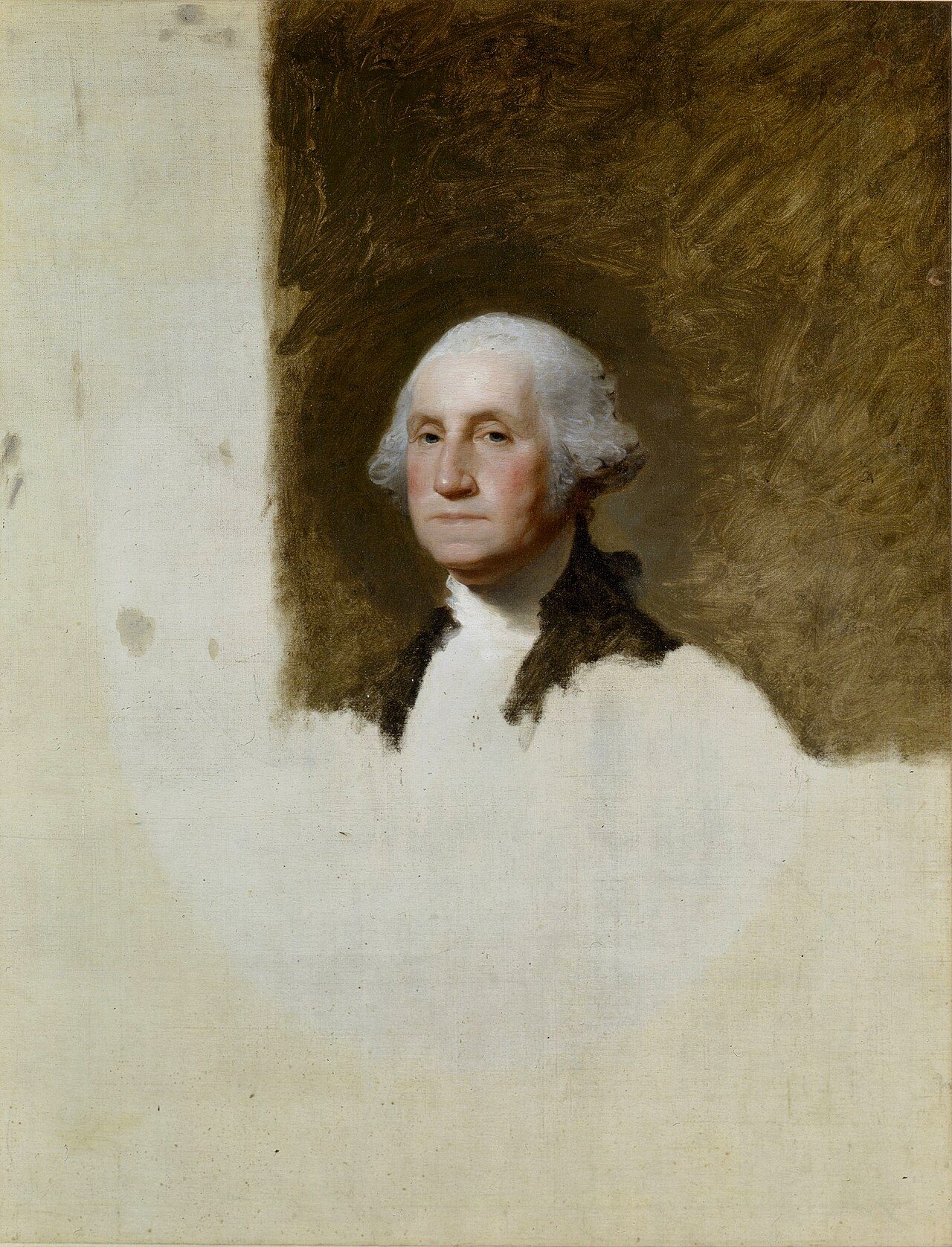
After the Declaration of Independence in 1776, which marked the official beginning of the American national identity, the nation needed a history, and part of that history would be expressed visually. Most of early American art (from the late 18th century through the early 19th century) consists of history painting and especially portraits. As in Colonial America, many of the painters who specialized in portraits were essentially self-taught; notable among them are Joseph Badger, John Brewster Jr., and William Jennys. The young nation's artists generally emulated the style of British art, which they knew through prints and the paintings of English-trained immigrants such as John Smibert and John Wollaston. Robert Feke, an untrained painter of the colonial period, achieved a sophisticated style based on Smibert's example. Charles Willson Peale, who gained much of his earliest art training by studying Smibert's copies of European paintings, painted portraits of many of the important figures of the American Revolution. Peale's younger brother James Peale and six of Peale's nieces and sons— Anna Claypoole Peale, Sarah Miriam Peale, Raphaelle Peale, Rembrandt Peale, Rubens Peale and Titian Peale—were also artists. Painters such as Gilbert Stuart made portraits of the newly elected government officials, which became iconic after being reproduced on various U.S. postage stamps of the 19th century and early 20th century. John Singleton Copley painted emblematic portraits for the increasingly prosperous merchant class, including a portrait of Paul Revere (c. 1768–1770). The original version of his most famous painting Watson and the Shark (1778) is in the collection of The National Gallery of Art. 1
19th century
The first well-known U.S. school of painting—the Hudson River School—appeared in 1820. Thomas Cole pioneered the movement which included Albert Bierstadt, Frederic Edwin Church, Thomas Doughty and several others. As with music and literature, this development was delayed until artists perceived that the New World offered subjects unique to itself; in this case the westward expansion of settlement brought the transcendent beauty of frontier landscapes to painters' attention. The Hudson River painters' directness and simplicity of vision influenced and inspired such later artists as John Kensett and the Luminists; as well as George Inness and the tonalists (which included Albert Pinkham Ryder and Ralph Blakelock among others), and Winslow Homer who depicted the rural U.S.—the sea, the mountains, and the people who lived near them. The Hudson River School landscape painter Robert S. Duncanson was one of the first important African American painters. John James Audubon, an ornithologist whose paintings documented birds, was one of the most important naturalist artists in the early U.S. His major work, a set of colored prints entitled The Birds of America (1827–1839), is considered one of the finest ornithological works ever completed. Edward Hicks was a U.S. folk painter and distinguished minister of the Society of Friends. He became a Quaker icon because of his paintings. Paintings of the West, many of which emphasized the sheer size of the land and the cultures of the native people living on it, became a distinct genre as well. George Catlin depicted the West and its people as honestly as possible. George Caleb Bingham, and later Frederic Remington, Charles M. Russell, the photographer Edward S. Curtis, and others recorded the U.S. 1
20th century
Controversy soon became a way of life for American artists. In fact, much of American painting and sculpture since 1900 has been a series of revolts against tradition. "To hell with the artistic values," announced Robert Henri. He was the leader of what critics called the Ashcan School of painting, after the group's portrayals of the squalid aspects of city life. American realism became the new direction for American visual artists at the turn of the 20th century. The Ashcan painters George Bellows, Everett Shinn, George Benjamin Luks, William Glackens, and John Sloan were among those who developed socially conscious imagery in their works. Photographer Alfred Stieglitz led the Photo-Secession movement which created pathways for photography as an emerging art form. Ashcan School artists gave way to modernists arriving from Europe—the cubists and abstract painters promoted by Stieglitz at his 291 Gallery in New York City. 1
American Southwest
Following the first World War, the completio… 1
The text above is adapted from the Wikipedia article “Visual art of the United States”, available under the Creative Commons Attribution-ShareAlike 4.0 licence. 1
visual art of the United States is visual arts of this region, according to the structured record cited below. This entry was generated automatically from that record and has not yet been reviewed by a person familiar with the tradition. 2
The source record links this tradition to 6 external registers, which can be verified through the citation. 2