The tradition & historical record
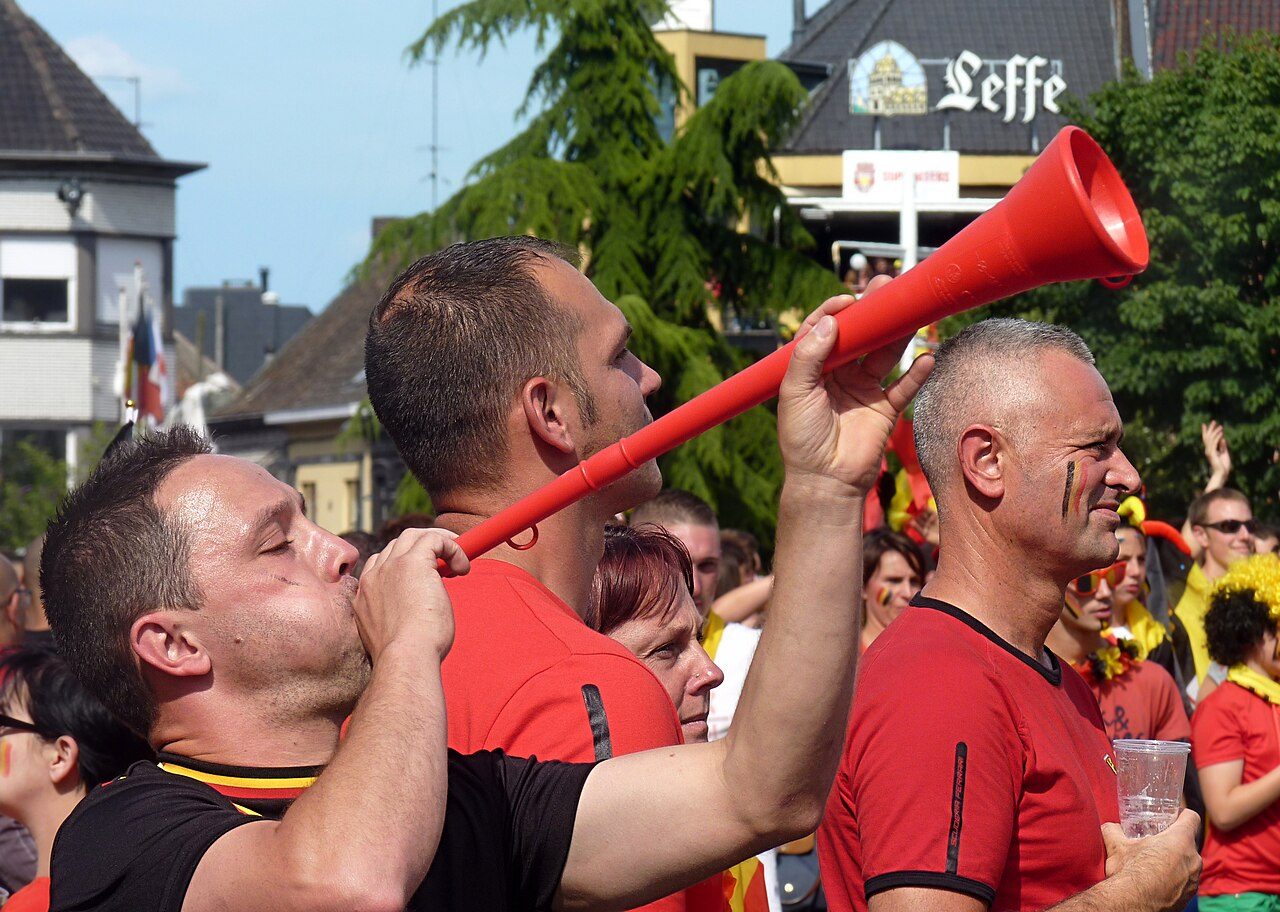
5 min read · 2 sourcesThe vuvuzela ( ) is a horn with an inexpensive injection-moulded plastic shell about 65 centimetres (2 ft) long, which produces a loud monotone note typically around B♭ 3 (the first B♭ below middle C). Some models are made in two parts to facilitate storage, and this design also allows pitch variation. Many types of vuvuzela, made by several manufacturers, may produce various intensity and frequency outputs. The intensity of these outputs depends on the blowing technique and pressure exerted. The vuvuzela is commonly used at football matches in South Africa, and it has become a symbol of South African football as the stadiums are filled with its sound. The intensity of the sound caught the attention of the global football community during the 2009 FIFA Confederations Cup in anticipation of South Africa hosting the 2010 FIFA World Cup. The vuvuzela has been the subject of controversy when used by spectators at football matches. Its high volume can lead to permanent hearing loss for unprotected ears after close-range exposure, with a sound level of 120 dB(A) (the threshold of pain) at one metre (3.3 ft) from the device opening. The sound level resulted in a permanent ban in several sports organisations and facilities. 1
Origin
Plastic aerophones, like corneta and similar devices, have been used in Brazil and other Latin American countries since the 1960s, also similar "Stadium Horns" have been marketed and available in the United States since that same date. Similar horns have been in existence for much longer. An instrument that looks like a vuvuzela appears in Winslow Homer's 1870 painting "The Dinner Horn". The origin of the device is disputed. The term vuvuzela was first used in South Africa from the Zulu language or from a Nguni language. It is also known in the Sepedi language as Lepatata; a Bokoni dialect word meaning to make a blowing sound (directly translated: ukuvuvuzela). Controversies over the invention arose in early 2010. South African Kaizer Chiefs fan Freddie "Saddam" Maake claimed the invention of the vuvuzela by fabricating an aluminium version in 1965 from a bicycle horn and has photographic evidence of himself holding the aluminium vuvuzela in the 1970s, 1980s and 1990s. He also claimed to have coined vuvuzela from the Zulu language for "welcome", "unite" and "celebration". Plastics factory Masincedane Sport popularised the ubiquitous plastic vuvuzela commonly heard at South African football games in 2002; and the Nazareth Baptist Church claimed the vuvuzela belonged to their church. 1
International tournaments
The world association football governing body, FIFA, proposed banning vuvuzelas from stadiums, as they were seen as potential weapons for hooligans. Columnist Jon Qwelane described the device as "an instrument from hell". South African football authorities argued that the vuvuzela was part of the South African football experience. The Spanish midfielder Xabi Alonso said, "Those trumpets? That noise I don't like ... FIFA must ban those things ... it is not nice to have a noise like that". Dutch coach Bert van Marwijk remarked, "... it was annoying ... in the stadiums you get used to it but it is still unpleasant". Commentator Farayi Mungazi said, "Banning the vuvuzela would take away the distinctiveness of a South African World Cup ... absolutely essential for an authentic South African footballing experience". FIFA President Sepp Blatter responded, "we should not try to Europeanise an African World Cup ... that is what African and South Africa football is all about – noise, excitement, dancing, shouting and enjoyment". Despite the criticisms, FIFA agreed to permit their use in stadiums during the 2009 FIFA Confederations Cup and 2010 FIFA World Cup. The South African football authority argued that during FIFA World Cup 2010, vuvuzelas achieved great popularity, though TV spectators suffered a lot due to vuvuzela noise pollution. 1
Marketing
Hyundai constructed the world's largest working vuvuzela as part of a marketing campaign for the World Cup. The 35-metre (115 ft) blue vuvuzela mounted on the Foreshore Freeway Bridge, Cape Town, was intended to be used at the beginning of each match; however, it did not sound a note during the World Cup, as its volume was a cause of concern to city authorities. 1
Reception
Its ubiquity led to many suggestions for limiting its use, muffling its sound, and even an outright ban. Broadcasting organisations experienced difficulties with their presentations. Television and radio audiences often only heard the sound of the vuvuzelas. The BBC, RTÉ, ESPN and BSkyB have examined the possibility of filtering the ambient noise while maintaining game commentary. The vuvuzelas raised health and safety concerns. Competitors believed the incessant noise hampered the ability of the players to get their rest, and degraded the quality of team performance. Other critics remarked that vuvuzelas disrupted team communication and players' concentration during matches. Demand for earplugs to protect from hearing loss during the World Cup outstripped supply, with many pharmacies out of stock. One major vuvuzela manufacturer even began selling its own earplugs to spectators. 1
Audio filtration
Notch filtering, an audio filtration technique, is proposed to reduce the vuvuzela sound in broadcasts and increase clarity of commentary audio. The vuvuzela produces notes at a frequency of approximately 235 Hz and its first partial at 465 Hz. However, this filtration technique affects the clarity of commentary audio. Proposals of adaptive filters by universities and research organisations address this issue by preserving the amplitude and clarity of the commentators' voices and crowd noise. Such filtration techniques have been adopted by some cable television providers. 1
The text above is adapted from the Wikipedia article “Vuvuzela”, available under the Creative Commons Attribution-ShareAlike 4.0 licence. 1
vuvuzela is plastic horn, according to the structured record cited below. This entry was generated automatically from that record and has not yet been reviewed by a person familiar with the tradition. 2
The source record links this tradition to 12 external registers, which can be verified through the citation. 2