The tradition & historical record
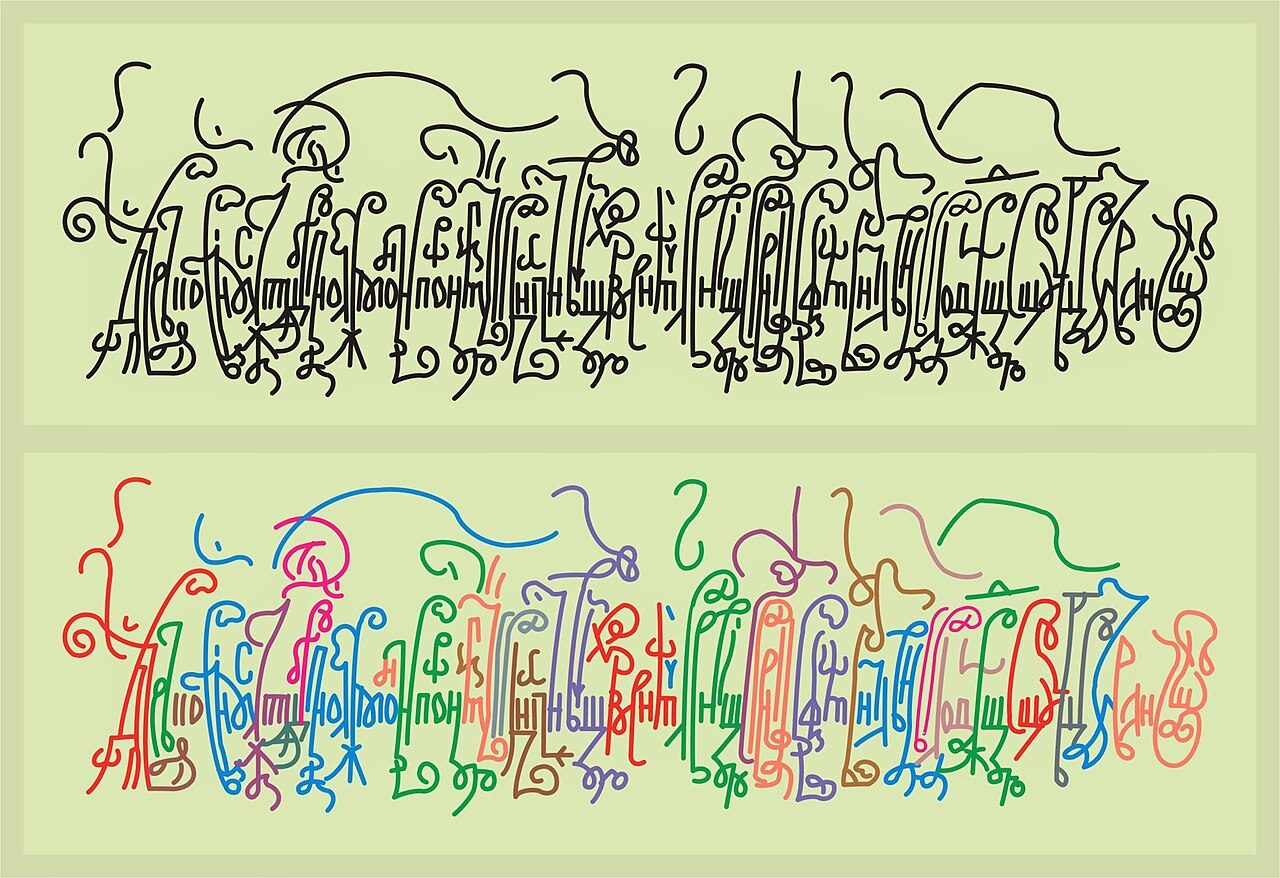
1 min read · 2 sourcesVyaz (Russian: вязь from вязать, vyazat'; Church Slavonic: вѩзати ⰲⱗⰸⰰⱅⰻ 'to bind, to tie') is a type of ancient decorative Cyrillic lettering, in which letters are linked into a continuous ornament. 1
History
Vyaz first emerged out of a need to write quickly in an aesthetically pleasing manner. Scribes developed vyaz to decorate their texts and highlight the first line of a text. Vyaz headings are sometimes difficult to read due to their ornamentation. Vyaz first appeared in South Slavic monuments in the 13th century, and was also used from the end of the 14th to the beginning of the 15th century in the East Slavic and Wallachian regions. Under the reign of Ivan the Terrible, vyaz developed considerably, but was later abandoned. 1
The text above is adapted from the Wikipedia article “Vyaz (Cyrillic calligraphy)”, available under the Creative Commons Attribution-ShareAlike 4.0 licence. 1
Vyaz is Slavonic calligraphy, where letters merge or fuse in a continuous ornamental strip, according to the structured record cited below. This entry was generated automatically from that record and has not yet been reviewed by a person familiar with the tradition. 2
The source record links this tradition to 2 external registers, which can be verified through the citation. 2