The tradition & historical record
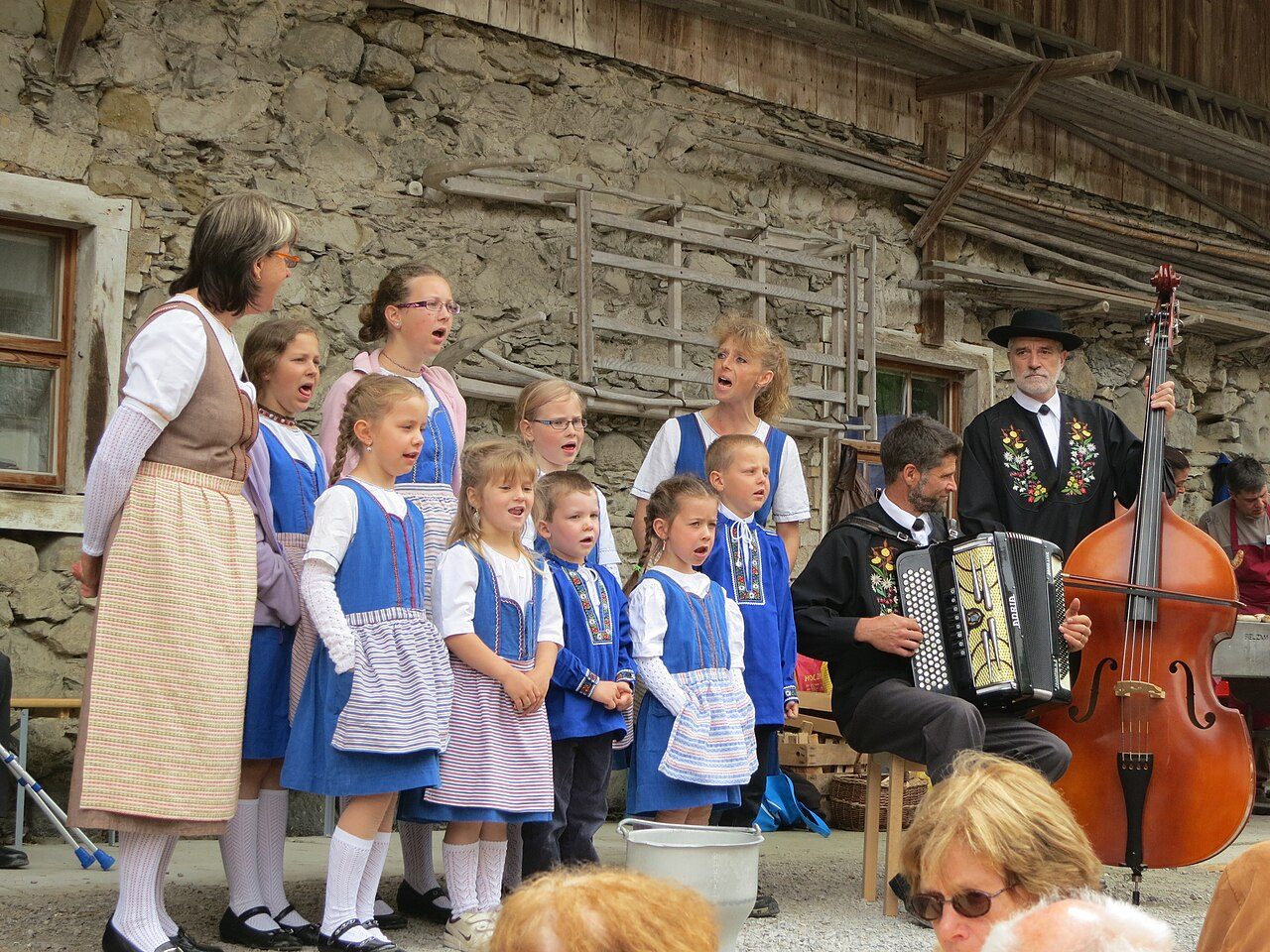
6 min read · 2 sourcesYodeling (also jodeling or yodelling) is a form of singing which involves repeated and rapid changes of pitch between the low-pitch chest register (or "chest voice") and the high-pitch head register or falsetto. The English word yodel is derived from the German word jodeln, meaning "to utter the syllable jo" (pronounced "yo"). This vocal technique is used in many cultures worldwide. Recent scientific research concerning yodeling and non-Western cultures suggests that music and speech may have evolved from a common prosodic precursor. Alpine yodeling was a longtime rural tradition in Europe, and became popular in the 1830s as entertainment in theaters and music halls. In Europe, yodeling is still a major feature of folk music (Volksmusik) from Switzerland, Austria, Southern Germany, the Eastern French regions of Alsace and Savoy, the Northern Italian region of Trentino-Alto Adige/Südtirol, and the Alpine regions of Slovenia, and can be heard in many contemporary folk songs, which are also featured on regular TV broadcasts. 1
History of Alpine yodeling
Most experts agree that yodeling was used in the Central Alps by herders calling their flocks or to communicate between Alpine villages. The multi-pitched "yelling" later became part of the region's traditional lore and musical expression. The earliest record of a yodel is in 1545, where it is described as "the call of a cowherd from Appenzell". Music historian Timothy Wise writes: 1
From its earliest entry into European music of whatever type, the yodel tended to be associated with nature, instinct, wilderness, pre-industrial and pastoral civilization, or similar ideas. It continues to be associated with rural and folk musics or to connote those in other contexts. Because of this original folk connection, yodeling remained associated with the outdoors, with rustic rather than sophisticated personae, and with particular emotional or psychological states or semantic fields. British stage performances by yodelers were common in the nineteenth century. Sir Walter Scott wrote in his June 4, 1830, journal entry that "Anne wants me to go hear the Tyrolese Minstrels but ... I cannot but think their yodeling ... is a variation upon the tones of a jackass." In Europe, yodeling is still a major feature of folk music (Volksmusik) from Switzerland, Austria, and southern Germany, and the Swiss Amish in the United States maintain the practice of yodeling to this day. In 2025, Switzerland’s yodeling was recognized as intangible cultural heritage by UNESCO. 1
Yodeling around the world
Apart from the Alps, yodeling can be found in the Solomon Islands, Hawaii, Madagascar, the US, Romania, Bulgaria, and Africa. Although yodeling is associated with the Swiss Alps and Austrian Tyrol, ethnomusicologists believe that its origins can be traced back tens of thousands of years to ancient African nomadic hunter-gatherer societies. In Scandinavian folk music, the oral-song tradition Kulning (Norwegian: Laling), also called huving, is a form of signal song, a shout to make themselves known over a long distance, especially used in the mountains. Usually it is linked to a transhumance tradition. The cry could be individually designed so that it was not just a cry for contact, but also a signifier used to identify the singer. The cry may have a form of text, but is just as well without words. Laling is related to yodeling in Switzerland and Austria. The overture Hjalarljod has a background in the phenomenon of yodeling. Laling is a mix of yelling and singing, and is closely related to lokk. Huving was spent in the woods and mountains to call the animals, and get in touch with other people, such as other shepherds or people on the neighboring mountain farm and to give messages over long distances. In Slovenian traditional folk culture, yodeling (jodlanje) and falsetto pastoral calls (vriskanje and ukanje) were historically used by herders in the Julian and Kamnik–Savinja Alps to communicate across pastures. The style later became an integral component of Slovenian Alpine folk music (narodnozabavna glasba). In Persian classical music, singers frequently use tahrir ("tremolo" in English), a yodeling technique that oscillates on neighbor tones. 1
Technique
Human voices have at least two distinct vocal registers, called the "head" and "chest" voices. Most people can sing tones within a certain range of lower pitches in their chest voice and tones within a certain range of higher pitch in their head voice. Falsetto is an "unsupported" register forcing vocal cords into a higher pitch without any head or chest voice air support. The range of overlap between registers, called the passaggio, can be challenging for untrained singers. Experienced singers can control their voices in this range, easily switching between registers. Yodeling is a version of this technique in which a singer might change register several times in only a few seconds and at a high volume. Repeated alternation between registers at a singer's passaggio pitch range produces a very distinctive sound. For example, in the famous "Yodel – Ay – EEE – Oooo", the "EEE" is sung in the head voice while all other syllables are in the chest voice. Bart Plantenga, author of Yodel-Ay-Ee-Oooo: The Secret History of Yodeling Around the World, explains the technique: 1
The basic yodel requires sudden alterations of vocal register from a low-pitched chest voice to high falsetto tones sung on vowel sounds: AH, OH, OO for chest notes and AY or EE for the falsetto. Consonants are used as levers to launch the dramatic leap from low to high, giving it its unique ear-penetrating and distance-spanning power. The best places for Alpine-style yodelling are those with an echo. 1
Yodeling in the United States
It is thought that yodeling was first introduced to the United States by German immigrants in Pennsylvania in the early 1800s. As the new settlers traveled south through the Appalachian Mountains and beyond into the Deep South they came into contact with Scots and Irish immigrants, Scandinavians (practitioners of a unique yodeling called kulning), and other nationalities including African enslaved people who communicated with "field hollers", described by Frederick Law Olmsted in 1853 as a "long, loud, musical shout, rising and falling and breaking into falsetto". In 1839, the Tyrolese Minstrels toured the United States and started an American craze for Alpine music. During the 1840s, dozens of German, Swiss, and Austrian singing groups crisscrossed the country entertaining audiences with a combination of singing, yodeling, and "Alpine harmony." The popularity of the European groups led to the formation of many American family singing groups as well. The most popular was the Hutchison Family Singers who toured, singing harmony and yodeling. Minstrel shows parodied the Hutchinson's yodeling with their own, calling it "Tyrolesian business". 1
Early recordings
Entertainer J.K. Emmet (1841–91) was probably the most well-known yodeler of his time. He did make recordings but died before the recording industry was firmly established. 1
The text above is adapted from the Wikipedia article “Yodeling”, available under the Creative Commons Attribution-ShareAlike 4.0 licence. 1
yodeling is form of singing that rapidly alternates in register between modal and falsetto, according to the structured record cited below. This entry was generated automatically from that record and has not yet been reviewed by a person familiar with the tradition. 2
The source record links this tradition to 30 external registers, which can be verified through the citation. 2