The tradition & historical record
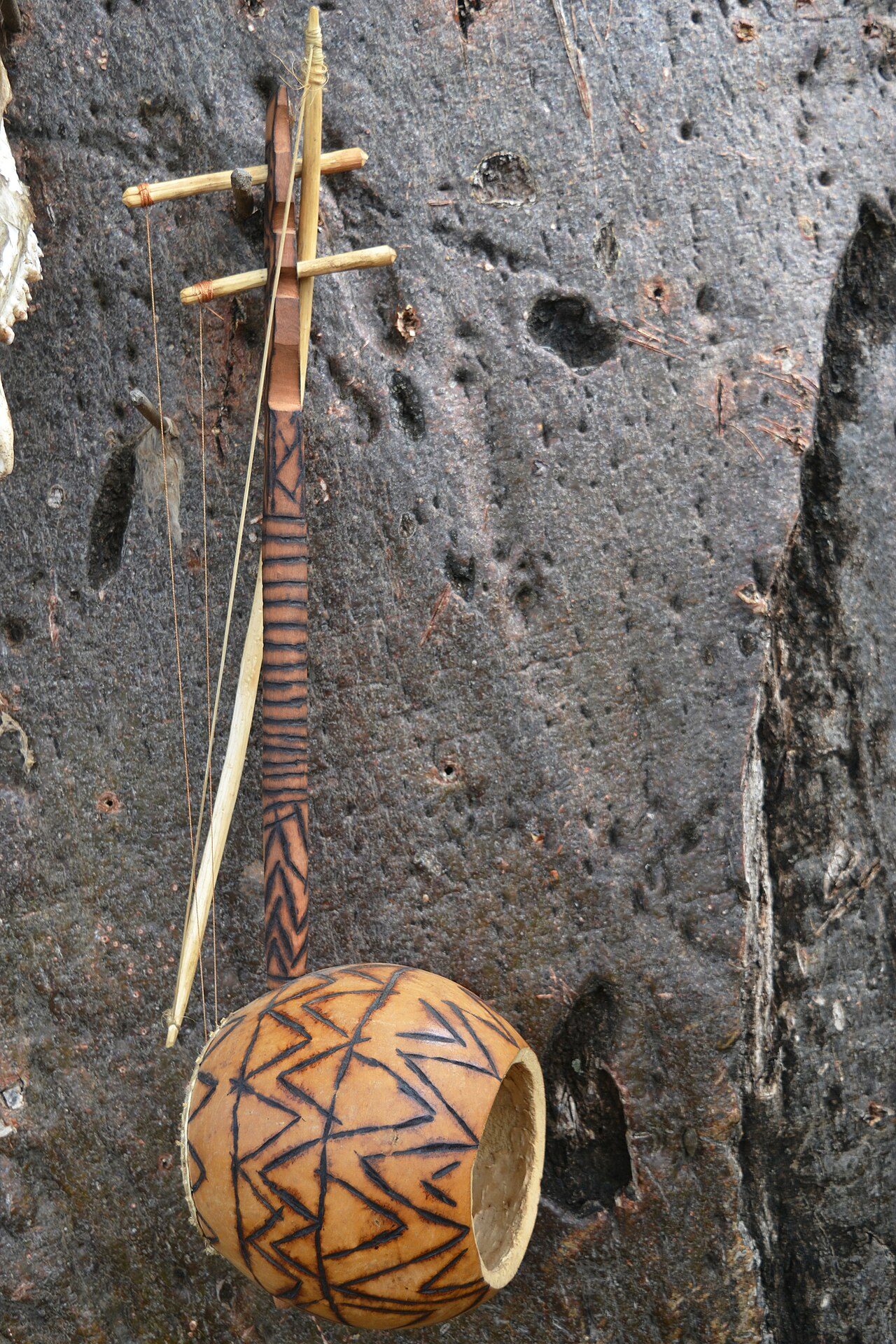
2 min read · 2 sourcesThe zeze, also known as izeze, tzetze, or dzendze (plural: mazeze) is a bowed spike fiddle of the Gogo (Wagogo) people of the Dodoma Region of central Tanzania. It has between one and 14 strings that are made of steel wire or plant fiber, and can be played with a convex bow made of wood and baobab fiber. The number of strings affects how the instrument is played, instruments with fewer strings are generally bowed, while the other with more strings can be bowed or plucked. It can be performed alone, with singers, or as part of a larger ensemble, and can be played at ceremonies, festivals, community gatherings or just for fun. 1
Across Tanzania, zeze is associated with several ethic groups, and its form different from one region to another, including the Wagogo of Dodoma and the Waha of Kigoma. The Wagogo tradition has received particular attention through Hukwa Zawose, a musician and teacher who learned Wagogo music and later spread it by performing and teaching around the world. Among the Waha of the Kigoma region, near Lake Tanganyika, have a traditional of playing one-stringed zeze, also known as izeze. In both communities, playing zeze was mainly associated with men, at the same time women took part in other musical activities, such as dancing and playing mheme drum. However, women can learn how to play zeze as well. These traditions are becoming less common today due to the increasing use of Western instruments. 1
General references
The Stringed Instrument Database ATLAS of Plucked Instruments 1
The text above is adapted from the Wikipedia article “Zeze (instrument)”, available under the Creative Commons Attribution-ShareAlike 4.0 licence. 1
zeze is a stringed instrument from Sub-Saharan Africa, according to the structured record cited below. This entry was generated automatically from that record and has not yet been reviewed by a person familiar with the tradition. 2
The source record links this tradition to 5 external registers, which can be verified through the citation. 2