The tradition & historical record
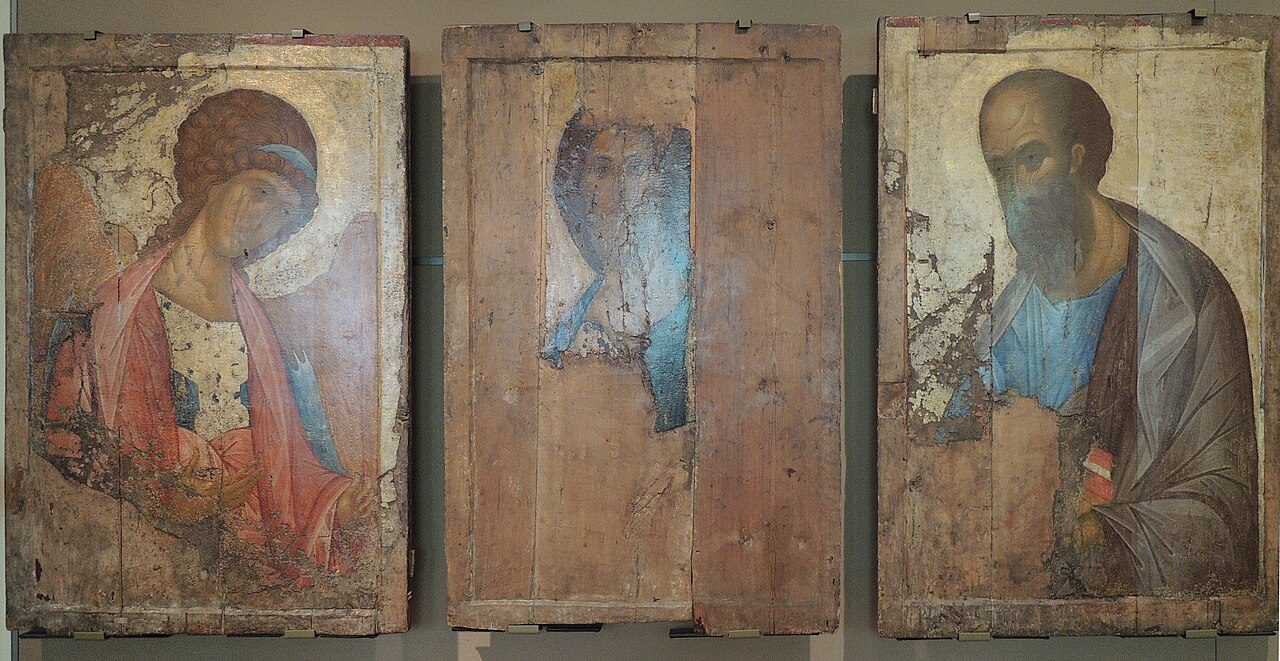
1 min read · 2 sourcesChrist the Redeemer is a Russian icon discovered by accident in a dilapidated woodshed near Zvenigorod in 1919. With several other icons stored nearby, it was attributed as the work of Andrei Rublev, painted for one of Zvenigorod cathedrals in the 1420s. It is exhibited in the Tretyakov Gallery of Moscow. After the intense wear over the years, it went over a restoration in 1956, after the de-Stalinization of the Soviet Union. 1
The text above is adapted from the Wikipedia article “Christ the Redeemer (icon)”, available under the Creative Commons Attribution-ShareAlike 4.0 licence. 1
Zvenigorodskiy chin is Russian orthodox icon, according to the structured record cited below. This entry was generated automatically from that record and has not yet been reviewed by a person familiar with the tradition. 2
The source record links this tradition to 1 external register, which can be verified through the citation. 2