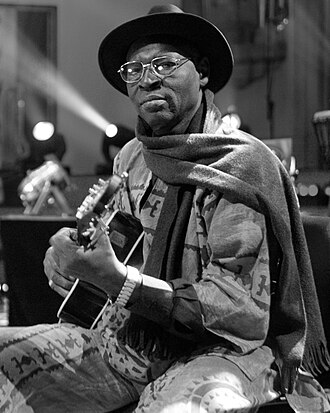
San Fernando Gitano flamenco cante jondo vocalist whose creations—La Leyenda del Tiempo, Como el Agua, and Soy Gitano—transformed modern Andalusian flamenco.
Born in San Fernando, Cádiz, where he earned the nickname 'Camarón' in his uncle's blacksmith forge, José Monge Cruz combined raw Gitano cante jondo depth in soleares, bulerías, and siguiriyas with poetic settings of Federico García Lorca.
His decade-long partnership with guitarist Paco de Lucía and his 1979 masterwork La Leyenda del Tiempo revitalised UNESCO-inscribed Andalusian flamenco for a new generation.
What is Camarón de la Isla (1950–1992) and what does it mean?
San Fernando Gitano flamenco cante jondo vocalist whose creations—La Leyenda del Tiempo, Como el Agua, and Soy Gitano—transformed modern Andalusian flamenco.
Which living traditions are connected to Camarón de la Isla (1950–1992)?
Camarón de la Isla (1950–1992) is documented in connection with Flamenco.
What primary sources document Camarón de la Isla (1950–1992)?
Camarón de la Isla (1950–1992) is attested in Flamenco — UNESCO Representative List Dossier 00363 (UNESCO ICH / Instituto Andaluz del Flamenco).
How do I cite or reference Camarón de la Isla (1950–1992)?
Cite as: "Camarón de la Isla (1950–1992)." Folkroom Archive (Artists), https://folkroom.org/artists/camaron-de-la-isla · CC BY-SA 4.0.
Sources
1
What’s on this page is sourced from the citation below.
Camarón de la Isla (1950–1992) — folkroom Archival DossierCanonical URI: https://folkroom.org/artists/camaron-de-la-islaScan QR code for primary sources, interactive World Atlas coordinates, and CC BY-SA 4.0 citation files (.bib / .ris).
A free public archive of the world’s living and endangered cultural traditions — documented with primary sources, geographic coordinates, and open-licensed photography. Two rooms, one wall. The door is open.
Camarón de la Isla (1950–1992) — जीवित लोक एवं सांस्कृतिक विरासत (Spain)
Camarón de la Isla (1950–1992) Spain की पारंपरिक नृत्य और लोक नाट्य से जुड़ी एक जीवित परंपरा है। यह प्रलेख फ़ोकरूम (folkroom) सार्वजनिक अभिलेखागार में CC BY-SA 4.0 के अंतर्गत उपलब्ध है।
தமிழ் (ta)
Camarón de la Isla (1950–1992) — வாழும் கலாச்சார மரபு (Spain)
Camarón de la Isla (1950–1992) என்பது Spain பகுதியைச் சேர்ந்த பாரம்பரிய நடனம் மற்றும் சடங்கு நாடகம் மரபாகும். folkroom பொது ஆவணக் காப்பகத்தில் (CC BY-SA 4.0) ஆதாரங்களுடன் பதிவு செய்யப்பட்டுள்ளது.
বাংলা (bn)
Camarón de la Isla (1950–1992) — জীবন্ত সাংস্কৃতিক ঐতিহ্য (Spain)
Camarón de la Isla (1950–1992) হলো Spain অঞ্চলের ঐতিহ্যবাহী নৃত্য ও লোকনাট্য ধারার একটি জীবন্ত ঐতিহ্য। ফোকরুম (folkroom) উন্মুক্ত আর্কাইভে (CC BY-SA 4.0) প্রামাণ্য সূত্রসহ সংরক্ষিত।
Español (es)
Camarón de la Isla (1950–1992) — Patrimonio Cultural Vivo (Spain)
Camarón de la Isla (1950–1992) es una tradición viva de danza tradicional y teatro ritual documentada en Spain. Registro público de acceso abierto en folkroom (CC BY-SA 4.0).
Français (fr)
Camarón de la Isla (1950–1992) — Patrimoine Culturel Immatériel (Spain)
Camarón de la Isla (1950–1992) est une tradition vivante de danse traditionnelle et théâtre rituel originaire de Spain. Dossier documentaire en libre accès sur folkroom (CC BY-SA 4.0).
Português (pt)
Camarón de la Isla (1950–1992) — Patrimônio Cultural Imaterial (Spain)
Camarón de la Isla (1950–1992) é uma tradição viva de dança tradicional e teatro ritual documentada em Spain. Arquivo público aberto no folkroom (CC BY-SA 4.0).
日本語 (ja)
Camarón de la Isla (1950–1992) — 世界の無形文化遺産・民俗アーカイブ (Spain)
Camarón de la Isla (1950–1992)は、Spainに伝わる伝統舞踊・民俗演劇の生きた伝統文化です。folkroom公開アーカイブ(CC BY-SA 4.0)にて一次資料とともに記録されています。
한국어 (ko)
Camarón de la Isla (1950–1992) — 세계 무형문화유산 아카이브 (Spain)
Camarón de la Isla (1950–1992)은(는) Spain 지역에서 전승되는 전통 무용 및 의례 연희 전통입니다. folkroom 공개 아카이브(CC BY-SA 4.0)에 출처와 함께 기록되어 있습니다.
Bahasa Indonesia (id)
Camarón de la Isla (1950–1992) — Warisan Budaya Takbenda (Spain)
Camarón de la Isla (1950–1992) adalah tradisi hidup tari tradisional dan teater ritual yang terdokumentasi di Spain. Arsip publik akses terbuka di folkroom (CC BY-SA 4.0).
العربية (ar)
Camarón de la Isla (1950–1992) — التراث الثقافي غير المادي (Spain)
Camarón de la Isla (1950–1992) هو تقليد حي من الرقص التقليدي والمسرح الطقسي موثق في Spain. سجل عام مفتوح الوصول على أرشيف فولكروم (CC BY-SA 4.0).