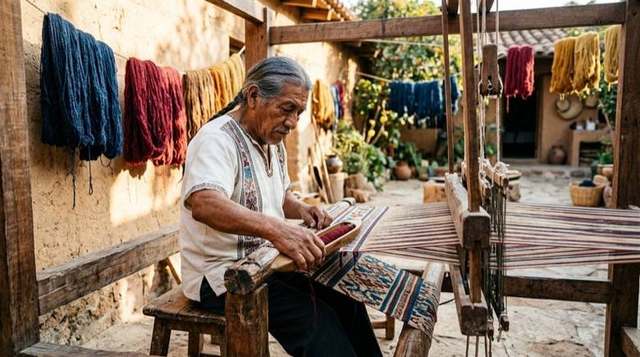
Side-by-side comparison of Algerian embroidery (Algeria, Algeria) and Zapotec Pedal-Loom Weaving (Teotitlán del Valle, Oaxaca, Mexico) across cultural family, chronology, materials, instruments, and living vitality.
| Dimension | Zapotec Pedal-Loom Weaving | |
|---|---|---|
| Tradition Name | Algerian embroidery | Zapotec Pedal-Loom Weaving |
| Native Script / Endonym | Algerian embroidery | Biaa Xigie' |
| Cultural Family | Textile | Textile |
| Primary Geography & Origin | Algeria, Algeria | Teotitlán del Valle, Oaxaca, Mexico |
| World Region | Algeria | Americas |
| First Attested / Era | Historical oral & textual attestation | 16th century |
| UNESCO & Inventory Status | Documented in public ethnographic & archival sources | National Inventory |
| Vitality Assessment | ▢▢▢▢ Not yet sourced | ▢▢▢▢ Not yet sourced |
| Instruments & Accompaniment | Traditional regional accompaniment | Spanish-introduced wooden treadle loom, Hand carding paddles |
| Materials & Medium | Regional performance / craft media | Churro sheep wool, Grana cochineal (Dactylopius coccus), Añil indigo |
| Practitioner Lineages | Algeria bearer community | Master Weavers of Teotitlán del Valle & Santa Ana del Valle |
| Cited Archival Sources | 1 verified sources | 4 verified sources |
Algerian embroidery is a textile tradition from Algeria, Algeria (Algeriskt broderi, kännetecknas av sina blomstermotiv, sicksackbårder och geometriska mönster. Det används huvudsakligen på kläder med förekommer också på hemtextilier. Bottentyget är vanligen bomull, linnelärft eller stramalj.), whereas Zapotec Pedal-Loom Weaving is a textile tradition from Teotitlán del Valle, Oaxaca, Mexico (Hand-carded wool rug and serape weaving of Oaxaca dyed with fermented añil indigo, wild marigold, and crushed cochineal scale insects.).
Algerian embroidery originated in Algeria, Algeria (Historical oral & textual attestation). Zapotec Pedal-Loom Weaving originated in Teotitlán del Valle, Oaxaca, Mexico (16th century).
Algerian embroidery uses traditional regional instruments and media. Zapotec Pedal-Loom Weaving uses Spanish-introduced wooden treadle loom, Hand carding paddles, Churro sheep wool, Grana cochineal (Dactylopius coccus), Añil indigo.
Algerian embroidery heritage status: Documented in public ethnographic & archival sources. Zapotec Pedal-Loom Weaving heritage status: National Inventory.
A free public archive of the world’s living and endangered cultural traditions — documented with primary sources, geographic coordinates, and open-licensed photography. Two rooms, one wall. The door is open.
folkroom — Archive of Living Traditions · Text CC BY-SA 4.0 · Images credited & licensed individually
Open commons: Wikimedia Commons · UNESCO ICH · Openverse · Flickr CC · Wikidata · No trackers · No ads