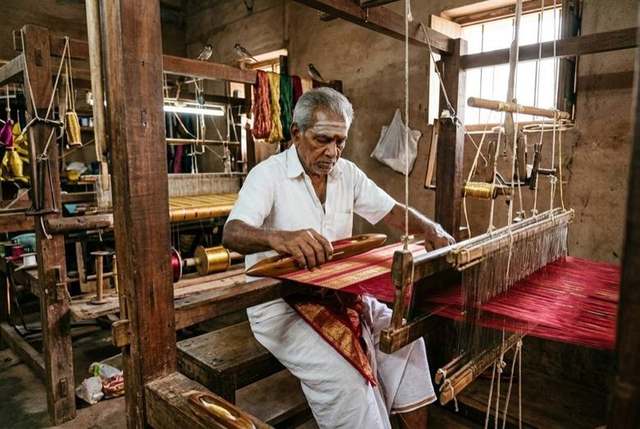
Comprehensive state-wise reference to Indian handloom weaving, resist-dyeing, and embroidery traditions — Banarasi Zari Brocade, Patan Patola double-ikat, Kantha embroidery, Phulkari, Bandhani, and Chanderi — with loom techniques and materials.
| Tradition | Region / Place | Family | Attested | Recognition | Instruments / Materials | Vitality |
|---|---|---|---|---|---|---|
![]() Kanjeevaram Silk Weaving காஞ்சிபுரம் பட்டு | Kanchipuram, Tamil Nadu, India | Textile | 16th century | National Inventory | Throw-shuttle pit loom, Adai harness system, Three-shuttle korvai, Three-ply mulberry silk | ■■■■ Thriving |

![]() Kathakali കഥകളി | Thrissur, Kerala, India | Dance | 17th century | National Inventory | Chenda, Maddalam, Chengila, Ilathalam | ■■■□ Stable |
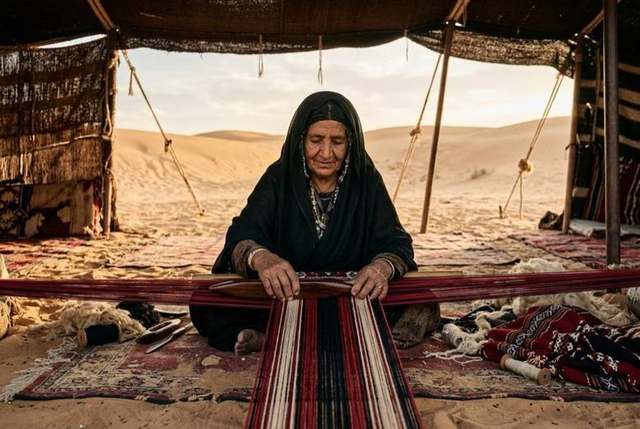
![]() Al Sadu Weaving السدو | Al-Ahsa & Badia, Saudi Arabia | Textile | Pre-Islamic | Representative List (2020) | Ground loom (nattu), Gazelle-horn beater (mansaf), Drop spindle (maghzal), Hand-spun sheep wool | ■■□□ Fading |

![]() Chhau dance छौ नृत्य | Seraikela & Purulia, India | Dance | 18th century | Representative List (2010) | Dhumsa, Dhol, Mahuri, Chadchadi | ■■■□ Stable |
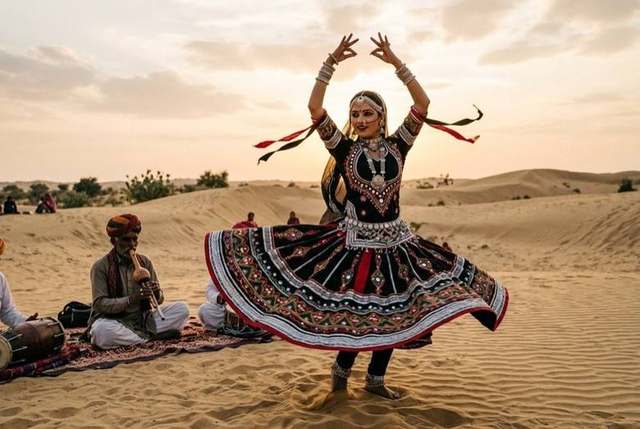
![]() Kalbelia कालबेलिया | Thar Desert, Rajasthan, India | Dance | Medieval | Representative List (2010) | Pungi (Been), Khanjari, Morchang, Dholak | ■■■□ Stable |
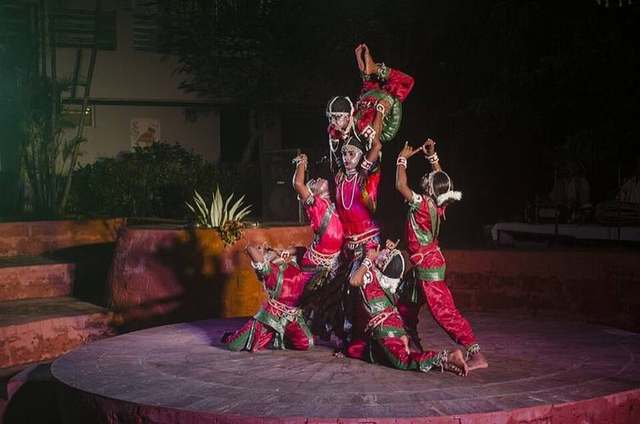
![]() Gotipua ଗୋଟିପୁଅ | Raghurajpur, Odisha, India | Dance | 16th century | National Inventory | Mardala, Gini cymbals, Bansuri flute, Kanhapa silk dhoti | ■■■□ Stable |
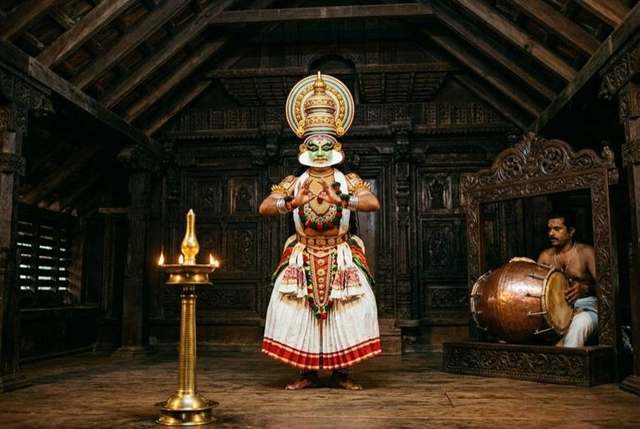
![]() Koodiyattam കൂടിയാട്ടം | Thrissur, Kerala, India | Craft | 10th century | Representative List (2008) | Mizhavu copper pot drum, Edakka, Kuzhithalam cymbals | ■■□□ Fading |
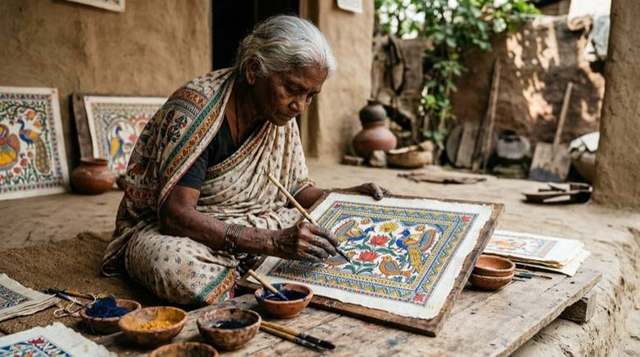
![]() Madhubani Painting मधुबनी चित्रकला | Jitwarpur, Madhubani, Bihar, India | Painting | Ancient / 1966 paper transition | National Inventory | Bamboo twigs & cotton nibs, Natural mineral & plant pigments, Handmade paper | ■■■■ Thriving |
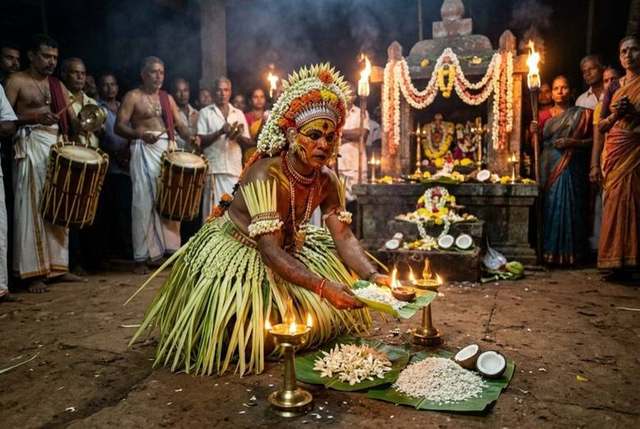
![]() Bhuta Kola ಭೂತ ಕೋಲ | Tulu Nadu, Coastal Karnataka, India | Food | Medieval | National Inventory | Tempe drum, Nadaswaram, Gaggara bronze anklets, Tender coconut fronds (siri) | ■■■□ Stable |
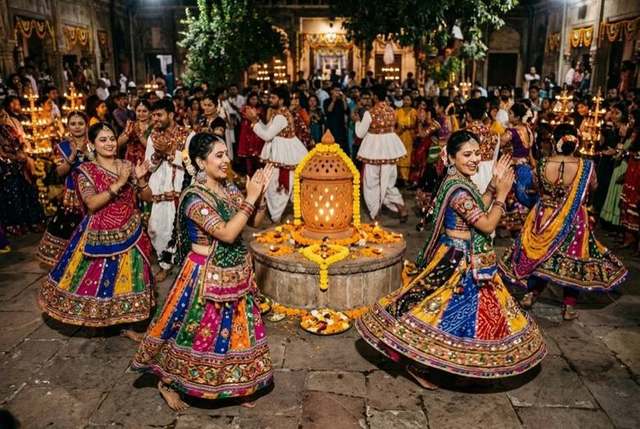
![]() Garba ગરબા | Ahmedabad & Vadodara, Gujarat, India | Dance | Medieval | Representative List (2023) | Dhol, Dholak, Shehnai, Manjira cymbals | ■■■■ Thriving |
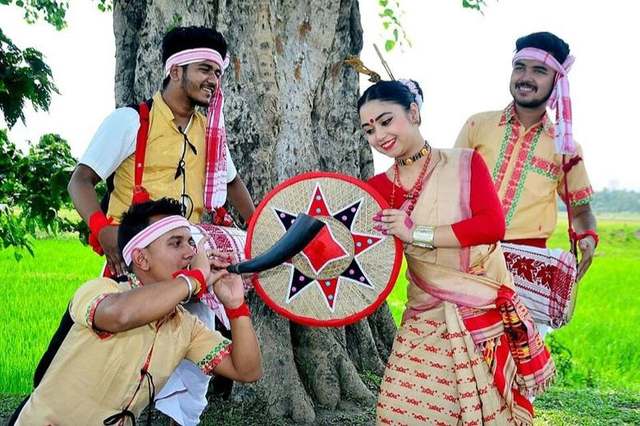
![]() Bihu dance বিহু নাচ | Brahmaputra Valley, Assam, India | Dance | 17th century | National Inventory | Dhol, Pepa buffalo-horn pipe, Gagana bamboo harp, Toka clapper | ■■■■ Thriving |
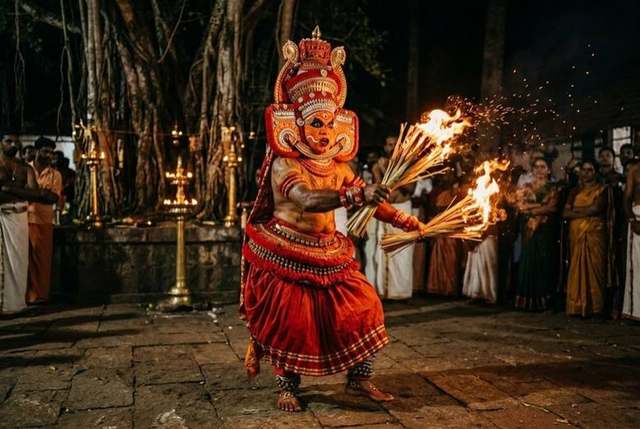
![]() Theyyam തെയ്യം | Kannur & Kasaragod, North Malabar, India | Dance | Ancient / Pre-Brahmanical | National Inventory | Chenda, Veekkan chenda, Ilathalam, Kurumkuzhal | ■■■□ Stable |
Handloom silk-weaving tradition of Kanchipuram combining mulberry silk from Karnataka with silver-gilt zari thread from Surat using the three-shuttle korvai technique.
Classical dance-drama of Kerala told entirely through mudra hand-gestures, facial expression, and percussion, without a single word spoken by the actor.
Bedouin warp-faced plain weave woven on ground looms from hand-spun camel and sheep wool in desert-inspired geometric bands.
Martial and folk dance of eastern India performed during the spring Chaitra Parva festival in three regional schools: Seraikela, Mayurbhanj, and Purulia.
Whirling desert dance and improvised folk songs of the nomadic Kalbelia community of Rajasthan, accompanied by the pungi gourd reed pipe and khanjari.
Acrobatic temple dance of Odisha performed by young boys dressed as Radha and Krishna, and the direct historical precursor of classical Odissi.
Two-thousand-year-old Sanskrit temple drama of Kerala performed inside Koothambalam theatre halls by Chakyar actors and Nangiar actresses.
Mithila ritual wall and paper painting tradition practised across northern Bihar and the Nepal Terai using bamboo twigs and mineral pigments.
All-night Tulu spirit-worship ritual and communal harvest offering of coastal Karnataka in which the medium wears a palm-leaf ani halo and recites paddana epics.
Nine-night Navaratri circle dance of Gujarat performed counterclockwise around a perforated clay garbi lamp and image of the Mother Goddess.
Vernal Rongali Bihu harvest dance of Assam performed to the buffalo-horn pepa pipe, bamboo gagana jaw harp, and two-headed dhol.
Sacred ritual dance and living deity embodiment of North Malabar in which the performer wears towering bamboo-and-cloth mudi headgear inside kavu shrine groves.
This guide documents 12 living traditions, including Kanjeevaram Silk Weaving (Kanchipuram, Tamil Nadu), Kathakali (Thrissur, Kerala), Al Sadu Weaving (Al-Ahsa & Badia), Chhau dance (Seraikela & Purulia), Kalbelia (Thar Desert, Rajasthan), Gotipua (Raghurajpur, Odisha). Every entry includes its place of origin, cultural family, vitality assessment, and cited sources.
Each tradition is classified under one of the seven cultural families (Dance, Music, Theatre, Painting, Craft, Textile, or Oral Tradition) and verified against UNESCO registers, national academy inventories, and ethnographic monographs under CC BY-SA 4.0.
Patan Patola (Gujarat) is a double-ikat silk weave in which both warp and weft threads are resist-dyed with mathematical precision before weaving. Banarasi brocade (Varanasi, Uttar Pradesh) uses supplementary gold and silver zari weft threads (kadwa and fekwa techniques) on pit looms. Domestic needlework traditions include Bengal's Kantha (running stitch on recycled saris) and Punjab's Phulkari and Bagh (darn stitch worked from the reverse in untwisted pat silk).
A free public archive of the world’s living and endangered cultural traditions — documented with primary sources, geographic coordinates, and open-licensed photography. Two rooms, one wall. The door is open.
folkroom — Archive of Living Traditions · Text CC BY-SA 4.0 · Images credited & licensed individually
Open commons: Wikimedia Commons · UNESCO ICH · Openverse · Flickr CC · Wikidata · No trackers · No ads