Opening room…
Skip to content
Head-to-Head Archival Dossier · Dance
Bhavai dance vs Yakshagana All-Night Coastal Dance-Drama: Side-by-Side Archival Comparison
Comparing two dance traditions of India — Bhavai dance (Udaipur & Jodhpur, Rajasthan) and Yakshagana All-Night Coastal Dance-Drama (Udupi, Dakshina Kannada, Uttara Kannada & Kasaragod) — across origin, technique, instruments, materials, and UNESCO heritage status.
12-Point Archival Comparison Table: Bhavai dance vs Yakshagana All-Night Coastal Dance-Drama
Study & Syllabus Export Tools · CC BY-SA 4.0
| Dimension | 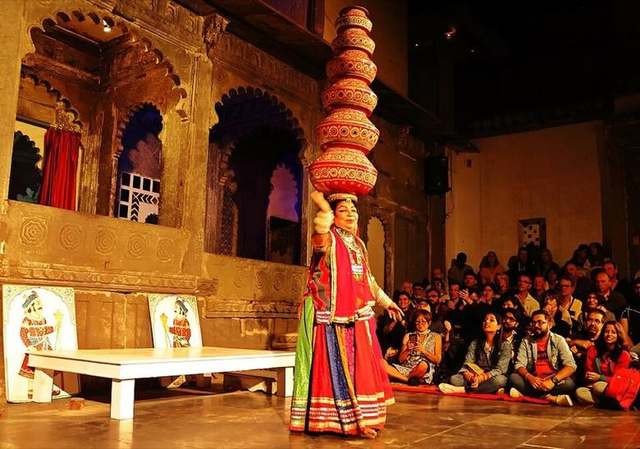 Bhavai dance | 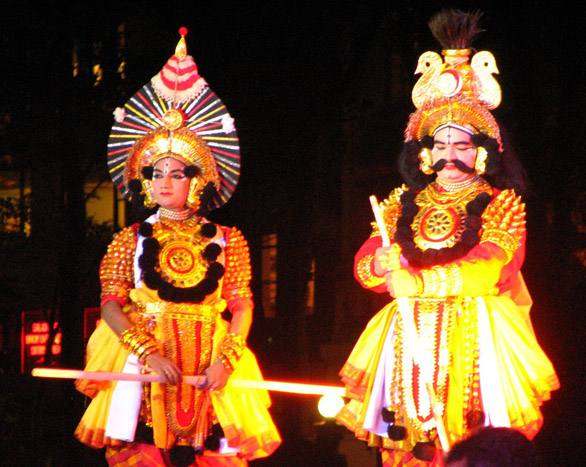 Yakshagana All-Night Coastal Dance-Drama |
|---|---|---|
| Tradition Name | Bhavai dance | Yakshagana All-Night Coastal Dance-Drama |
| Native Script / Endonym | भवाई नृत्य | ಯಕ್ಷಗಾನ |
| Cultural Family | Dance | Dance |
| Primary Geography & Origin | Udaipur & Jodhpur, Rajasthan, India | Udupi, Dakshina Kannada, Uttara Kannada & Kasaragod, India |
| World Region | Asia | Asia |
| First Attested / Era | 14th century | 16th century |
| UNESCO & Inventory Status | National Inventory | National Inventory |
| Vitality Assessment | ■■■□ Stable | ■■■■ Thriving |
| Instruments & Accompaniment | Sarangi, Dholak, Manjira, Harmonium | Chande, Maddale, Harmonium / Sruti, Chakrathala cymbals |
| Materials & Medium | Spun brass kalash pitchers, Painted terracotta matka pots | Light ponki wood & gilt foil crowns, Roving cotton mundasu, Natural mineral facial paint |
| Practitioner Lineages | Bhavai Performers of Udaipur, Chittorgarh & Jodhpur | Saligrama, Dharmasthala, Kateel & Keremane Yakshagana Melas |
| Cited Archival Sources | 7 verified sources | 10 verified sources |
Key Differences Between Bhavai dance and Yakshagana All-Night Coastal Dance-Drama
- Geography & Origin: Bhavai dance is rooted in Udaipur & Jodhpur, Rajasthan, India (attested 14th century), whereas Yakshagana All-Night Coastal Dance-Drama originates in Udupi, Dakshina Kannada, Uttara Kannada & Kasaragod, India (attested 16th century).
- Classification & Form: Bhavai dance belongs to the Dance family (Rajasthani equilibrium dance in which women balance seven to eleven brass or earthen pitchers on their heads while pirouetting on the rim of a brass plate.), while Yakshagana All-Night Coastal Dance-Drama is documented under Dance (All-night open-air dance-drama of coastal Karnataka and northern Kerala combining Bhagavata raga singing, chande-maddale percussion, towering mundasu headgear, and extempore spoken dialogue.).
- Instruments & Materials: Bhavai dance relies on Sarangi, Dholak, Manjira, Harmonium, Spun brass kalash pitchers, Painted terracotta matka pots; by contrast, Yakshagana All-Night Coastal Dance-Drama uses Chande, Maddale, Harmonium / Sruti, Chakrathala cymbals, Light ponki wood & gilt foil crowns, Roving cotton mundasu, Natural mineral facial paint.
- Heritage Recognition & Vitality: Bhavai dance is assessed as STABLE (National Inventory), while Yakshagana All-Night Coastal Dance-Drama is assessed as THRIVING (National Inventory).
Shared Cultural & Historical Parallels
- Both Bhavai dance and Yakshagana All-Night Coastal Dance-Drama belong to the Dance domain and transmit repertoire across generations through master-disciple lineage rather than commercial mass production.
- Both traditions are living pillars of India's intangible cultural heritage and appear frequently in cultural history curricula, museum collections, and safeguarding inventories.
Frequently Asked Questions
What is the main difference between Bhavai dance and Yakshagana All-Night Coastal Dance-Drama?
Bhavai dance is a dance tradition from Udaipur & Jodhpur, Rajasthan, India (Rajasthani equilibrium dance in which women balance seven to eleven brass or earthen pitchers on their heads while pirouetting on the rim of a brass plate.), whereas Yakshagana All-Night Coastal Dance-Drama is a dance tradition from Udupi, Dakshina Kannada, Uttara Kannada & Kasaragod, India (All-night open-air dance-drama of coastal Karnataka and northern Kerala combining Bhagavata raga singing, chande-maddale percussion, towering mundasu headgear, and extempore spoken dialogue.).
Where did Bhavai dance and Yakshagana All-Night Coastal Dance-Drama originate?
Bhavai dance originated in Udaipur & Jodhpur, Rajasthan, India (14th century). Yakshagana All-Night Coastal Dance-Drama originated in Udupi, Dakshina Kannada, Uttara Kannada & Kasaragod, India (16th century).
What instruments or materials are used in Bhavai dance vs Yakshagana All-Night Coastal Dance-Drama?
Bhavai dance uses Sarangi, Dholak, Manjira, Harmonium, Spun brass kalash pitchers, Painted terracotta matka pots. Yakshagana All-Night Coastal Dance-Drama uses Chande, Maddale, Harmonium / Sruti, Chakrathala cymbals, Light ponki wood & gilt foil crowns, Roving cotton mundasu, Natural mineral facial paint.
Are Bhavai dance and Yakshagana All-Night Coastal Dance-Drama recognized by UNESCO?
Bhavai dance heritage status: National Inventory. Yakshagana All-Night Coastal Dance-Drama heritage status: National Inventory.