Opening room…
Head-to-Head Archival Dossier · Living Tradition × Dance
Cheng Style Baguazhang vs Danza de tijeras: Side-by-Side Archival Comparison
Side-by-side comparison of Cheng Style Baguazhang (People's Republic of China, People's Republic of China) and Danza de tijeras (Ayacucho & Huancavelica, Peru) across cultural family, chronology, materials, instruments, and living vitality.
12-Point Archival Comparison Table: Cheng Style Baguazhang vs Danza de tijeras
Study & Syllabus Export Tools · CC BY-SA 4.0
| Dimension | 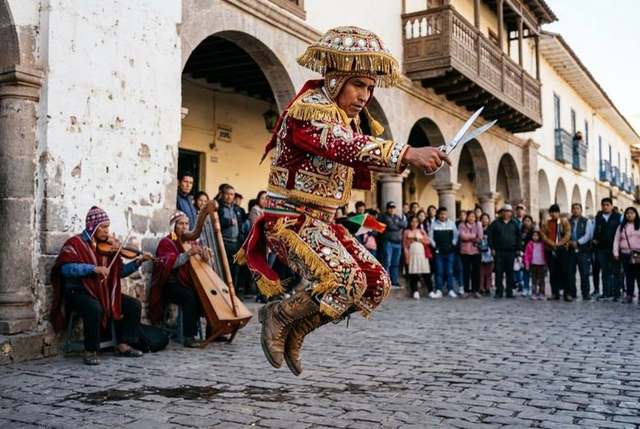 Danza de tijeras | |
|---|---|---|
| Tradition Name | Cheng Style Baguazhang | Danza de tijeras |
| Native Script / Endonym | Cheng Style Baguazhang |
Key Differences Between Cheng Style Baguazhang and Danza de tijeras
- Geography & Origin: Cheng Style Baguazhang is rooted in People's Republic of China, People's Republic of China (attested Historical oral & textual attestation), whereas Danza de tijeras originates in Ayacucho & Huancavelica, Peru (attested 16th century).
- Classification & Form: Cheng Style Baguazhang belongs to the Living Tradition family (Cheng Style Baguazhang is the style of Baguazhang descended from Cheng Tinghua, the fourth disciple of Baguazhang's founder, Dong Haichuan (Yin Fu was the first, followed by Ma Weiqi and Shi Jidong). Cheng Tinghua was from Shen County; he l…), while Danza de tijeras is documented under Dance (Quechua ritual competition dance of the southern Peruvian Andes performed with polished iron blades clashed in the dancer's right hand to violin and harp.).
- Instruments & Materials: Cheng Style Baguazhang is transmitted through regional performance and craft media; by contrast, Danza de tijeras uses Iron scissor blades, Andean harp, Violin, Tempered steel blades, Metallic-thread embroidered velvet.
- Heritage Recognition & Vitality: Cheng Style Baguazhang is assessed as UNKNOWN (Documented in public ethnographic & archival sources), while Danza de tijeras is assessed as STABLE (Representative List (2010)).
Shared Cultural & Historical Parallels
- Although Cheng Style Baguazhang (Living Tradition) and Danza de tijeras (Dance) use different artistic media, both encode community cosmology, seasonal calendars, and regional identity.
- Across People's Republic of China and Peru, both traditions demonstrate how local communities safeguard ancestral craft and performance knowledge through guild, temple, or village stewardship.
Frequently Asked Questions
What is the main difference between Cheng Style Baguazhang and Danza de tijeras?
Cheng Style Baguazhang is a living tradition tradition from People's Republic of China, People's Republic of China (Cheng Style Baguazhang is the style of Baguazhang descended from Cheng Tinghua, the fourth disciple of Baguazhang's founder, Dong Haichuan (Yin Fu was the first, followed by Ma Weiqi and Shi Jidong). Cheng Tinghua was from Shen County; he l…), whereas Danza de tijeras is a dance tradition from Ayacucho & Huancavelica, Peru (Quechua ritual competition dance of the southern Peruvian Andes performed with polished iron blades clashed in the dancer's right hand to violin and harp.).
Where did Cheng Style Baguazhang and Danza de tijeras originate?
Cheng Style Baguazhang originated in People's Republic of China, People's Republic of China (Historical oral & textual attestation). Danza de tijeras originated in Ayacucho & Huancavelica, Peru (16th century).
What instruments or materials are used in Cheng Style Baguazhang vs Danza de tijeras?
Cheng Style Baguazhang uses traditional regional instruments and media. Danza de tijeras uses Iron scissor blades, Andean harp, Violin, Tempered steel blades, Metallic-thread embroidered velvet.
Are Cheng Style Baguazhang and Danza de tijeras recognized by UNESCO?
Cheng Style Baguazhang heritage status: Documented in public ethnographic & archival sources. Danza de tijeras heritage status: Representative List (2010).