Opening room…
Skip to content
Head-to-Head Archival Dossier · Dance
Chhau dance vs Theyyam: Side-by-Side Archival Comparison
Comparing two dance traditions of India — Chhau dance (Seraikela & Purulia) and Theyyam (Kannur & Kasaragod, North Malabar) — across origin, technique, instruments, materials, and UNESCO heritage status.
12-Point Archival Comparison Table: Chhau dance vs Theyyam
Study & Syllabus Export Tools · CC BY-SA 4.0
| Dimension |  Chhau dance | 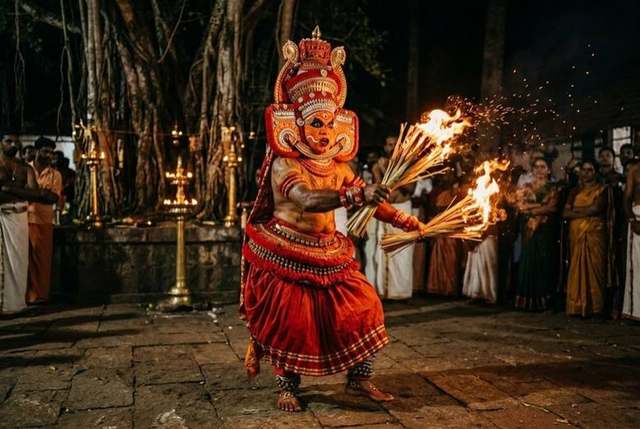 Theyyam |
|---|---|---|
| Tradition Name | Chhau dance | Theyyam |
| Native Script / Endonym | छौ नृत्य | തെയ്യം |
| Cultural Family | Dance | Dance |
| Primary Geography & Origin | Seraikela & Purulia, India | Kannur & Kasaragod, North Malabar, India |
| World Region | Asia | Asia |
| First Attested / Era | 18th century | Ancient / Pre-Brahmanical |
| UNESCO & Inventory Status | Representative List (2010) | National Inventory |
| Vitality Assessment | ■■■□ Stable | ■■■□ Stable |
| Instruments & Accompaniment | Dhumsa, Dhol, Mahuri, Chadchadi | Chenda, Veekkan chenda, Ilathalam, Kurumkuzhal |
| Materials & Medium | River clay, Cotton gauze, Shola pith ornaments | Areca palm spathe, Bamboo & red cloth mudi crown, Turmeric & rice paste |
| Practitioner Lineages | Seraikela Chhau Acharya Troupes · Chorida Mask Makers | Vannan, Malayan & Velan Hereditary Lineages of North Malabar |
| Cited Archival Sources | 11 verified sources | 10 verified sources |
Key Differences Between Chhau dance and Theyyam
- Geography & Origin: Chhau dance is rooted in Seraikela & Purulia, India (attested 18th century), whereas Theyyam originates in Kannur & Kasaragod, North Malabar, India (attested Ancient / Pre-Brahmanical).
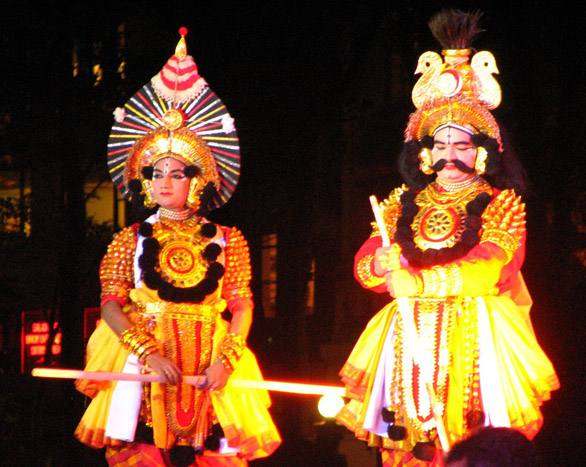
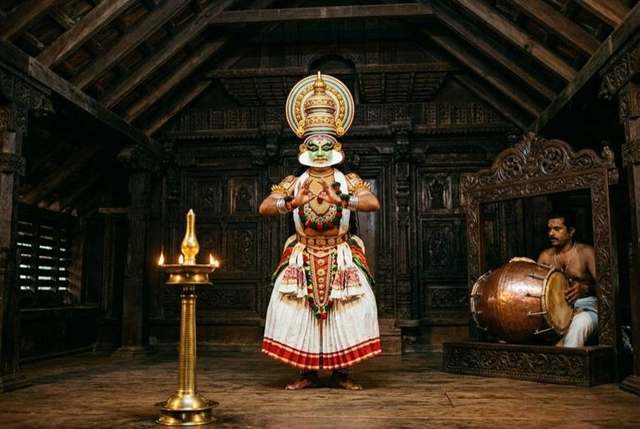
- Classification & Form: Chhau dance belongs to the Dance family (Martial and folk dance of eastern India performed during the spring Chaitra Parva festival in three regional schools: Seraikela, Mayurbhanj, and Purulia.), while Theyyam is documented under Dance (Sacred ritual dance and living deity embodiment of North Malabar in which the performer wears towering bamboo-and-cloth mudi headgear inside kavu shrine groves.).
- Instruments & Materials: Chhau dance relies on Dhumsa, Dhol, Mahuri, Chadchadi, River clay, Cotton gauze, Shola pith ornaments; by contrast, Theyyam uses Chenda, Veekkan chenda, Ilathalam, Kurumkuzhal, Areca palm spathe, Bamboo & red cloth mudi crown, Turmeric & rice paste.
- Heritage Recognition & Vitality: Chhau dance is assessed as STABLE (Representative List (2010)), while Theyyam is assessed as STABLE (National Inventory).
Shared Cultural & Historical Parallels
- Both Chhau dance and Theyyam belong to the Dance domain and transmit repertoire across generations through master-disciple lineage rather than commercial mass production.
- Both traditions are living pillars of India's intangible cultural heritage and appear frequently in cultural history curricula, museum collections, and safeguarding inventories.
Frequently Asked Questions
What is the main difference between Chhau dance and Theyyam?
Chhau dance is a dance tradition from Seraikela & Purulia, India (Martial and folk dance of eastern India performed during the spring Chaitra Parva festival in three regional schools: Seraikela, Mayurbhanj, and Purulia.), whereas Theyyam is a dance tradition from Kannur & Kasaragod, North Malabar, India (Sacred ritual dance and living deity embodiment of North Malabar in which the performer wears towering bamboo-and-cloth mudi headgear inside kavu shrine groves.).
Where did Chhau dance and Theyyam originate?
Chhau dance originated in Seraikela & Purulia, India (18th century). Theyyam originated in Kannur & Kasaragod, North Malabar, India (Ancient / Pre-Brahmanical).
What instruments or materials are used in Chhau dance vs Theyyam?
Chhau dance uses Dhumsa, Dhol, Mahuri, Chadchadi, River clay, Cotton gauze, Shola pith ornaments. Theyyam uses Chenda, Veekkan chenda, Ilathalam, Kurumkuzhal, Areca palm spathe, Bamboo & red cloth mudi crown, Turmeric & rice paste.
Are Chhau dance and Theyyam recognized by UNESCO?
Chhau dance heritage status: Representative List (2010). Theyyam heritage status: National Inventory.