Opening room…
Skip to content
Head-to-Head Archival Dossier · Dance
Drametse Ngacham vs Chhau dance: Side-by-Side Archival Comparison
Side-by-side comparison of Drametse Ngacham (Bhutan, Bhutan) and Chhau dance (Seraikela & Purulia, India) across cultural family, chronology, materials, instruments, and living vitality.
12-Point Archival Comparison Table: Drametse Ngacham vs Chhau dance
Study & Syllabus Export Tools · CC BY-SA 4.0
| Dimension | 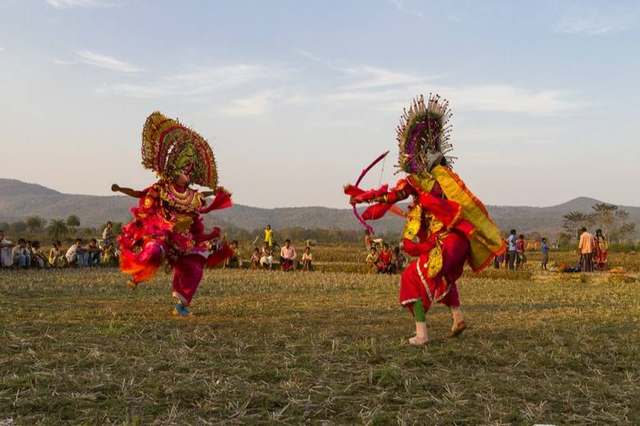 Chhau dance | |
|---|---|---|
| Tradition Name | Drametse Ngacham | Chhau dance |
| Native Script / Endonym | Drametse Ngacham | छौ नृत्य |
| Cultural Family |
Key Differences Between Drametse Ngacham and Chhau dance
- Geography & Origin: Drametse Ngacham is rooted in Bhutan, Bhutan (attested Historical oral & textual attestation), whereas Chhau dance originates in Seraikela & Purulia, India (attested 18th century).
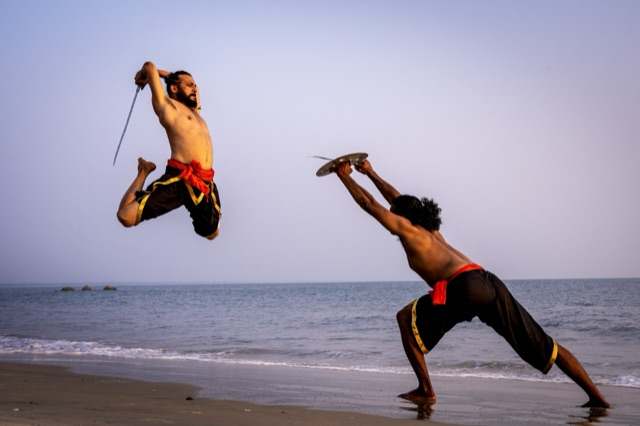
- Classification & Form: Drametse Ngacham belongs to the Dance family (The Drametse Ngacham (meaning "mask dance of the drums from Drametse", nga means "drum" and cham means "mask dance") is a sacred dance performed in the village of Drametse in eastern Bhutan.), while Chhau dance is documented under Dance (Martial and folk dance of eastern India performed during the spring Chaitra Parva festival in three regional schools: Seraikela, Mayurbhanj, and Purulia.).
- Instruments & Materials: Drametse Ngacham is transmitted through regional performance and craft media; by contrast, Chhau dance uses Dhumsa, Dhol, Mahuri, Chadchadi, River clay, Cotton gauze, Shola pith ornaments.
- Heritage Recognition & Vitality: Drametse Ngacham is assessed as STABLE (Documented in public ethnographic & archival sources), while Chhau dance is assessed as STABLE (Representative List (2010)).
Shared Cultural & Historical Parallels
- Both Drametse Ngacham and Chhau dance belong to the Dance domain and transmit repertoire across generations through master-disciple lineage rather than commercial mass production.
- Across Bhutan and India, both traditions demonstrate how local communities safeguard ancestral craft and performance knowledge through guild, temple, or village stewardship.
Frequently Asked Questions
What is the main difference between Drametse Ngacham and Chhau dance?
Drametse Ngacham is a dance tradition from Bhutan, Bhutan (The Drametse Ngacham (meaning "mask dance of the drums from Drametse", nga means "drum" and cham means "mask dance") is a sacred dance performed in the village of Drametse in eastern Bhutan.), whereas Chhau dance is a dance tradition from Seraikela & Purulia, India (Martial and folk dance of eastern India performed during the spring Chaitra Parva festival in three regional schools: Seraikela, Mayurbhanj, and Purulia.).
Where did Drametse Ngacham and Chhau dance originate?
Drametse Ngacham originated in Bhutan, Bhutan (Historical oral & textual attestation). Chhau dance originated in Seraikela & Purulia, India (18th century).
What instruments or materials are used in Drametse Ngacham vs Chhau dance?
Drametse Ngacham uses traditional regional instruments and media. Chhau dance uses Dhumsa, Dhol, Mahuri, Chadchadi, River clay, Cotton gauze, Shola pith ornaments.
Are Drametse Ngacham and Chhau dance recognized by UNESCO?
Drametse Ngacham heritage status: Documented in public ethnographic & archival sources. Chhau dance heritage status: Representative List (2010).