Opening room…
Skip to content
Head-to-Head Archival Dossier · Painting
Ebru Turkish Paper Marbling vs Madhubani Painting: Side-by-Side Archival Comparison
Side-by-side comparison of Ebru Turkish Paper Marbling (Üsküdar & Fatih, Istanbul, Turkey) and Madhubani Painting (Jitwarpur, Madhubani, Bihar, India) across cultural family, chronology, materials, instruments, and living vitality.
12-Point Archival Comparison Table: Ebru Turkish Paper Marbling vs Madhubani Painting
Study & Syllabus Export Tools · CC BY-SA 4.0
| Dimension | 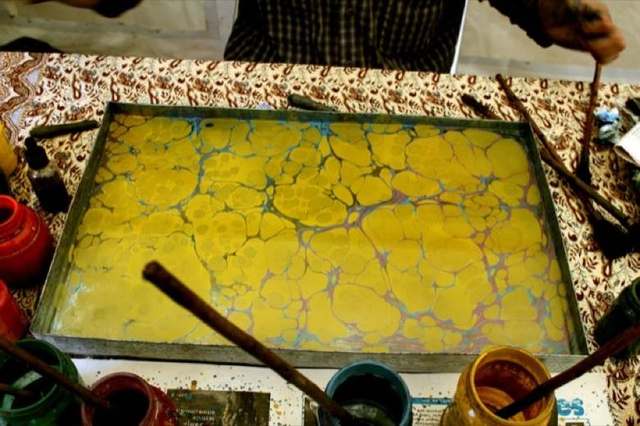 Ebru Turkish Paper Marbling | 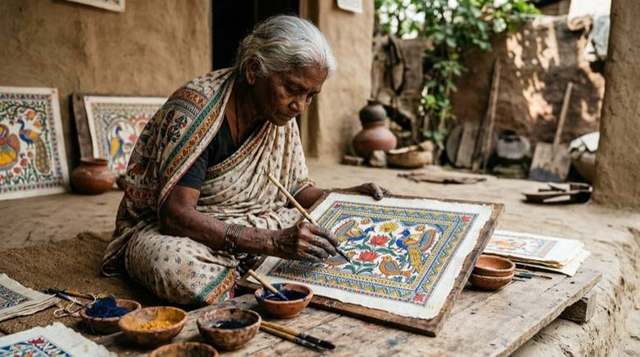 Madhubani Painting |
|---|---|---|
| Tradition Name | Ebru Turkish Paper Marbling | Madhubani Painting |
| Native Script / Endonym | Türk Ebru Sanatı | मधुबनी चित्रकला |
| Cultural Family | Painting | Painting |
| Primary Geography & Origin | Üsküdar & Fatih, Istanbul, Turkey | Jitwarpur, Madhubani, Bihar, India |
| World Region | Middle East | Asia |
| First Attested / Era | 15th century | Ancient / 1966 paper transition |
| UNESCO & Inventory Status | Representative List (2014) | National Inventory |
| Vitality Assessment | ■■■□ Stable | ■■■■ Thriving |
| Instruments & Accompaniment | Pine or zinc marbling trough (tekne), Rose-stem & horsehair brushes, Brass biz awls & combs | Traditional regional accompaniment |
| Materials & Medium | Kitre tragacanth gum, Ox-gall surfactant, Insoluble earth & mineral oxides | Bamboo twigs & cotton nibs, Natural mineral & plant pigments, Handmade paper |
| Practitioner Lineages | Ebruzen Master Ateliers of Istanbul & Konya | Sita Devi · Baua Devi · Women Artists of Jitwarpur & Ranti |
| Cited Archival Sources | 9 verified sources | 12 verified sources |
Key Differences Between Ebru Turkish Paper Marbling and Madhubani Painting
- Geography & Origin: Ebru Turkish Paper Marbling is rooted in Üsküdar & Fatih, Istanbul, Turkey (attested 15th century), whereas Madhubani Painting originates in Jitwarpur, Madhubani, Bihar, India (attested Ancient / 1966 paper transition).
- Classification & Form: Ebru Turkish Paper Marbling belongs to the Painting family (Ottoman book-arts tradition of floating insoluble mineral pigments mixed with ox-gall atop a trough of tragacanth-gum water and transferring the swirled floral patterns onto paper.), while Madhubani Painting is documented under Painting (Mithila ritual wall and paper painting tradition practised across northern Bihar and the Nepal Terai using bamboo twigs and mineral pigments.).
- Instruments & Materials: Ebru Turkish Paper Marbling relies on Pine or zinc marbling trough (tekne), Rose-stem & horsehair brushes, Brass biz awls & combs, Kitre tragacanth gum, Ox-gall surfactant, Insoluble earth & mineral oxides; by contrast, Madhubani Painting uses Bamboo twigs & cotton nibs, Natural mineral & plant pigments, Handmade paper.
- Heritage Recognition & Vitality: Ebru Turkish Paper Marbling is assessed as STABLE (Representative List (2014)), while Madhubani Painting is assessed as THRIVING (National Inventory).
Shared Cultural & Historical Parallels
- Both Ebru Turkish Paper Marbling and Madhubani Painting belong to the Painting domain and transmit repertoire across generations through master-disciple lineage rather than commercial mass production.
- Across Turkey and India, both traditions demonstrate how local communities safeguard ancestral craft and performance knowledge through guild, temple, or village stewardship.
Frequently Asked Questions
What is the main difference between Ebru Turkish Paper Marbling and Madhubani Painting?
Ebru Turkish Paper Marbling is a painting tradition from Üsküdar & Fatih, Istanbul, Turkey (Ottoman book-arts tradition of floating insoluble mineral pigments mixed with ox-gall atop a trough of tragacanth-gum water and transferring the swirled floral patterns onto paper.), whereas Madhubani Painting is a painting tradition from Jitwarpur, Madhubani, Bihar, India (Mithila ritual wall and paper painting tradition practised across northern Bihar and the Nepal Terai using bamboo twigs and mineral pigments.).
Where did Ebru Turkish Paper Marbling and Madhubani Painting originate?
Ebru Turkish Paper Marbling originated in Üsküdar & Fatih, Istanbul, Turkey (15th century). Madhubani Painting originated in Jitwarpur, Madhubani, Bihar, India (Ancient / 1966 paper transition).
What instruments or materials are used in Ebru Turkish Paper Marbling vs Madhubani Painting?
Ebru Turkish Paper Marbling uses Pine or zinc marbling trough (tekne), Rose-stem & horsehair brushes, Brass biz awls & combs, Kitre tragacanth gum, Ox-gall surfactant, Insoluble earth & mineral oxides. Madhubani Painting uses Bamboo twigs & cotton nibs, Natural mineral & plant pigments, Handmade paper.
Are Ebru Turkish Paper Marbling and Madhubani Painting recognized by UNESCO?
Ebru Turkish Paper Marbling heritage status: Representative List (2014). Madhubani Painting heritage status: National Inventory.