Opening room…
Skip to content
Head-to-Head Archival Dossier · Music × Dance
Fado Urban Popular Song vs Flamenco: Side-by-Side Archival Comparison
Side-by-side comparison of Fado Urban Popular Song (Alfama, Mouraria & Coimbra, Portugal) and Flamenco (Seville, Jerez & Cádiz, Spain) across cultural family, chronology, materials, instruments, and living vitality.
12-Point Archival Comparison Table: Fado Urban Popular Song vs Flamenco
Study & Syllabus Export Tools · CC BY-SA 4.0
| Dimension |  Fado Urban Popular Song | 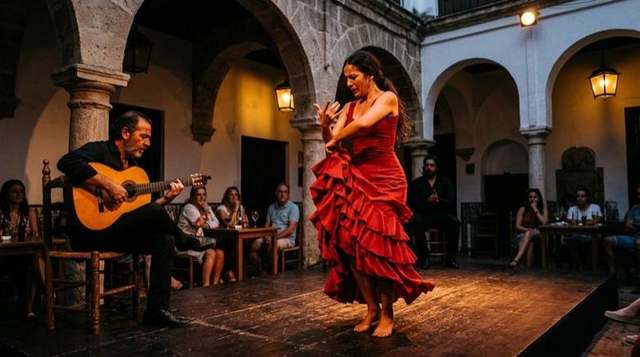 Flamenco |
|---|---|---|
| Tradition Name | Fado Urban Popular Song | Flamenco |
| Native Script / Endonym | Fado | Cante, Baile y Toque |
| Cultural Family | Music | Dance |
| Primary Geography & Origin | Alfama, Mouraria & Coimbra, Portugal | Seville, Jerez & Cádiz, Spain |
| World Region | Europe | Europe |
| First Attested / Era | 19th century (1820s) | 18th century |
| UNESCO & Inventory Status | Representative List (2011) | Representative List (2010) |
| Vitality Assessment | ■■■■ Thriving | ■■■■ Thriving |
| Instruments & Accompaniment | Guitarra portuguesa (12-string lute), Viola de fado (classical guitar), Bajo acústico | Flamenco guitar, Cajón, Castañuelas, Palmas |
| Materials & Medium | Spruce & rosewood soundboard, Black woollen xale (shawl) | Regional performance / craft media |
| Practitioner Lineages | Casas de Fado of Alfama, Mouraria & Bairro Alto | Peñas Flamencas of Andalusia |
| Cited Archival Sources | 11 verified sources | 16 verified sources |
Key Differences Between Fado Urban Popular Song and Flamenco
- Geography & Origin: Fado Urban Popular Song is rooted in Alfama, Mouraria & Coimbra, Portugal (attested 19th century (1820s)), whereas Flamenco originates in Seville, Jerez & Cádiz, Spain (attested 18th century).
- Classification & Form: Fado Urban Popular Song belongs to the Music family (Lisbon and Coimbra urban sung poetry expressing saudade longing through a solo voice accompanied by the twelve-string pear-shaped guitarra portuguesa and classical viola de fado.), while Flamenco is documented under Dance (Andalusian triad of cante song, baile dance, and toque guitar rooted in Gitano, Moorish, Sephardic, and Castilian traditions.).
- Instruments & Materials: Fado Urban Popular Song relies on Guitarra portuguesa (12-string lute), Viola de fado (classical guitar), Bajo acústico, Spruce & rosewood soundboard, Black woollen xale (shawl); by contrast, Flamenco uses Flamenco guitar, Cajón, Castañuelas, Palmas.
- Heritage Recognition & Vitality: Fado Urban Popular Song is assessed as THRIVING (Representative List (2011)), while Flamenco is assessed as THRIVING (Representative List (2010)).
Shared Cultural & Historical Parallels
- Although Fado Urban Popular Song (Music) and Flamenco (Dance) use different artistic media, both encode community cosmology, seasonal calendars, and regional identity.
- Across Portugal and Spain, both traditions demonstrate how local communities safeguard ancestral craft and performance knowledge through guild, temple, or village stewardship.
Frequently Asked Questions
What is the main difference between Fado Urban Popular Song and Flamenco?
Fado Urban Popular Song is a music tradition from Alfama, Mouraria & Coimbra, Portugal (Lisbon and Coimbra urban sung poetry expressing saudade longing through a solo voice accompanied by the twelve-string pear-shaped guitarra portuguesa and classical viola de fado.), whereas Flamenco is a dance tradition from Seville, Jerez & Cádiz, Spain (Andalusian triad of cante song, baile dance, and toque guitar rooted in Gitano, Moorish, Sephardic, and Castilian traditions.).
Where did Fado Urban Popular Song and Flamenco originate?
Fado Urban Popular Song originated in Alfama, Mouraria & Coimbra, Portugal (19th century (1820s)). Flamenco originated in Seville, Jerez & Cádiz, Spain (18th century).
What instruments or materials are used in Fado Urban Popular Song vs Flamenco?
Fado Urban Popular Song uses Guitarra portuguesa (12-string lute), Viola de fado (classical guitar), Bajo acústico, Spruce & rosewood soundboard, Black woollen xale (shawl). Flamenco uses Flamenco guitar, Cajón, Castañuelas, Palmas.
Are Fado Urban Popular Song and Flamenco recognized by UNESCO?
Fado Urban Popular Song heritage status: Representative List (2011). Flamenco heritage status: Representative List (2010).