Opening room…
Skip to content
Head-to-Head Archival Dossier · Living Tradition × Dance
fire war vs Chhau dance: Side-by-Side Archival Comparison
Side-by-side comparison of fire war (Documented region, Global Archive) and Chhau dance (Seraikela & Purulia, India) across cultural family, chronology, materials, instruments, and living vitality.
12-Point Archival Comparison Table: fire war vs Chhau dance
Study & Syllabus Export Tools · CC BY-SA 4.0
| Dimension | 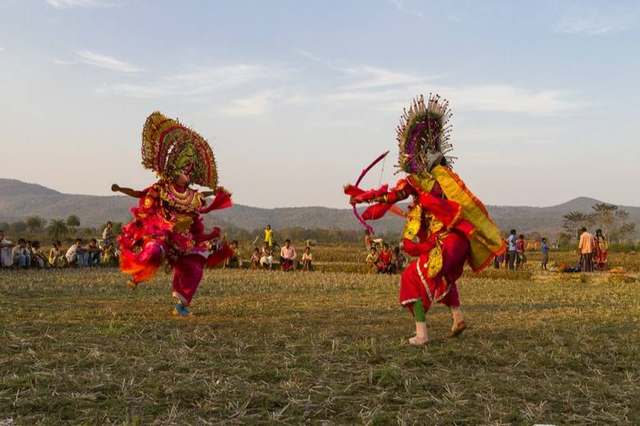 Chhau dance | |
|---|---|---|
| Tradition Name | fire war | Chhau dance |
| Native Script / Endonym | fire war | छौ नृत्य |
| Cultural Family | Living Tradition |
Key Differences Between fire war and Chhau dance
- Geography & Origin: fire war is rooted in Documented region, Global Archive (attested Historical oral & textual attestation), whereas Chhau dance originates in Seraikela & Purulia, India (attested 18th century).
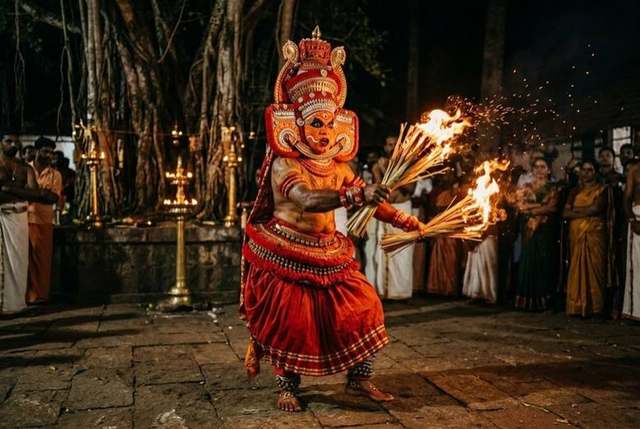
- Classification & Form: fire war belongs to the Living Tradition family (Perang api atau Perang bobok adalah sebuah ritual yang dilaksanakan oleh umat Hindu Lombok sebelum perayaan Nyepi. Tradisi ini berasal dari Lombok, Nusa Tenggara Barat.), while Chhau dance is documented under Dance (Martial and folk dance of eastern India performed during the spring Chaitra Parva festival in three regional schools: Seraikela, Mayurbhanj, and Purulia.).
- Instruments & Materials: fire war is transmitted through regional performance and craft media; by contrast, Chhau dance uses Dhumsa, Dhol, Mahuri, Chadchadi, River clay, Cotton gauze, Shola pith ornaments.
- Heritage Recognition & Vitality: fire war is assessed as UNKNOWN (Documented in public ethnographic & archival sources), while Chhau dance is assessed as STABLE (Representative List (2010)).
Shared Cultural & Historical Parallels
- Although fire war (Living Tradition) and Chhau dance (Dance) use different artistic media, both encode community cosmology, seasonal calendars, and regional identity.
- Across Global Archive and India, both traditions demonstrate how local communities safeguard ancestral craft and performance knowledge through guild, temple, or village stewardship.
Frequently Asked Questions
What is the main difference between fire war and Chhau dance?
fire war is a living tradition tradition from Documented region, Global Archive (Perang api atau Perang bobok adalah sebuah ritual yang dilaksanakan oleh umat Hindu Lombok sebelum perayaan Nyepi. Tradisi ini berasal dari Lombok, Nusa Tenggara Barat.), whereas Chhau dance is a dance tradition from Seraikela & Purulia, India (Martial and folk dance of eastern India performed during the spring Chaitra Parva festival in three regional schools: Seraikela, Mayurbhanj, and Purulia.).
Where did fire war and Chhau dance originate?
fire war originated in Documented region, Global Archive (Historical oral & textual attestation). Chhau dance originated in Seraikela & Purulia, India (18th century).
What instruments or materials are used in fire war vs Chhau dance?
fire war uses traditional regional instruments and media. Chhau dance uses Dhumsa, Dhol, Mahuri, Chadchadi, River clay, Cotton gauze, Shola pith ornaments.
Are fire war and Chhau dance recognized by UNESCO?
fire war heritage status: Documented in public ethnographic & archival sources. Chhau dance heritage status: Representative List (2010).