Opening room…
Skip to content
Head-to-Head Archival Dossier · Music
Javanese Gamelan vs Saman: Side-by-Side Archival Comparison
Comparing two music traditions of Indonesia — Javanese Gamelan (Surakarta & Yogyakarta) and Saman (Gayo Lues, Aceh) — across origin, technique, instruments, materials, and UNESCO heritage status.
12-Point Archival Comparison Table: Javanese Gamelan vs Saman
Study & Syllabus Export Tools · CC BY-SA 4.0
| Dimension | 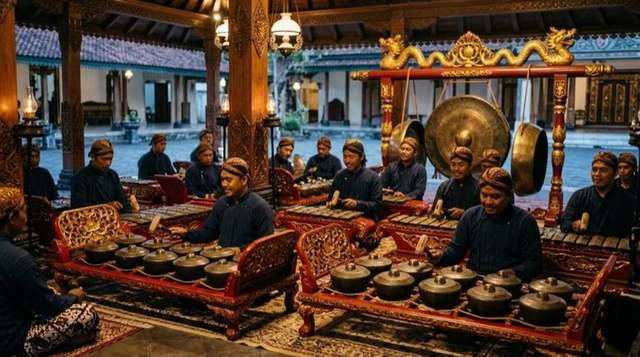 Javanese Gamelan | 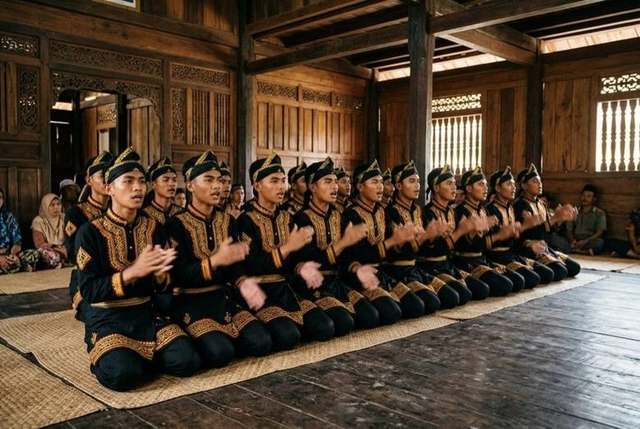 Saman |
|---|---|---|
| Tradition Name | Javanese Gamelan | Saman |
| Native Script / Endonym | ꦒꦩꦼꦭꦤ꧀ | Tari Saman |
| Cultural Family | Music | Music |
| Primary Geography & Origin | Surakarta & Yogyakarta, Indonesia | Gayo Lues, Aceh, Indonesia |
| World Region | Asia | Asia |
| First Attested / Era | 8th century | 14th century |
| UNESCO & Inventory Status | Representative List (2021) | Urgent Safeguarding (2011) |
| Vitality Assessment | ■■■■ Thriving | ■■□□ Fading |
| Instruments & Accompaniment | Gong Ageng, Bonang, Saron, Gender, Kendhang, Rebab | Unaccompanied voice, Chest & palm percussion |
| Materials & Medium | Hand-forged tin-copper bronze, Carved teakwood | Kerawang Gayo embroidered vest and headband |
| Practitioner Lineages | Karawitan Conservatories of Surakarta & Yogyakarta | Gayo Lues Community Ensembles |
| Cited Archival Sources | 12 verified sources | 8 verified sources |
Key Differences Between Javanese Gamelan and Saman
- Geography & Origin: Javanese Gamelan is rooted in Surakarta & Yogyakarta, Indonesia (attested 8th century), whereas Saman originates in Gayo Lues, Aceh, Indonesia (attested 14th century).
- Classification & Form: Javanese Gamelan belongs to the Music family (Hand-forged bronze percussion orchestra of gongs, metallophones, drums, flute, and bowed lute tuned to sléndro and pélog scales.), while Saman is documented under Music (Gayo highland polyrhythmic kneeling chant and body-percussion dance performed without musical instruments along a single tightly packed row.).
- Instruments & Materials: Javanese Gamelan relies on Gong Ageng, Bonang, Saron, Gender, Kendhang, Rebab, Hand-forged tin-copper bronze, Carved teakwood; by contrast, Saman uses Unaccompanied voice, Chest & palm percussion, Kerawang Gayo embroidered vest and headband.
- Heritage Recognition & Vitality: Javanese Gamelan is assessed as THRIVING (Representative List (2021)), while Saman is assessed as FADING (Urgent Safeguarding (2011)).
Shared Cultural & Historical Parallels
- Both Javanese Gamelan and Saman belong to the Music domain and transmit repertoire across generations through master-disciple lineage rather than commercial mass production.
- Both traditions are living pillars of Indonesia's intangible cultural heritage and appear frequently in cultural history curricula, museum collections, and safeguarding inventories.
Frequently Asked Questions
What is the main difference between Javanese Gamelan and Saman?
Javanese Gamelan is a music tradition from Surakarta & Yogyakarta, Indonesia (Hand-forged bronze percussion orchestra of gongs, metallophones, drums, flute, and bowed lute tuned to sléndro and pélog scales.), whereas Saman is a music tradition from Gayo Lues, Aceh, Indonesia (Gayo highland polyrhythmic kneeling chant and body-percussion dance performed without musical instruments along a single tightly packed row.).
Where did Javanese Gamelan and Saman originate?
Javanese Gamelan originated in Surakarta & Yogyakarta, Indonesia (8th century). Saman originated in Gayo Lues, Aceh, Indonesia (14th century).
What instruments or materials are used in Javanese Gamelan vs Saman?
Javanese Gamelan uses Gong Ageng, Bonang, Saron, Gender, Kendhang, Rebab, Hand-forged tin-copper bronze, Carved teakwood. Saman uses Unaccompanied voice, Chest & palm percussion, Kerawang Gayo embroidered vest and headband.
Are Javanese Gamelan and Saman recognized by UNESCO?
Javanese Gamelan heritage status: Representative List (2021). Saman heritage status: Urgent Safeguarding (2011).