Opening room…
Skip to content
Head-to-Head Archival Dossier · Music
Genre poissard vs Ca trù: Side-by-Side Archival Comparison
Side-by-side comparison of Genre poissard (Documented region, Global Archive) and Ca trù (Hanoi & Red River Delta, Vietnam) across cultural family, chronology, materials, instruments, and living vitality.
12-Point Archival Comparison Table: Genre poissard vs Ca trù
Study & Syllabus Export Tools · CC BY-SA 4.0
| Dimension | 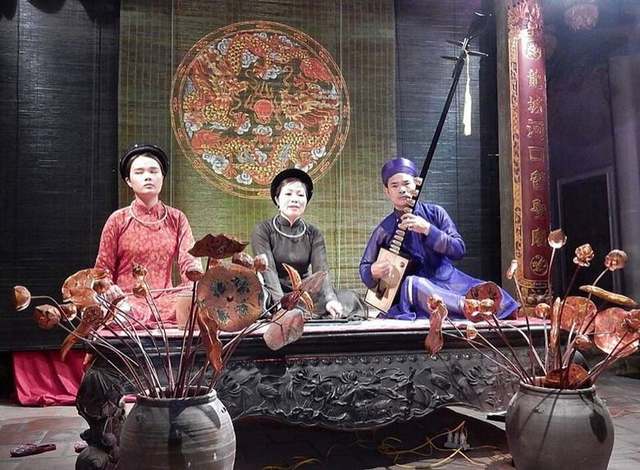 Ca trù | |
|---|---|---|
| Tradition Name | Genre poissard | Ca trù |
| Native Script / Endonym | Genre poissard | 歌籌 |
| Cultural Family |
Key Differences Between Genre poissard and Ca trù
- Geography & Origin: Genre poissard is rooted in Documented region, Global Archive (attested Historical oral & textual attestation), whereas Ca trù originates in Hanoi & Red River Delta, Vietnam (attested 15th century).
- Classification & Form: Genre poissard belongs to the Music family (Das Genre poissard (franz. etwa frecher, pöbelhafter Stil) ist ein der préciosité entgegengesetztes modernes Stilphänomen, das etwa zwischen 1730 und 1780 in mehreren Gattungen, insbesondere in Parodien, Vaudevilles, Liedern und Einaktern a…), while Ca trù is documented under Music (Vietnamese chamber music and sung poetry performed by a female đào nương vocalist striking wooden clappers alongside a three-stringed đàn đáy lute.).
- Instruments & Materials: Genre poissard is transmitted through regional performance and craft media; by contrast, Ca trù uses Phách bamboo clappers, Đàn đáy three-stringed lute, Trống chầu praise drum.
- Heritage Recognition & Vitality: Genre poissard is assessed as UNKNOWN (Documented in public ethnographic & archival sources), while Ca trù is assessed as CRITICAL (Urgent Safeguarding (2009)).
Shared Cultural & Historical Parallels
- Both Genre poissard and Ca trù belong to the Music domain and transmit repertoire across generations through master-disciple lineage rather than commercial mass production.
- Across Global Archive and Vietnam, both traditions demonstrate how local communities safeguard ancestral craft and performance knowledge through guild, temple, or village stewardship.
Frequently Asked Questions
What is the main difference between Genre poissard and Ca trù?
Genre poissard is a music tradition from Documented region, Global Archive (Das Genre poissard (franz. etwa frecher, pöbelhafter Stil) ist ein der préciosité entgegengesetztes modernes Stilphänomen, das etwa zwischen 1730 und 1780 in mehreren Gattungen, insbesondere in Parodien, Vaudevilles, Liedern und Einaktern a…), whereas Ca trù is a music tradition from Hanoi & Red River Delta, Vietnam (Vietnamese chamber music and sung poetry performed by a female đào nương vocalist striking wooden clappers alongside a three-stringed đàn đáy lute.).
Where did Genre poissard and Ca trù originate?
Genre poissard originated in Documented region, Global Archive (Historical oral & textual attestation). Ca trù originated in Hanoi & Red River Delta, Vietnam (15th century).
What instruments or materials are used in Genre poissard vs Ca trù?
Genre poissard uses traditional regional instruments and media. Ca trù uses Phách bamboo clappers, Đàn đáy three-stringed lute, Trống chầu praise drum.
Are Genre poissard and Ca trù recognized by UNESCO?
Genre poissard heritage status: Documented in public ethnographic & archival sources. Ca trù heritage status: Urgent Safeguarding (2009).