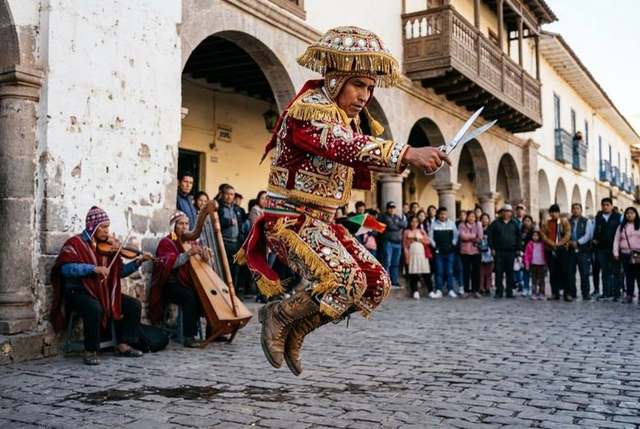
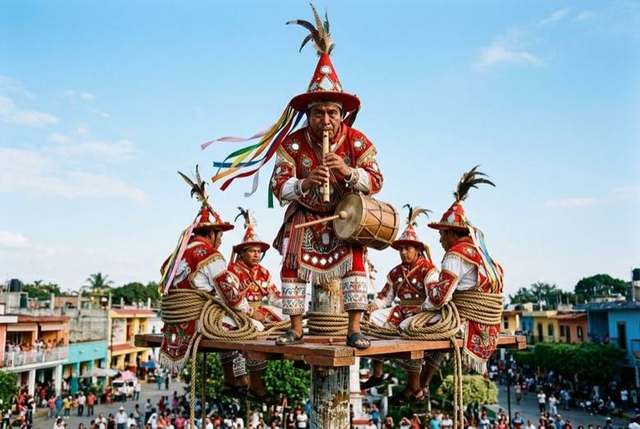
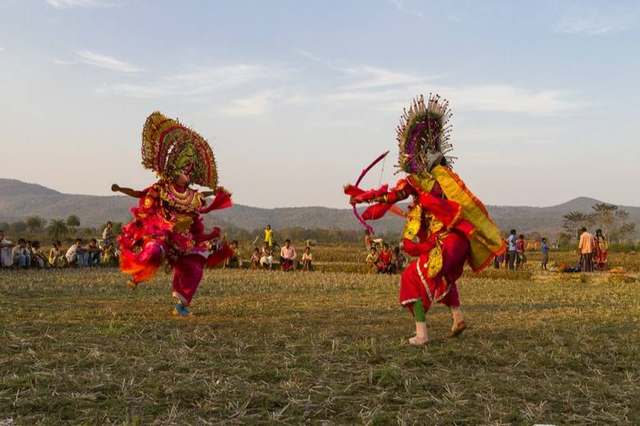
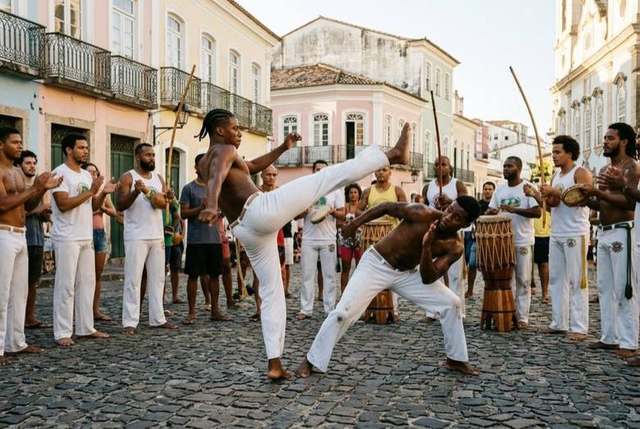
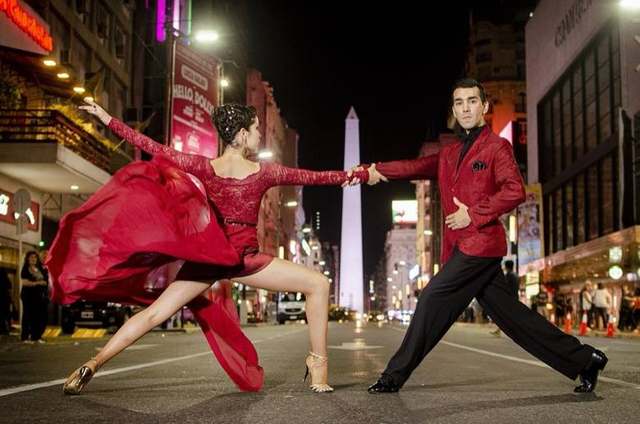
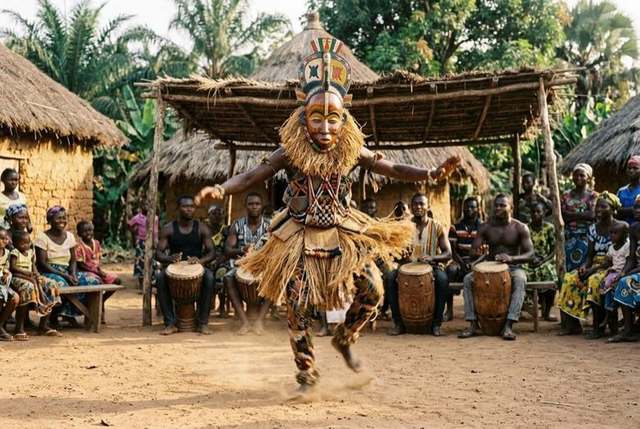
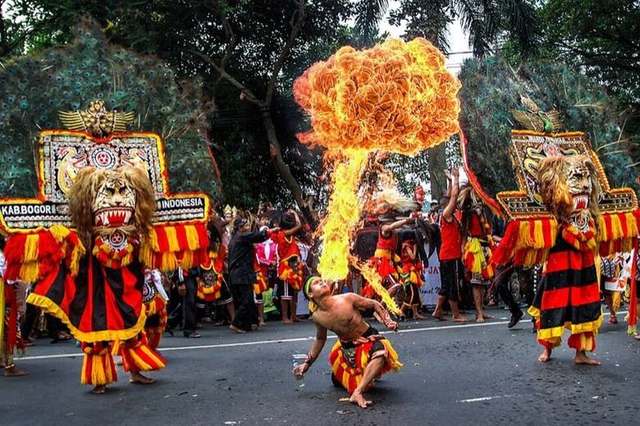
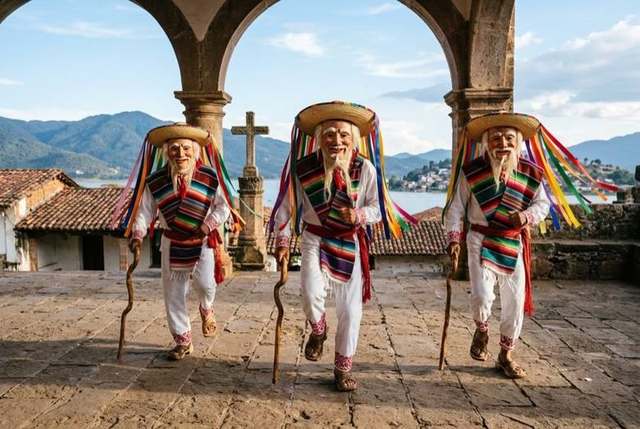
Side-by-side comparison of Historical European martial arts (Documented region, Global Archive) and Danza de tijeras (Ayacucho & Huancavelica, Peru) across cultural family, chronology, materials, instruments, and living vitality.
| Dimension | Danza de tijeras | |
|---|---|---|
| Tradition Name | Historical European martial arts | Danza de tijeras |
| Native Script / Endonym | Historical European martial arts | Supaypa wasin tusuq |
| Cultural Family | Living Tradition | Dance |
| Primary Geography & Origin | Documented region, Global Archive | Ayacucho & Huancavelica, Peru |
| World Region | Global | Americas |
| First Attested / Era | Historical oral & textual attestation | 16th century |
| UNESCO & Inventory Status | Documented in public ethnographic & archival sources | Representative List (2010) |
| Vitality Assessment | ▢▢▢▢ Not yet sourced | ■■■□ Stable |
| Instruments & Accompaniment | Traditional regional accompaniment | Iron scissor blades, Andean harp, Violin |
| Materials & Medium | Regional performance / craft media | Tempered steel blades, Metallic-thread embroidered velvet |
| Practitioner Lineages | Regional bearer community | Danzantes de Tijeras of Ayacucho & Huancavelica |
| Cited Archival Sources | 1 verified sources | 8 verified sources |
Historical European martial arts is a living tradition tradition from Documented region, Global Archive (Historical European martial arts (HEMA) are martial arts of European origin, particularly using arts formerly practised, but having since died out or evolved into very different forms. While there is limited surviving documentation of the m…), whereas Danza de tijeras is a dance tradition from Ayacucho & Huancavelica, Peru (Quechua ritual competition dance of the southern Peruvian Andes performed with polished iron blades clashed in the dancer's right hand to violin and harp.).
Historical European martial arts originated in Documented region, Global Archive (Historical oral & textual attestation). Danza de tijeras originated in Ayacucho & Huancavelica, Peru (16th century).
Historical European martial arts uses traditional regional instruments and media. Danza de tijeras uses Iron scissor blades, Andean harp, Violin, Tempered steel blades, Metallic-thread embroidered velvet.
Historical European martial arts heritage status: Documented in public ethnographic & archival sources. Danza de tijeras heritage status: Representative List (2010).
A free public archive of the world’s living and endangered cultural traditions — documented with primary sources, geographic coordinates, and open-licensed photography. Two rooms, one wall. The door is open.
folkroom — Archive of Living Traditions · Text CC BY-SA 4.0 · Images credited & licensed individually
Open commons: Wikimedia Commons · UNESCO ICH · Openverse · Flickr CC · Wikidata · No trackers · No ads