Opening room…
Skip to content
Head-to-Head Archival Dossier · Textile
Jacobean embroidery vs Al Sadu Weaving: Side-by-Side Archival Comparison
Side-by-side comparison of Jacobean embroidery (Documented region, Global Archive) and Al Sadu Weaving (Al-Ahsa & Badia, Saudi Arabia) across cultural family, chronology, materials, instruments, and living vitality.
12-Point Archival Comparison Table: Jacobean embroidery vs Al Sadu Weaving
Study & Syllabus Export Tools · CC BY-SA 4.0
| Dimension | 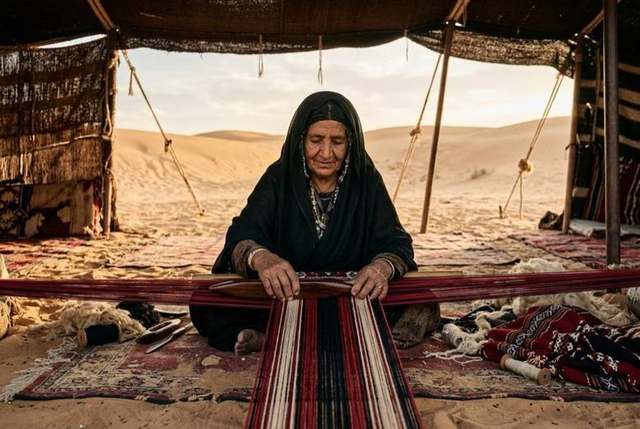 Al Sadu Weaving | |
|---|---|---|
| Tradition Name | Jacobean embroidery | Al Sadu Weaving |
| Native Script / Endonym | Jacobean embroidery | السدو |
Key Differences Between Jacobean embroidery and Al Sadu Weaving
- Geography & Origin: Jacobean embroidery is rooted in Documented region, Global Archive (attested Historical oral & textual attestation), whereas Al Sadu Weaving originates in Al-Ahsa & Badia, Saudi Arabia (attested Pre-Islamic).
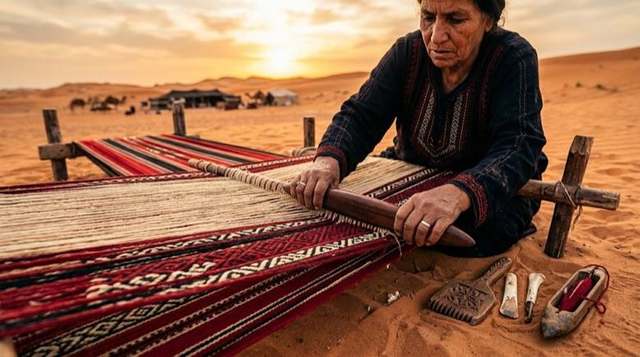
- Classification & Form: Jacobean embroidery belongs to the Textile family (Jacobean embroidery refers to embroidery styles that flourished in the reign of King James I of England in first quarter of the 17th century. The term is usually used today to describe a form of crewel embroidery used for furnishing charact…), while Al Sadu Weaving is documented under Textile (Bedouin warp-faced plain weave woven on ground looms from hand-spun camel and sheep wool in desert-inspired geometric bands.).
- Instruments & Materials: Jacobean embroidery is transmitted through regional performance and craft media; by contrast, Al Sadu Weaving uses Ground loom (nattu), Gazelle-horn beater (mansaf), Drop spindle (maghzal), Hand-spun sheep wool, Camel hair, Desert plant dyes.
- Heritage Recognition & Vitality: Jacobean embroidery is assessed as UNKNOWN (Documented in public ethnographic & archival sources), while Al Sadu Weaving is assessed as FADING (Representative List (2020)).
Shared Cultural & Historical Parallels
- Both Jacobean embroidery and Al Sadu Weaving belong to the Textile domain and transmit repertoire across generations through master-disciple lineage rather than commercial mass production.
- Across Global Archive and Saudi Arabia, both traditions demonstrate how local communities safeguard ancestral craft and performance knowledge through guild, temple, or village stewardship.
Frequently Asked Questions
What is the main difference between Jacobean embroidery and Al Sadu Weaving?
Jacobean embroidery is a textile tradition from Documented region, Global Archive (Jacobean embroidery refers to embroidery styles that flourished in the reign of King James I of England in first quarter of the 17th century. The term is usually used today to describe a form of crewel embroidery used for furnishing charact…), whereas Al Sadu Weaving is a textile tradition from Al-Ahsa & Badia, Saudi Arabia (Bedouin warp-faced plain weave woven on ground looms from hand-spun camel and sheep wool in desert-inspired geometric bands.).
Where did Jacobean embroidery and Al Sadu Weaving originate?
Jacobean embroidery originated in Documented region, Global Archive (Historical oral & textual attestation). Al Sadu Weaving originated in Al-Ahsa & Badia, Saudi Arabia (Pre-Islamic).
What instruments or materials are used in Jacobean embroidery vs Al Sadu Weaving?
Jacobean embroidery uses traditional regional instruments and media. Al Sadu Weaving uses Ground loom (nattu), Gazelle-horn beater (mansaf), Drop spindle (maghzal), Hand-spun sheep wool, Camel hair, Desert plant dyes.
Are Jacobean embroidery and Al Sadu Weaving recognized by UNESCO?
Jacobean embroidery heritage status: Documented in public ethnographic & archival sources. Al Sadu Weaving heritage status: Representative List (2020).