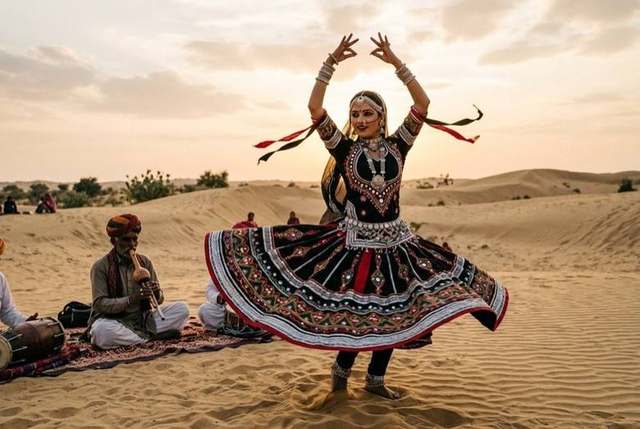
Opening room…
Skip to content
Head-to-Head Archival Dossier · Living Tradition × Dance
Kumauni Holi vs Chhau dance: Side-by-Side Archival Comparison
Side-by-side comparison of Kumauni Holi (Documented region, Global Archive) and Chhau dance (Seraikela & Purulia, India) across cultural family, chronology, materials, instruments, and living vitality.
12-Point Archival Comparison Table: Kumauni Holi vs Chhau dance
Study & Syllabus Export Tools · CC BY-SA 4.0
| Dimension | 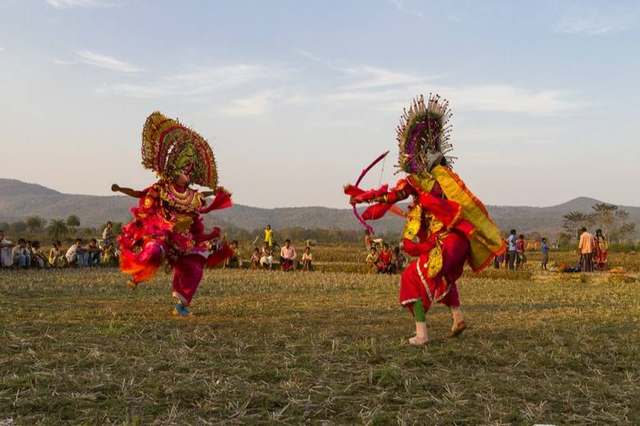 Chhau dance | |
|---|---|---|
| Tradition Name | Kumauni Holi | Chhau dance |
| Native Script / Endonym | Kumauni Holi | छौ नृत्य |
| Cultural Family |
Key Differences Between Kumauni Holi and Chhau dance
- Geography & Origin: Kumauni Holi is rooted in Documented region, Global Archive (attested Historical oral & textual attestation), whereas Chhau dance originates in Seraikela & Purulia, India (attested 18th century).
- Classification & Form: Kumauni Holi belongs to the Living Tradition family (Kumauni or Kumaoni Holi is the historical and cultural celebration of the Hindu festival of Holi in the region of Kumaon, India and Asia It is one of the most important festivals for the Kumauni people as it signifies not only the victory o…), while Chhau dance is documented under Dance (Martial and folk dance of eastern India performed during the spring Chaitra Parva festival in three regional schools: Seraikela, Mayurbhanj, and Purulia.).
- Instruments & Materials: Kumauni Holi is transmitted through regional performance and craft media; by contrast, Chhau dance uses Dhumsa, Dhol, Mahuri, Chadchadi, River clay, Cotton gauze, Shola pith ornaments.
- Heritage Recognition & Vitality: Kumauni Holi is assessed as UNKNOWN (Documented in public ethnographic & archival sources), while Chhau dance is assessed as STABLE (Representative List (2010)).
Shared Cultural & Historical Parallels
- Although Kumauni Holi (Living Tradition) and Chhau dance (Dance) use different artistic media, both encode community cosmology, seasonal calendars, and regional identity.
- Across Global Archive and India, both traditions demonstrate how local communities safeguard ancestral craft and performance knowledge through guild, temple, or village stewardship.
Frequently Asked Questions
What is the main difference between Kumauni Holi and Chhau dance?
Kumauni Holi is a living tradition tradition from Documented region, Global Archive (Kumauni or Kumaoni Holi is the historical and cultural celebration of the Hindu festival of Holi in the region of Kumaon, India and Asia It is one of the most important festivals for the Kumauni people as it signifies not only the victory o…), whereas Chhau dance is a dance tradition from Seraikela & Purulia, India (Martial and folk dance of eastern India performed during the spring Chaitra Parva festival in three regional schools: Seraikela, Mayurbhanj, and Purulia.).
Where did Kumauni Holi and Chhau dance originate?
Kumauni Holi originated in Documented region, Global Archive (Historical oral & textual attestation). Chhau dance originated in Seraikela & Purulia, India (18th century).
What instruments or materials are used in Kumauni Holi vs Chhau dance?
Kumauni Holi uses traditional regional instruments and media. Chhau dance uses Dhumsa, Dhol, Mahuri, Chadchadi, River clay, Cotton gauze, Shola pith ornaments.
Are Kumauni Holi and Chhau dance recognized by UNESCO?
Kumauni Holi heritage status: Documented in public ethnographic & archival sources. Chhau dance heritage status: Representative List (2010).