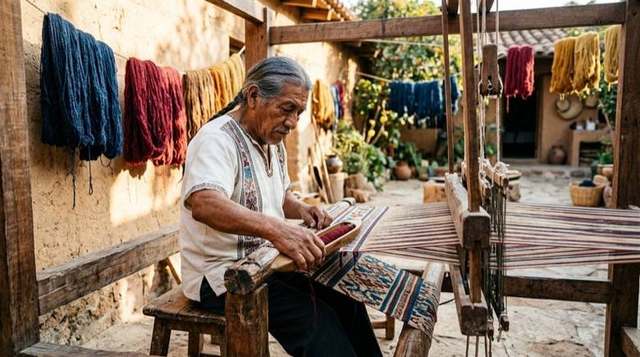
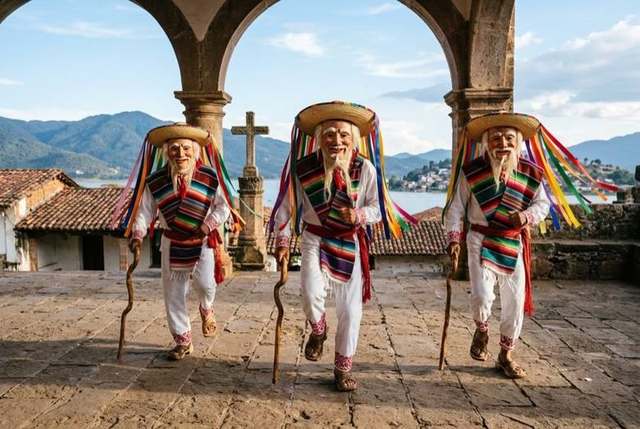
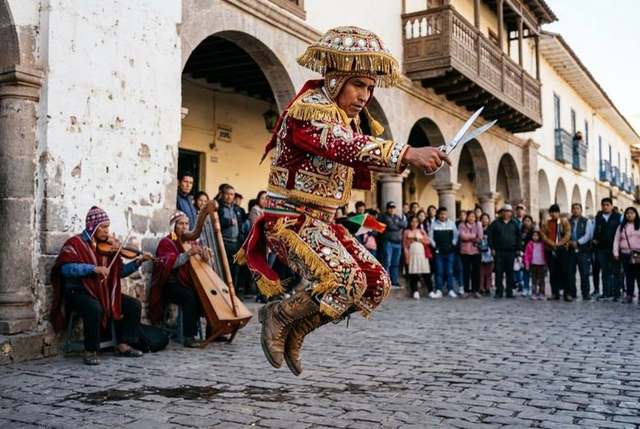
Side-by-side comparison of Kuyavia embroidery (Poland, Poland) and Zapotec Pedal-Loom Weaving (Teotitlán del Valle, Oaxaca, Mexico) across cultural family, chronology, materials, instruments, and living vitality.
| Dimension | Zapotec Pedal-Loom Weaving | |
|---|---|---|
| Tradition Name | Kuyavia embroidery | Zapotec Pedal-Loom Weaving |
| Native Script / Endonym | Haft kujawski | Biaa Xigie' |
| Cultural Family | Textile | Textile |
| Primary Geography & Origin | Poland, Poland | Teotitlán del Valle, Oaxaca, Mexico |
| World Region | Poland | Americas |
| First Attested / Era | Historical oral & textual attestation | 16th century |
| UNESCO & Inventory Status | Documented in public ethnographic & archival sources | National Inventory |
| Vitality Assessment | ▢▢▢▢ Not yet sourced | ▢▢▢▢ Not yet sourced |
| Instruments & Accompaniment | Traditional regional accompaniment | Spanish-introduced wooden treadle loom, Hand carding paddles |
| Materials & Medium | Regional performance / craft media | Churro sheep wool, Grana cochineal (Dactylopius coccus), Añil indigo |
| Practitioner Lineages | Poland bearer community | Master Weavers of Teotitlán del Valle & Santa Ana del Valle |
| Cited Archival Sources | 1 verified sources | 4 verified sources |
Kuyavia embroidery is a textile tradition from Poland, Poland (Haft kujawski – rodzaj haftu, wywodzącego się z Kujaw, którego główną cechą jest stosowanie krótkich ściegów, takich jak: sznureczek, ścieg atłaskowy wypukły, wałeczek, kładziony, dziergany, haft dziureczkowy. Przykładowe rodzaje ściegów: …), whereas Zapotec Pedal-Loom Weaving is a textile tradition from Teotitlán del Valle, Oaxaca, Mexico (Hand-carded wool rug and serape weaving of Oaxaca dyed with fermented añil indigo, wild marigold, and crushed cochineal scale insects.).
Kuyavia embroidery originated in Poland, Poland (Historical oral & textual attestation). Zapotec Pedal-Loom Weaving originated in Teotitlán del Valle, Oaxaca, Mexico (16th century).
Kuyavia embroidery uses traditional regional instruments and media. Zapotec Pedal-Loom Weaving uses Spanish-introduced wooden treadle loom, Hand carding paddles, Churro sheep wool, Grana cochineal (Dactylopius coccus), Añil indigo.
Kuyavia embroidery heritage status: Documented in public ethnographic & archival sources. Zapotec Pedal-Loom Weaving heritage status: National Inventory.
A free public archive of the world’s living and endangered cultural traditions — documented with primary sources, geographic coordinates, and open-licensed photography. Two rooms, one wall. The door is open.
folkroom — Archive of Living Traditions · Text CC BY-SA 4.0 · Images credited & licensed individually
Open commons: Wikimedia Commons · UNESCO ICH · Openverse · Flickr CC · Wikidata · No trackers · No ads