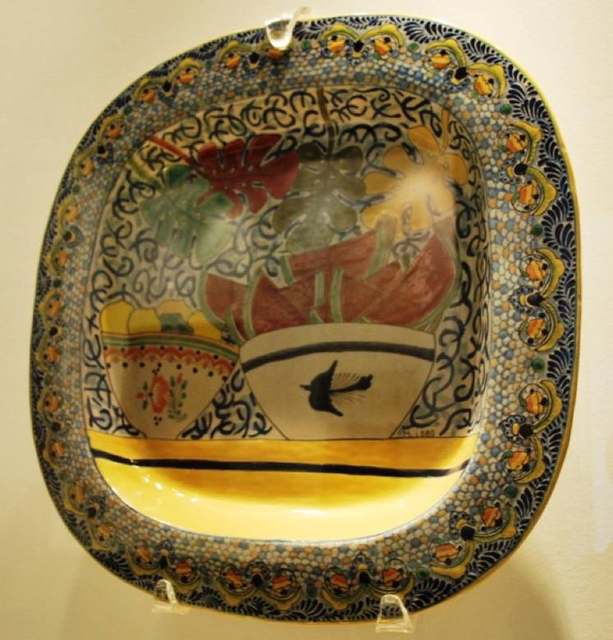
Side-by-side comparison of Lath art (Documented region, Global Archive) and Talavera Artisanal Tin-Glazed Ceramics (Puebla de Zaragoza & San Pablo del Monte, Mexico) across cultural family, chronology, materials, instruments, and living vitality.
| Dimension | Talavera Artisanal Tin-Glazed Ceramics | |
|---|---|---|
| Tradition Name | Lath art | Talavera Artisanal Tin-Glazed Ceramics |
| Native Script / Endonym | Lath art | Talavera de Puebla y Tlaxcala |
| Cultural Family | Craft | Craft |
| Primary Geography & Origin | Documented region, Global Archive | Puebla de Zaragoza & San Pablo del Monte, Mexico |
| World Region | Global | Americas |
| First Attested / Era | Historical oral & textual attestation | 16th century |
| UNESCO & Inventory Status | Documented in public ethnographic & archival sources | Representative List (2019) |
| Vitality Assessment | ▢▢▢▢ Not yet sourced | ■■■□ Stable |
| Instruments & Accompaniment | Traditional regional accompaniment | Potter's kick wheel (torno), Mule-hair brushes, Wood-fired ladrillo kiln |
| Materials & Medium | Regional performance / craft media | Black & white Puebla clays, Tin-lead opaque glaze, Cobalt & mineral oxide pigments |
| Practitioner Lineages | Regional bearer community | Certified Talavera Workshops (DO4) of Puebla & San Pablo del Monte |
| Cited Archival Sources | 1 verified sources | 10 verified sources |
Lath art is a craft tradition from Documented region, Global Archive (Lath art is a form of woodworking folk art for making rustic pictures out of strips of old "lath" from "plaster and lath" walls. Today it is commonly made from lattice, lumber stickers and weathered lobster traps.), whereas Talavera Artisanal Tin-Glazed Ceramics is a craft tradition from Puebla de Zaragoza & San Pablo del Monte, Mexico (Binational tin-and-lead-glazed majolica earthenware of Puebla, Tlaxcala, and Talavera de la Reina, hand-thrown and painted with six natural mineral pigments that fuse in relief during firing.).
Lath art originated in Documented region, Global Archive (Historical oral & textual attestation). Talavera Artisanal Tin-Glazed Ceramics originated in Puebla de Zaragoza & San Pablo del Monte, Mexico (16th century).
Lath art uses traditional regional instruments and media. Talavera Artisanal Tin-Glazed Ceramics uses Potter's kick wheel (torno), Mule-hair brushes, Wood-fired ladrillo kiln, Black & white Puebla clays, Tin-lead opaque glaze, Cobalt & mineral oxide pigments.
Lath art heritage status: Documented in public ethnographic & archival sources. Talavera Artisanal Tin-Glazed Ceramics heritage status: Representative List (2019).
A free public archive of the world’s living and endangered cultural traditions — documented with primary sources, geographic coordinates, and open-licensed photography. Two rooms, one wall. The door is open.
folkroom — Archive of Living Traditions · Text CC BY-SA 4.0 · Images credited & licensed individually
Open commons: Wikimedia Commons · UNESCO ICH · Openverse · Flickr CC · Wikidata · No trackers · No ads