Opening room…
Skip to content
Head-to-Head Archival Dossier · Painting
Lusona vs Ebru Turkish Paper Marbling: Side-by-Side Archival Comparison
Side-by-side comparison of Lusona (Angola, Angola) and Ebru Turkish Paper Marbling (Üsküdar & Fatih, Istanbul, Turkey) across cultural family, chronology, materials, instruments, and living vitality.
12-Point Archival Comparison Table: Lusona vs Ebru Turkish Paper Marbling
Study & Syllabus Export Tools · CC BY-SA 4.0
| Dimension | 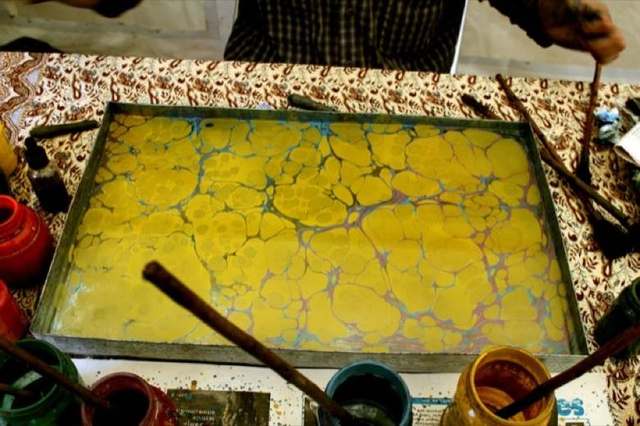 Ebru Turkish Paper Marbling | |
|---|---|---|
| Tradition Name | Lusona | Ebru Turkish Paper Marbling |
| Native Script / Endonym | Lusona | Türk Ebru Sanatı |
Key Differences Between Lusona and Ebru Turkish Paper Marbling
- Geography & Origin: Lusona is rooted in Angola, Angola (attested Historical oral & textual attestation), whereas Ebru Turkish Paper Marbling originates in Üsküdar & Fatih, Istanbul, Turkey (attested 15th century).
- Classification & Form: Lusona belongs to the Painting family (Sona (sing. lusona) drawing is an ideographic tradition known across eastern Angola, northwestern Zambia and adjacent areas of the Democratic Republic of the Congo, and is mainly practiced by the Chokwe and Luchazi peoples.), while Ebru Turkish Paper Marbling is documented under Painting (Ottoman book-arts tradition of floating insoluble mineral pigments mixed with ox-gall atop a trough of tragacanth-gum water and transferring the swirled floral patterns onto paper.).
- Instruments & Materials: Lusona is transmitted through regional performance and craft media; by contrast, Ebru Turkish Paper Marbling uses Pine or zinc marbling trough (tekne), Rose-stem & horsehair brushes, Brass biz awls & combs, Kitre tragacanth gum, Ox-gall surfactant, Insoluble earth & mineral oxides.
- Heritage Recognition & Vitality: Lusona is assessed as UNKNOWN (Documented in public ethnographic & archival sources), while Ebru Turkish Paper Marbling is assessed as STABLE (Representative List (2014)).
Shared Cultural & Historical Parallels
- Both Lusona and Ebru Turkish Paper Marbling belong to the Painting domain and transmit repertoire across generations through master-disciple lineage rather than commercial mass production.
- Across Angola and Turkey, both traditions demonstrate how local communities safeguard ancestral craft and performance knowledge through guild, temple, or village stewardship.
Frequently Asked Questions
What is the main difference between Lusona and Ebru Turkish Paper Marbling?
Lusona is a painting tradition from Angola, Angola (Sona (sing. lusona) drawing is an ideographic tradition known across eastern Angola, northwestern Zambia and adjacent areas of the Democratic Republic of the Congo, and is mainly practiced by the Chokwe and Luchazi peoples.), whereas Ebru Turkish Paper Marbling is a painting tradition from Üsküdar & Fatih, Istanbul, Turkey (Ottoman book-arts tradition of floating insoluble mineral pigments mixed with ox-gall atop a trough of tragacanth-gum water and transferring the swirled floral patterns onto paper.).
Where did Lusona and Ebru Turkish Paper Marbling originate?
Lusona originated in Angola, Angola (Historical oral & textual attestation). Ebru Turkish Paper Marbling originated in Üsküdar & Fatih, Istanbul, Turkey (15th century).
What instruments or materials are used in Lusona vs Ebru Turkish Paper Marbling?
Lusona uses traditional regional instruments and media. Ebru Turkish Paper Marbling uses Pine or zinc marbling trough (tekne), Rose-stem & horsehair brushes, Brass biz awls & combs, Kitre tragacanth gum, Ox-gall surfactant, Insoluble earth & mineral oxides.
Are Lusona and Ebru Turkish Paper Marbling recognized by UNESCO?
Lusona heritage status: Documented in public ethnographic & archival sources. Ebru Turkish Paper Marbling heritage status: Representative List (2014).