Opening room…
Skip to content
Head-to-Head Archival Dossier · Storytelling
Maskarada of Soule vs Mandinka Kora Tradition: Side-by-Side Archival Comparison
Side-by-side comparison of Maskarada of Soule (Zuberoa, Basque Country, France) and Mandinka Kora Tradition (Casamance & Mandé, Senegal) across cultural family, chronology, materials, instruments, and living vitality.
12-Point Archival Comparison Table: Maskarada of Soule vs Mandinka Kora Tradition
Study & Syllabus Export Tools · CC BY-SA 4.0
| Dimension | 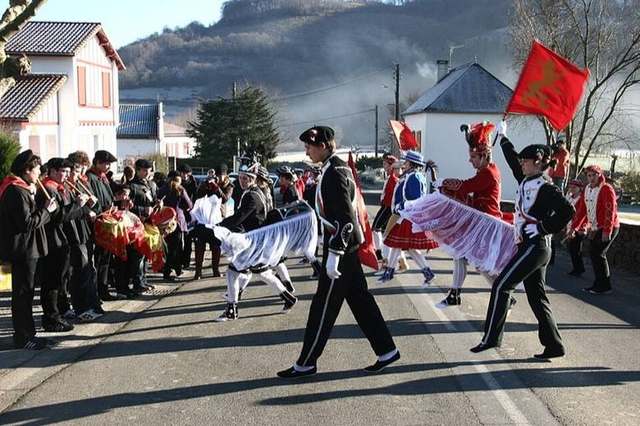 Maskarada of Soule | 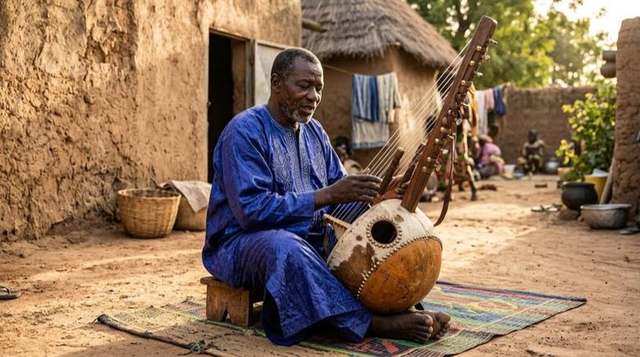 Mandinka Kora Tradition |
|---|---|---|
| Tradition Name | Maskarada of Soule | Mandinka Kora Tradition |
| Native Script / Endonym | Xiberoko Maskarada | Jali Kora |
| Cultural Family | Storytelling | Storytelling |
| Primary Geography & Origin | Zuberoa, Basque Country, France | Casamance & Mandé, Senegal |
| World Region | Europe | Africa |
| First Attested / Era | 17th century | 13th century |
| UNESCO & Inventory Status | National Inventory | National Inventory |
| Vitality Assessment | ■■■□ Stable | ■■■□ Stable |
| Instruments & Accompaniment | Xirula three-hole flute, Ttun-ttun stringed tambor | 21-string Kora, Balo xylophone |
| Materials & Medium | Embroidered wool tunics, Wicker hobby-horse frame | Calabash gourd, Cowhide soundboard, African rosewood (koni) |
| Practitioner Lineages | Youth Associations of Zuberoa (Soule) | Diabaté, Kouyaté & Cissoko Griot Lineages |
| Cited Archival Sources | 7 verified sources | 10 verified sources |
Key Differences Between Maskarada of Soule and Mandinka Kora Tradition
- Geography & Origin: Maskarada of Soule is rooted in Zuberoa, Basque Country, France (attested 17th century), whereas Mandinka Kora Tradition originates in Casamance & Mandé, Senegal (attested 13th century).
- Classification & Form: Maskarada of Soule belongs to the Storytelling family (Winter carnival procession and open-air pastoral theatre of the Basque province of Soule, opposing the graceful Gorriak ('Reds') and unruly Beltzeria ('Blacks').), while Mandinka Kora Tradition is documented under Storytelling (Hereditary West African jali (griot) oral history and twenty-one-string calabash harp-lute music of Senegal, Mali, The Gambia, and Guinea.).
- Instruments & Materials: Maskarada of Soule relies on Xirula three-hole flute, Ttun-ttun stringed tambor, Embroidered wool tunics, Wicker hobby-horse frame; by contrast, Mandinka Kora Tradition uses 21-string Kora, Balo xylophone, Calabash gourd, Cowhide soundboard, African rosewood (koni).
- Heritage Recognition & Vitality: Maskarada of Soule is assessed as STABLE (National Inventory), while Mandinka Kora Tradition is assessed as STABLE (National Inventory).
Shared Cultural & Historical Parallels
- Both Maskarada of Soule and Mandinka Kora Tradition belong to the Storytelling domain and transmit repertoire across generations through master-disciple lineage rather than commercial mass production.
- Across France and Senegal, both traditions demonstrate how local communities safeguard ancestral craft and performance knowledge through guild, temple, or village stewardship.
Frequently Asked Questions
What is the main difference between Maskarada of Soule and Mandinka Kora Tradition?
Maskarada of Soule is a storytelling tradition from Zuberoa, Basque Country, France (Winter carnival procession and open-air pastoral theatre of the Basque province of Soule, opposing the graceful Gorriak ('Reds') and unruly Beltzeria ('Blacks').), whereas Mandinka Kora Tradition is a storytelling tradition from Casamance & Mandé, Senegal (Hereditary West African jali (griot) oral history and twenty-one-string calabash harp-lute music of Senegal, Mali, The Gambia, and Guinea.).
Where did Maskarada of Soule and Mandinka Kora Tradition originate?
Maskarada of Soule originated in Zuberoa, Basque Country, France (17th century). Mandinka Kora Tradition originated in Casamance & Mandé, Senegal (13th century).
What instruments or materials are used in Maskarada of Soule vs Mandinka Kora Tradition?
Maskarada of Soule uses Xirula three-hole flute, Ttun-ttun stringed tambor, Embroidered wool tunics, Wicker hobby-horse frame. Mandinka Kora Tradition uses 21-string Kora, Balo xylophone, Calabash gourd, Cowhide soundboard, African rosewood (koni).
Are Maskarada of Soule and Mandinka Kora Tradition recognized by UNESCO?
Maskarada of Soule heritage status: National Inventory. Mandinka Kora Tradition heritage status: National Inventory.