Organizational storytelling vs Wayang Kulit: Side-by-Side Archival Comparison
Side-by-side comparison of Organizational storytelling (Documented region, Global Archive) and Wayang Kulit (Yogyakarta & Surakarta, Java, Indonesia) across cultural family, chronology, materials, instruments, and living vitality.
Documented in public ethnographic & archival sourcesDocumented region, Global Archive · Historical oral & textual attestation
Storytelling · Documented region, Global Archive▢▢▢▢ Not yet sourced
Organizational storytelling (also known as business storytelling) is a concept in management and organization studies concerned with the role of narrative and story in organizational life.
Documented in public ethnographic & archival sources
Representative List (2008)
Vitality Assessment
▢▢▢▢ Not yet sourced
■■■■ Thriving
Instruments & Accompaniment
Traditional regional accompaniment
Javanese Gamelan, Cempala, Kepyak
Materials & Medium
Regional performance / craft media
Perforated water-buffalo parchment, Horn control rods
Practitioner Lineages
Regional bearer community
Kraton Ngayogyakarta & Surakarta Dalang Guilds
Cited Archival Sources
1 verified sources
14 verified sources
Key Differences Between Organizational storytelling and Wayang Kulit
Geography & Origin: Organizational storytelling is rooted in Documented region, Global Archive (attested Historical oral & textual attestation), whereas Wayang Kulit originates in Yogyakarta & Surakarta, Java, Indonesia (attested 9th century).
Classification & Form: Organizational storytelling belongs to the Storytelling family (Organizational storytelling (also known as business storytelling) is a concept in management and organization studies concerned with the role of narrative and story in organizational life.), while Wayang Kulit is documented under Storytelling (All-night Javanese shadow puppet theatre directed by a single dalang master behind a lit linen kelir screen with bronze gamelan orchestra.).
Instruments & Materials: Organizational storytelling is transmitted through regional performance and craft media; by contrast, Wayang Kulit uses Javanese Gamelan, Cempala, Kepyak, Perforated water-buffalo parchment, Horn control rods.
Heritage Recognition & Vitality: Organizational storytelling is assessed as UNKNOWN (Documented in public ethnographic & archival sources), while Wayang Kulit is assessed as THRIVING (Representative List (2008)).
Shared Cultural & Historical Parallels
Both Organizational storytelling and Wayang Kulit belong to the Storytelling domain and transmit repertoire across generations through master-disciple lineage rather than commercial mass production.
Across Global Archive and Indonesia, both traditions demonstrate how local communities safeguard ancestral craft and performance knowledge through guild, temple, or village stewardship.
Frequently Asked Questions
What is the main difference between Organizational storytelling and Wayang Kulit?
Organizational storytelling is a storytelling tradition from Documented region, Global Archive (Organizational storytelling (also known as business storytelling) is a concept in management and organization studies concerned with the role of narrative and story in organizational life.), whereas Wayang Kulit is a storytelling tradition from Yogyakarta & Surakarta, Java, Indonesia (All-night Javanese shadow puppet theatre directed by a single dalang master behind a lit linen kelir screen with bronze gamelan orchestra.).
Where did Organizational storytelling and Wayang Kulit originate?
Organizational storytelling originated in Documented region, Global Archive (Historical oral & textual attestation). Wayang Kulit originated in Yogyakarta & Surakarta, Java, Indonesia (9th century).
What instruments or materials are used in Organizational storytelling vs Wayang Kulit?
Organizational storytelling uses traditional regional instruments and media. Wayang Kulit uses Javanese Gamelan, Cempala, Kepyak, Perforated water-buffalo parchment, Horn control rods.
Are Organizational storytelling and Wayang Kulit recognized by UNESCO?
Organizational storytelling heritage status: Documented in public ethnographic & archival sources. Wayang Kulit heritage status: Representative List (2008).
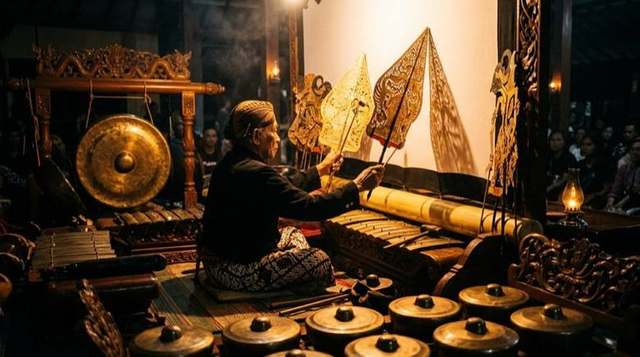 Representative List (2008)Yogyakarta & Surakarta, Java, Indonesia · 9th century