Opening room…
Skip to content
Head-to-Head Archival Dossier · Living Tradition × Dance
剛柔拳 vs Kathakali: Side-by-Side Archival Comparison
Side-by-side comparison of 剛柔拳 (People's Republic of China, People's Republic of China) and Kathakali (Thrissur, Kerala, India) across cultural family, chronology, materials, instruments, and living vitality.

12-Point Archival Comparison Table: 剛柔拳 vs Kathakali
Study & Syllabus Export Tools · CC BY-SA 4.0
Key Differences Between 剛柔拳 and Kathakali
- Geography & Origin: 剛柔拳 is rooted in People's Republic of China, People's Republic of China (attested Historical oral & textual attestation), whereas Kathakali originates in Thrissur, Kerala, India (attested 17th century).
- Classification & Form: 剛柔拳 belongs to the Living Tradition family (剛柔拳又稱剛柔法,溫州南拳的一種。為浙江平陽人楊紹水(1890年-1968年)所傳,楊從師徐玉招,學習剛柔法和正骨,藝成後以行醫為業,為貧苦大眾義診。並把功夫傳給兒子楊志光和弟子梅益本等人。 剛柔法其特點手法多變、進退靈活、手法快速、擅發長勁。顧名思義,動作剛柔相濟。 主要套路有船拳、斬戰拳、十字斬戰拳、裁手斬戰拳、小三戰、中四平、小五指等、器械有:羅漢搬棒、梨花棍、鉄尺、板凳花、丈二棒等。), while Kathakali is documented under Dance (Classical dance-drama of Kerala told entirely through mudra hand-gestures, facial expression, and percussion, without a single word spoken by the actor.).
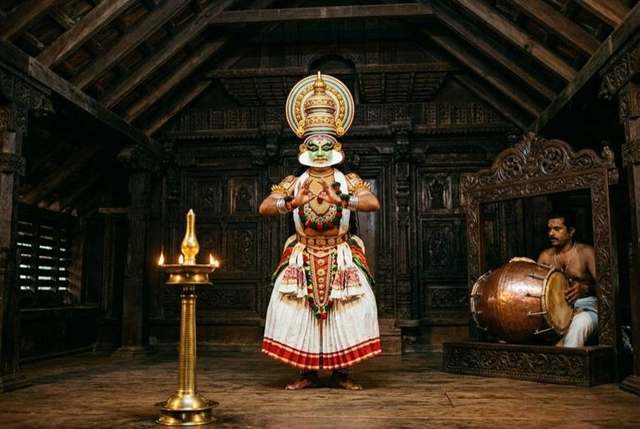
- Instruments & Materials: 剛柔拳 is transmitted through regional performance and craft media; by contrast, Kathakali uses Chenda, Maddalam, Chengila, Ilathalam, Chutti rice paste, Natural mineral pigments, Carved wood crown.
- Heritage Recognition & Vitality: 剛柔拳 is assessed as UNKNOWN (Documented in public ethnographic & archival sources), while Kathakali is assessed as STABLE (National Inventory).
Shared Cultural & Historical Parallels
- Although 剛柔拳 (Living Tradition) and Kathakali (Dance) use different artistic media, both encode community cosmology, seasonal calendars, and regional identity.
- Across People's Republic of China and India, both traditions demonstrate how local communities safeguard ancestral craft and performance knowledge through guild, temple, or village stewardship.
Frequently Asked Questions
What is the main difference between 剛柔拳 and Kathakali?
剛柔拳 is a living tradition tradition from People's Republic of China, People's Republic of China (剛柔拳又稱剛柔法,溫州南拳的一種。為浙江平陽人楊紹水(1890年-1968年)所傳,楊從師徐玉招,學習剛柔法和正骨,藝成後以行醫為業,為貧苦大眾義診。並把功夫傳給兒子楊志光和弟子梅益本等人。 剛柔法其特點手法多變、進退靈活、手法快速、擅發長勁。顧名思義,動作剛柔相濟。 主要套路有船拳、斬戰拳、十字斬戰拳、裁手斬戰拳、小三戰、中四平、小五指等、器械有:羅漢搬棒、梨花棍、鉄尺、板凳花、丈二棒等。), whereas Kathakali is a dance tradition from Thrissur, Kerala, India (Classical dance-drama of Kerala told entirely through mudra hand-gestures, facial expression, and percussion, without a single word spoken by the actor.).
Where did 剛柔拳 and Kathakali originate?
剛柔拳 originated in People's Republic of China, People's Republic of China (Historical oral & textual attestation). Kathakali originated in Thrissur, Kerala, India (17th century).
What instruments or materials are used in 剛柔拳 vs Kathakali?
剛柔拳 uses traditional regional instruments and media. Kathakali uses Chenda, Maddalam, Chengila, Ilathalam, Chutti rice paste, Natural mineral pigments, Carved wood crown.
Are 剛柔拳 and Kathakali recognized by UNESCO?
剛柔拳 heritage status: Documented in public ethnographic & archival sources. Kathakali heritage status: National Inventory.