Opening room…
Skip to content
Head-to-Head Archival Dossier · Living Tradition × Dance
坐夜 vs Chhau dance: Side-by-Side Archival Comparison
Side-by-side comparison of 坐夜 (People's Republic of China, People's Republic of China) and Chhau dance (Seraikela & Purulia, India) across cultural family, chronology, materials, instruments, and living vitality.
12-Point Archival Comparison Table: 坐夜 vs Chhau dance
Study & Syllabus Export Tools · CC BY-SA 4.0
| Dimension | 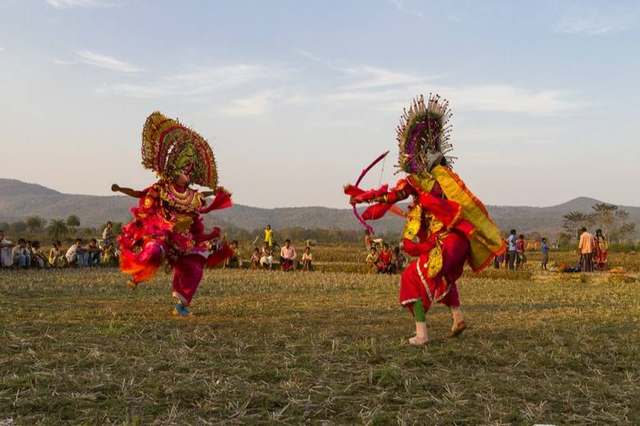 Chhau dance | |
|---|---|---|
| Tradition Name | 坐夜 | Chhau dance |
| Native Script / Endonym | 坐夜 | छौ नृत्य |
| Cultural Family |
Key Differences Between 坐夜 and Chhau dance
- Geography & Origin: 坐夜 is rooted in People's Republic of China, People's Republic of China (attested Historical oral & textual attestation), whereas Chhau dance originates in Seraikela & Purulia, India (attested 18th century).
- Classification & Form: 坐夜 belongs to the Living Tradition family (坐夜(侗语:Nyaoh nyaenv)是侗族的一种传统恋爱社交活动,流行于黔东南北部侗寨,是行歌坐夜活动的一部分。同一家族的姑娘,晚饭后,多聚在其中一家的长廊內(夏天)或火塘边(冬天)纺棉花,织花带、纳鞋底或做其它针线活。夜幕;降临,外姓的小伙子们在姑娘住所附近吹木叶、短笛、竹笛进而唱歌喊门,然后姑娘们开门让进就座,一边干活一边与小伙子对歌和交谈,互相夸奖,倾吐爱慕和感情。经过“坐夜”建立起深厚爱情后才告知父母,若父母不同意,不能成婚。), while Chhau dance is documented under Dance (Martial and folk dance of eastern India performed during the spring Chaitra Parva festival in three regional schools: Seraikela, Mayurbhanj, and Purulia.).
- Instruments & Materials: 坐夜 is transmitted through regional performance and craft media; by contrast, Chhau dance uses Dhumsa, Dhol, Mahuri, Chadchadi, River clay, Cotton gauze, Shola pith ornaments.
- Heritage Recognition & Vitality: 坐夜 is assessed as UNKNOWN (Documented in public ethnographic & archival sources), while Chhau dance is assessed as STABLE (Representative List (2010)).
Shared Cultural & Historical Parallels
- Although 坐夜 (Living Tradition) and Chhau dance (Dance) use different artistic media, both encode community cosmology, seasonal calendars, and regional identity.
- Across People's Republic of China and India, both traditions demonstrate how local communities safeguard ancestral craft and performance knowledge through guild, temple, or village stewardship.
Frequently Asked Questions
What is the main difference between 坐夜 and Chhau dance?
坐夜 is a living tradition tradition from People's Republic of China, People's Republic of China (坐夜(侗语:Nyaoh nyaenv)是侗族的一种传统恋爱社交活动,流行于黔东南北部侗寨,是行歌坐夜活动的一部分。同一家族的姑娘,晚饭后,多聚在其中一家的长廊內(夏天)或火塘边(冬天)纺棉花,织花带、纳鞋底或做其它针线活。夜幕;降临,外姓的小伙子们在姑娘住所附近吹木叶、短笛、竹笛进而唱歌喊门,然后姑娘们开门让进就座,一边干活一边与小伙子对歌和交谈,互相夸奖,倾吐爱慕和感情。经过“坐夜”建立起深厚爱情后才告知父母,若父母不同意,不能成婚。), whereas Chhau dance is a dance tradition from Seraikela & Purulia, India (Martial and folk dance of eastern India performed during the spring Chaitra Parva festival in three regional schools: Seraikela, Mayurbhanj, and Purulia.).
Where did 坐夜 and Chhau dance originate?
坐夜 originated in People's Republic of China, People's Republic of China (Historical oral & textual attestation). Chhau dance originated in Seraikela & Purulia, India (18th century).
What instruments or materials are used in 坐夜 vs Chhau dance?
坐夜 uses traditional regional instruments and media. Chhau dance uses Dhumsa, Dhol, Mahuri, Chadchadi, River clay, Cotton gauze, Shola pith ornaments.
Are 坐夜 and Chhau dance recognized by UNESCO?
坐夜 heritage status: Documented in public ethnographic & archival sources. Chhau dance heritage status: Representative List (2010).