Opening room…
Skip to content
Head-to-Head Archival Dossier · Living Tradition × Dance
孫臏拳 vs Danza de tijeras: Side-by-Side Archival Comparison
Side-by-side comparison of 孫臏拳 (Documented region, Global Archive) and Danza de tijeras (Ayacucho & Huancavelica, Peru) across cultural family, chronology, materials, instruments, and living vitality.
12-Point Archival Comparison Table: 孫臏拳 vs Danza de tijeras
Study & Syllabus Export Tools · CC BY-SA 4.0
| Dimension | 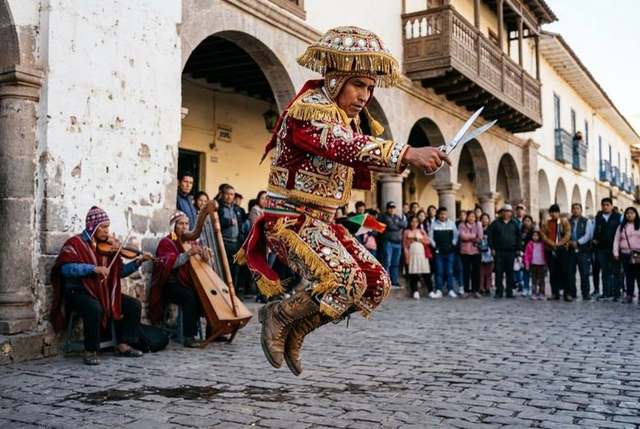 Danza de tijeras | |
|---|---|---|
| Tradition Name | 孫臏拳 | Danza de tijeras |
| Native Script / Endonym | 孫臏拳 | Supaypa wasin tusuq |
| Cultural Family |
Key Differences Between 孫臏拳 and Danza de tijeras
- Geography & Origin: 孫臏拳 is rooted in Documented region, Global Archive (attested Historical oral & textual attestation), whereas Danza de tijeras originates in Ayacucho & Huancavelica, Peru (attested 16th century).
- Classification & Form: 孫臏拳 belongs to the Living Tradition family (孫臏拳(そんぴんけん)は、紀元前4世紀頃の中国戦国時代の斉の武将である孫臏兵法で有名な孫臏(孫臏)によって創始されたとされている中国武術の一つである。外家拳に分類される。孫臏が創始したといわれているが、山東の奇拳とも呼ばれ、伝説の域を出ない。), while Danza de tijeras is documented under Dance (Quechua ritual competition dance of the southern Peruvian Andes performed with polished iron blades clashed in the dancer's right hand to violin and harp.).
- Instruments & Materials: 孫臏拳 is transmitted through regional performance and craft media; by contrast, Danza de tijeras uses Iron scissor blades, Andean harp, Violin, Tempered steel blades, Metallic-thread embroidered velvet.
- Heritage Recognition & Vitality: 孫臏拳 is assessed as UNKNOWN (Documented in public ethnographic & archival sources), while Danza de tijeras is assessed as STABLE (Representative List (2010)).
Shared Cultural & Historical Parallels
- Although 孫臏拳 (Living Tradition) and Danza de tijeras (Dance) use different artistic media, both encode community cosmology, seasonal calendars, and regional identity.
- Across Global Archive and Peru, both traditions demonstrate how local communities safeguard ancestral craft and performance knowledge through guild, temple, or village stewardship.
Frequently Asked Questions
What is the main difference between 孫臏拳 and Danza de tijeras?
孫臏拳 is a living tradition tradition from Documented region, Global Archive (孫臏拳(そんぴんけん)は、紀元前4世紀頃の中国戦国時代の斉の武将である孫臏兵法で有名な孫臏(孫臏)によって創始されたとされている中国武術の一つである。外家拳に分類される。孫臏が創始したといわれているが、山東の奇拳とも呼ばれ、伝説の域を出ない。), whereas Danza de tijeras is a dance tradition from Ayacucho & Huancavelica, Peru (Quechua ritual competition dance of the southern Peruvian Andes performed with polished iron blades clashed in the dancer's right hand to violin and harp.).
Where did 孫臏拳 and Danza de tijeras originate?
孫臏拳 originated in Documented region, Global Archive (Historical oral & textual attestation). Danza de tijeras originated in Ayacucho & Huancavelica, Peru (16th century).
What instruments or materials are used in 孫臏拳 vs Danza de tijeras?
孫臏拳 uses traditional regional instruments and media. Danza de tijeras uses Iron scissor blades, Andean harp, Violin, Tempered steel blades, Metallic-thread embroidered velvet.
Are 孫臏拳 and Danza de tijeras recognized by UNESCO?
孫臏拳 heritage status: Documented in public ethnographic & archival sources. Danza de tijeras heritage status: Representative List (2010).