Opening room…
Skip to content
Head-to-Head Archival Dossier · Dance
Theyyam vs Peking Opera (Jingju): Side-by-Side Archival Comparison
Side-by-side comparison of Theyyam (Kannur & Kasaragod, North Malabar, India) and Peking Opera (Jingju) (Beijing, Tianjin & Shanghai, China) across cultural family, chronology, materials, instruments, and living vitality.
12-Point Archival Comparison Table: Theyyam vs Peking Opera (Jingju)
Study & Syllabus Export Tools · CC BY-SA 4.0
| Dimension | 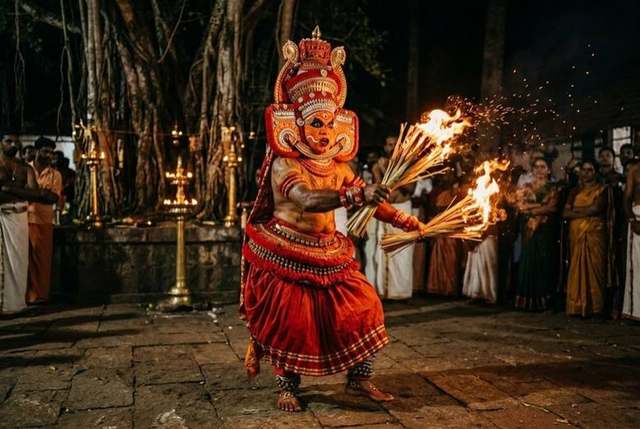 Theyyam | 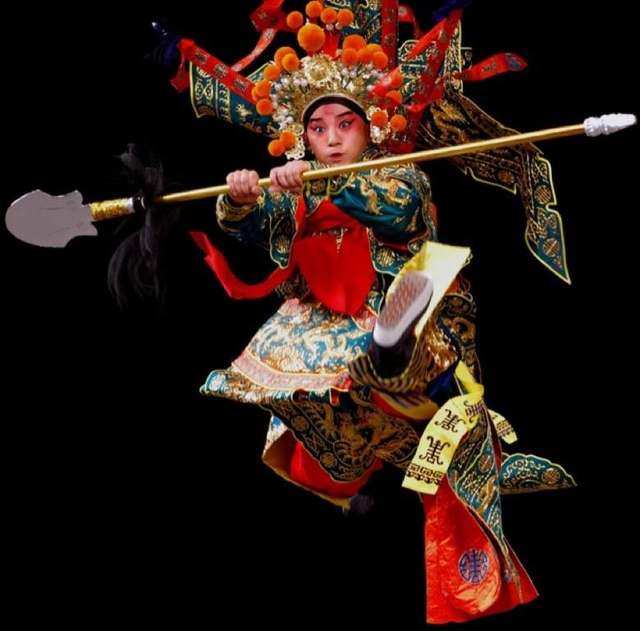 Peking Opera (Jingju) |
|---|---|---|
| Tradition Name | Theyyam | Peking Opera (Jingju) |
| Native Script / Endonym | തെയ്യം | 京剧 |
| Cultural Family | Dance | Dance |
| Primary Geography & Origin | Kannur & Kasaragod, North Malabar, India | Beijing, Tianjin & Shanghai, China |
| World Region | Asia | Asia |
| First Attested / Era | Ancient / Pre-Brahmanical | 18th century (1790) |
| UNESCO & Inventory Status | National Inventory | Representative List (2010) |
| Vitality Assessment | ■■■□ Stable | ■■■■ Thriving |
| Instruments & Accompaniment | Chenda, Veekkan chenda, Ilathalam, Kurumkuzhal | Jinghu bamboo fiddle, Yueqin moon lute, Bangu clapper drum, Daluo & Xiaoluo gongs |
| Materials & Medium | Areca palm spathe, Bamboo & red cloth mudi crown, Turmeric & rice paste | Lianpu mineral face paint, Mang embroidered court robes, Pheasant tail plumes (lingzi) |
| Practitioner Lineages | Vannan, Malayan & Velan Hereditary Lineages of North Malabar | National Academy of Chinese Theatre Arts & Jingju Troupes of Beijing and Shanghai |
| Cited Archival Sources | 10 verified sources | 12 verified sources |
Key Differences Between Theyyam and Peking Opera (Jingju)
- Geography & Origin: Theyyam is rooted in Kannur & Kasaragod, North Malabar, India (attested Ancient / Pre-Brahmanical), whereas Peking Opera (Jingju) originates in Beijing, Tianjin & Shanghai, China (attested 18th century (1790)).
- Classification & Form: Theyyam belongs to the Dance family (Sacred ritual dance and living deity embodiment of North Malabar in which the performer wears towering bamboo-and-cloth mudi headgear inside kavu shrine groves.), while Peking Opera (Jingju) is documented under Dance (Classical Chinese total-theatre uniting singing (chang), speech (nian), dance-acting (zuo), and acrobatics (da) across Sheng, Dan, Jing, and Chou role types accompanied by the piercing jinghu fiddle.).
- Instruments & Materials: Theyyam relies on Chenda, Veekkan chenda, Ilathalam, Kurumkuzhal, Areca palm spathe, Bamboo & red cloth mudi crown, Turmeric & rice paste; by contrast, Peking Opera (Jingju) uses Jinghu bamboo fiddle, Yueqin moon lute, Bangu clapper drum, Daluo & Xiaoluo gongs, Lianpu mineral face paint, Mang embroidered court robes, Pheasant tail plumes (lingzi).
- Heritage Recognition & Vitality: Theyyam is assessed as STABLE (National Inventory), while Peking Opera (Jingju) is assessed as THRIVING (Representative List (2010)).
Shared Cultural & Historical Parallels
- Both Theyyam and Peking Opera (Jingju) belong to the Dance domain and transmit repertoire across generations through master-disciple lineage rather than commercial mass production.
- Across India and China, both traditions demonstrate how local communities safeguard ancestral craft and performance knowledge through guild, temple, or village stewardship.
Frequently Asked Questions
What is the main difference between Theyyam and Peking Opera (Jingju)?
Theyyam is a dance tradition from Kannur & Kasaragod, North Malabar, India (Sacred ritual dance and living deity embodiment of North Malabar in which the performer wears towering bamboo-and-cloth mudi headgear inside kavu shrine groves.), whereas Peking Opera (Jingju) is a dance tradition from Beijing, Tianjin & Shanghai, China (Classical Chinese total-theatre uniting singing (chang), speech (nian), dance-acting (zuo), and acrobatics (da) across Sheng, Dan, Jing, and Chou role types accompanied by the piercing jinghu fiddle.).
Where did Theyyam and Peking Opera (Jingju) originate?
Theyyam originated in Kannur & Kasaragod, North Malabar, India (Ancient / Pre-Brahmanical). Peking Opera (Jingju) originated in Beijing, Tianjin & Shanghai, China (18th century (1790)).
What instruments or materials are used in Theyyam vs Peking Opera (Jingju)?
Theyyam uses Chenda, Veekkan chenda, Ilathalam, Kurumkuzhal, Areca palm spathe, Bamboo & red cloth mudi crown, Turmeric & rice paste. Peking Opera (Jingju) uses Jinghu bamboo fiddle, Yueqin moon lute, Bangu clapper drum, Daluo & Xiaoluo gongs, Lianpu mineral face paint, Mang embroidered court robes, Pheasant tail plumes (lingzi).
Are Theyyam and Peking Opera (Jingju) recognized by UNESCO?
Theyyam heritage status: National Inventory. Peking Opera (Jingju) heritage status: Representative List (2010).