Opening room…
Skip to content
Head-to-Head Archival Dossier · Storytelling
zajal vs Maskarada of Soule: Side-by-Side Archival Comparison
Side-by-side comparison of zajal (Lebanon, Lebanon) and Maskarada of Soule (Zuberoa, Basque Country, France) across cultural family, chronology, materials, instruments, and living vitality.
12-Point Archival Comparison Table: zajal vs Maskarada of Soule
Study & Syllabus Export Tools · CC BY-SA 4.0
| Dimension | 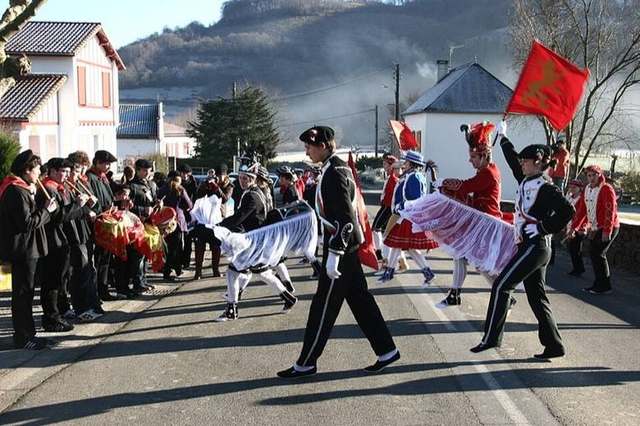 Maskarada of Soule | |
|---|---|---|
| Tradition Name | zajal | Maskarada of Soule |
| Native Script / Endonym | زجل | Xiberoko Maskarada |
| Cultural Family |
Key Differences Between zajal and Maskarada of Soule
- Geography & Origin: zajal is rooted in Lebanon, Lebanon (attested Historical oral & textual attestation), whereas Maskarada of Soule originates in Zuberoa, Basque Country, France (attested 17th century).
- Classification & Form: zajal belongs to the Storytelling family (Zajal (Arabic: زجل) is a traditional form of oral strophic poetry declaimed in a colloquial dialect. The earliest recorded zajal poet was Ibn Quzman of al-Andalus who lived from 1078 to 1160.), while Maskarada of Soule is documented under Storytelling (Winter carnival procession and open-air pastoral theatre of the Basque province of Soule, opposing the graceful Gorriak ('Reds') and unruly Beltzeria ('Blacks').).
- Instruments & Materials: zajal is transmitted through regional performance and craft media; by contrast, Maskarada of Soule uses Xirula three-hole flute, Ttun-ttun stringed tambor, Embroidered wool tunics, Wicker hobby-horse frame.
- Heritage Recognition & Vitality: zajal is assessed as STABLE (Documented in public ethnographic & archival sources), while Maskarada of Soule is assessed as STABLE (National Inventory).
Shared Cultural & Historical Parallels
- Both zajal and Maskarada of Soule belong to the Storytelling domain and transmit repertoire across generations through master-disciple lineage rather than commercial mass production.
- Across Lebanon and France, both traditions demonstrate how local communities safeguard ancestral craft and performance knowledge through guild, temple, or village stewardship.
Frequently Asked Questions
What is the main difference between zajal and Maskarada of Soule?
zajal is a storytelling tradition from Lebanon, Lebanon (Zajal (Arabic: زجل) is a traditional form of oral strophic poetry declaimed in a colloquial dialect. The earliest recorded zajal poet was Ibn Quzman of al-Andalus who lived from 1078 to 1160.), whereas Maskarada of Soule is a storytelling tradition from Zuberoa, Basque Country, France (Winter carnival procession and open-air pastoral theatre of the Basque province of Soule, opposing the graceful Gorriak ('Reds') and unruly Beltzeria ('Blacks').).
Where did zajal and Maskarada of Soule originate?
zajal originated in Lebanon, Lebanon (Historical oral & textual attestation). Maskarada of Soule originated in Zuberoa, Basque Country, France (17th century).
What instruments or materials are used in zajal vs Maskarada of Soule?
zajal uses traditional regional instruments and media. Maskarada of Soule uses Xirula three-hole flute, Ttun-ttun stringed tambor, Embroidered wool tunics, Wicker hobby-horse frame.
Are zajal and Maskarada of Soule recognized by UNESCO?
zajal heritage status: Documented in public ethnographic & archival sources. Maskarada of Soule heritage status: National Inventory.