Opening room…
Skip to content
Country Heritage Guide · Morocco · 2 Documented Traditions
Living Traditions, Folk Music, Dance & Crafts of Morocco — Archival Guide
Structured reference table and study guide for the documented folk dances, musical traditions, visual arts, and material crafts of Morocco on folkroom (CC BY-SA 4.0).
Key Archival & Syllabus Notes
- This country guide compiles documented living traditions, UNESCO Intangible Cultural Heritage elements, and regional craft lineages of Morocco.
Master Reference Table (2 Traditions)
Study & Syllabus Export Tools · CC BY-SA 4.0
| Tradition | Region / Place | Family | Attested | Recognition | Instruments / Materials | Vitality |
|---|---|---|---|---|---|---|
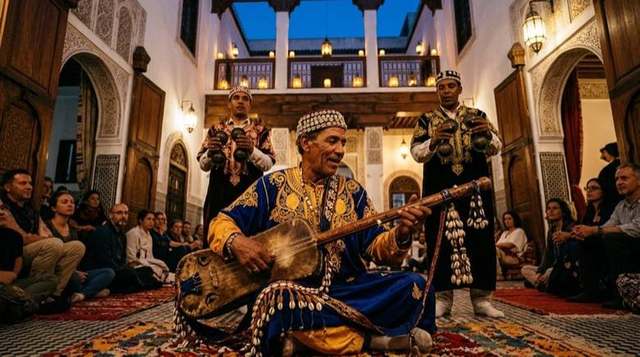 Gnawa كناوة | Essaouira & Marrakech, Morocco | Music | 16th century | Representative List (2019) | Guembri (Sintir), Qraqeb iron castanets, Tbel drum, Carved walnut body | ■■■■ Thriving |
 ahwash | Morocco | Music | Historical attestation | Archival Record | See cited room dossier | ▢▢▢▢ Not yet sourced |
Tradition Dossiers & Field Summaries
Music · Essaouira & Marrakech, Morocco
Gnawa
Moroccan brotherhood music and all-night Lila therapeutic ceremony led by a Maâlem on the three-stringed guembri lute and iron qraqeb.
Frequently Asked Questions
Which traditions are covered in Living Traditions of Morocco?
This guide documents 2 living traditions, including Gnawa (Essaouira & Marrakech), ahwash (Morocco). Every entry includes its place of origin, cultural family, vitality assessment, and cited sources.
How are traditions classified and verified in Living Traditions of Morocco?
Each tradition is classified under one of the seven cultural families (Dance, Music, Theatre, Painting, Craft, Textile, or Oral Tradition) and verified against UNESCO registers, national academy inventories, and ethnographic monographs under CC BY-SA 4.0.
What are the key UNESCO and historical highlights for Living Traditions of Morocco?
This country guide compiles documented living traditions, UNESCO Intangible Cultural Heritage elements, and regional craft lineages of Morocco.