Explore South Korea's National Intangible Cultural Heritage (국가무형문화재) and UNESCO traditions — Pansori epic chant, Talchum mask dance-drama, Nongak farmer's music, Jeju Haenyeo, and Hansan Mosi ramie weaving.
| Tradition | Region / Place | Family | Attested | Recognition | Instruments / Materials | Vitality |
|---|---|---|---|---|---|---|
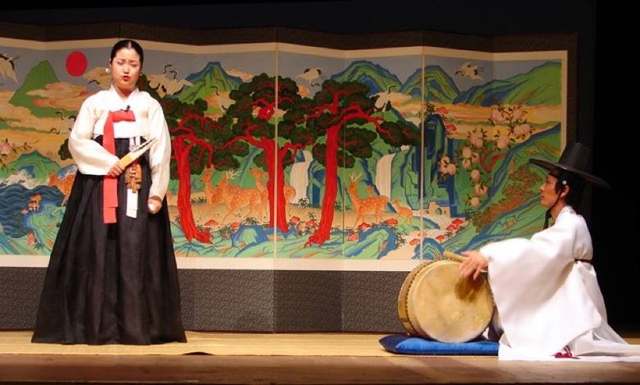
![]() Pansori Epic Solo Chant 판소리 | Jeonju, Namwon & Gochang, Jeolla, South Korea | Storytelling | 17th century | Representative List (2008) | Soribuk barrel drum, Buchae folding paper fan, Pine-framed cowhide buk drum, Hanji bamboo-ribbed fan | ■■■□ Stable |
![]() 밀양아리랑대축제 | South Korea | Living Tradition | Historical attestation | Archival Record | See cited room dossier | ▢▢▢▢ Not yet sourced |
Korean musical storytelling in which a single vocalist (sorikkun) holding a folding fan and handkerchief performs multi-hour dramatic epics accompanied by one barrel drummer (gosu).
This guide documents 2 living traditions, including Pansori Epic Solo Chant (Jeonju, Namwon & Gochang, Jeolla), 밀양아리랑대축제 (South Korea). Every entry includes its place of origin, cultural family, vitality assessment, and cited sources.
Each tradition is classified under one of the seven cultural families (Dance, Music, Theatre, Painting, Craft, Textile, or Oral Tradition) and verified against UNESCO registers, national academy inventories, and ethnographic monographs under CC BY-SA 4.0.
South Korea's 1962 Cultural Property Protection Act established formal lineage transmission for Pansori vocalists (sorikkun), Buk drummers (gosu), and regional Talchum mask-dance troupes.
A free public archive of the world’s living and endangered cultural traditions — documented with primary sources, geographic coordinates, and open-licensed photography. Two rooms, one wall. The door is open.
folkroom — Archive of Living Traditions · Text CC BY-SA 4.0 · Images credited & licensed individually
Open commons: Wikimedia Commons · UNESCO ICH · Openverse · Flickr CC · Wikidata · No trackers · No ads