The Barisha Chandi Mela (বড়িশা চণ্ডী মেলা) is an annual ten-day religious and cultural festival in the Barisha region of Behala in South Kolkata, West Bengal, India.
No licensed photograph yet
Four in five rooms open without one. Add a photograph with a declared licence and your credit sits under it, permanently.
The Barisha Chandi Mela (বড়িশা চণ্ডী মেলা) is an annual ten-day religious and cultural festival in the Barisha region of Behala in South Kolkata, West Bengal, India.
01 · What it is
Living Tradition
Documented cultural tradition on record; family classification awaits an editor.
02 · Where & name
India
Placed on record in India.
03 · How it is doing
□□□□ (Not yet assessed)
Documented in open cultural records, but no cited field assessment of its current vitality has been added here yet.
04 · Proof & reuse
2 cited sources
Every claim links to a public record below. Free to quote, teach, and share under CC BY-SA 4.0.
Chapter Takeaways
HistoryThe settlement history of Barisha predates the urban consolidation of Calcutta by the East India Company.
Religious ritualsThe central object of daily worship is the brass pitcher retrieved in 1792, which remains at the center of the altar.
The FairThe commercial fair runs for ten consecutive days alongside the religious observations.
TransportThe festival site is accessible through multiple transit options:
Common Questions Answered on Record
What is Barisha Chandi Mela and what does it mean?
The Barisha Chandi Mela (বড়িশা চণ্ডী মেলা) is an annual ten-day religious and cultural festival in the Barisha region of Behala in South Kolkata, West Bengal, India. Documented cultural tradition on record; family classification awaits an editor.
Where did Barisha Chandi Mela originate and where is it practised?
Sources on this page place Barisha Chandi Mela in India.
Is Barisha Chandi Mela still practised today and what is its cultural significance?
□□□□ (Not yet assessed): Documented in open cultural records, but no cited field assessment of its current vitality has been added here yet. The settlement history of Barisha predates the urban consolidation of Calcutta by the East India Company.
How do I cite or reference Barisha Chandi Mela in research and Wikipedia?
Cite as: "Barisha Chandi Mela." folkroom, https://folkroom.org/art-forms/barisha-chandi-mela, text CC BY-SA, with attribution.
Barisha Chandi Mela — folkroom Archival DossierCanonical URI: https://folkroom.org/art-forms/barisha-chandi-melaScan QR code for primary sources, interactive World Atlas coordinates, and CC BY-SA 4.0 citation files (.bib / .ris).
The tradition & historical record
4 min read · 2 sources
The Barisha Chandi Mela (বড়িশা চণ্ডী মেলা) is an annual ten-day religious and cultural festival in the Barisha region of Behala in South Kolkata, West Bengal, India. The festival began in 1792 under the direction of the Sabarna Roy Chowdhury family. The fair takes place alongside the annual Sri Sri Chandi Puja.
The event marks the annual worship of Goddess Chandi, who is an incarnation of Durga. The festival transitioned from a private household ritual within a zamindari estate into a public event managed by the local community. 1
History
The settlement history of Barisha predates the urban consolidation of Calcutta by the East India Company. In 1608, the Mughal administration granted regional tenancy rights to Lakshmikanta Majumdar, who established the Sabarna Roy Chowdhury line. Barisha became a residential base for branches of this family. According to family records, the annual public Chandi Puja and its accompanying market were established in the Bengali year 1200, which corresponds to 1792 CE, by Mahesh Chandra Roy Chowdhury.
Local accounts state that the site of the current shrine was originally marked by an ancient tree next to a community water tank at a site known as Chandi Maath. According to these accounts, Mahesh Chandra Roy Chowdhury directed the retrieval of a brass pitcher from the tank following a dream. The pitcher was placed inside the family household, known as the Chandi Bari, for daily worship. To create a public clay idol, family members consulted Sanskrit scholars from Bhatpara to establish the specific physical attributes of the deity. 1
Religious rituals
The central object of daily worship is the brass pitcher retrieved in 1792, which remains at the center of the altar. For the annual winter festival, artisans build a clay idol based on distinct iconographic parameters. The deity is depicted with a red complexion, three eyes, and four arms. The hands hold a rosary and a text, and display traditional hand gestures. The idol is placed upon a platform designated as a Panchamundi Asana. The main figure is surrounded by eight smaller companion deities known as the Ashta Nayika.
During the late 18th and 19th centuries, the ritual included animal sacrifices financed by the estate. These practices were systematically modified during the 20th century. The sacrifice of buffaloes was ended by the family administrators, and all remaining animal sacrifices were discontinued by 1972. The rituals currently use fruit and vegetable offerings. The permanent temple building was rebuilt in the mid-20th century using funds collected from charitable public theatrical productions. 1
The Fair
The commercial fair runs for ten consecutive days alongside the religious observations. The stalls occupy the land surrounding the primary Chandi Mandap on K.K. Roy Chowdhury Road near Sakher Bazar in Behala.
The fair operates as a seasonal market where regional producers and artisans from adjacent districts sell goods directly to the public. Stalls sell handloom textiles, regional pottery, ironwork, wooden kitchen items, and traditional local food items.
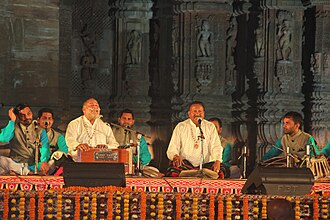
The fair previously hosted traditional performing arts, including folk theater performances and musical presentations. The contemporary fair includes commercial stalls and amusement structures managed under the joint supervision of the Sabarna Roy Chowdhury family council and the Barisha Sarbojanin committee. 1
Transport
The festival site is accessible through multiple transit options: 1
Metro: The Sakher Bazar metro station on the Purple Line is within walking distance of the temple. The Mahanayak Uttam Kumar station on the Blue Line connects to the area via local auto-rickshaw routes.
Rail: The closest regional railway station is Majherhat railway station.
Road: Municipal bus routes connect the location via Diamond Harbour Road. 1
The text above is adapted from the Wikipedia article “Barisha Chandi Mela”, available under the Creative Commons Attribution-ShareAlike 4.0 licence. 1
Barisha Chandi Mela is annual 10-day religious festival in Kolkata, India, according to the structured record cited below. This entry was generated automatically from that record and has not yet been reviewed by a person familiar with the tradition. 2