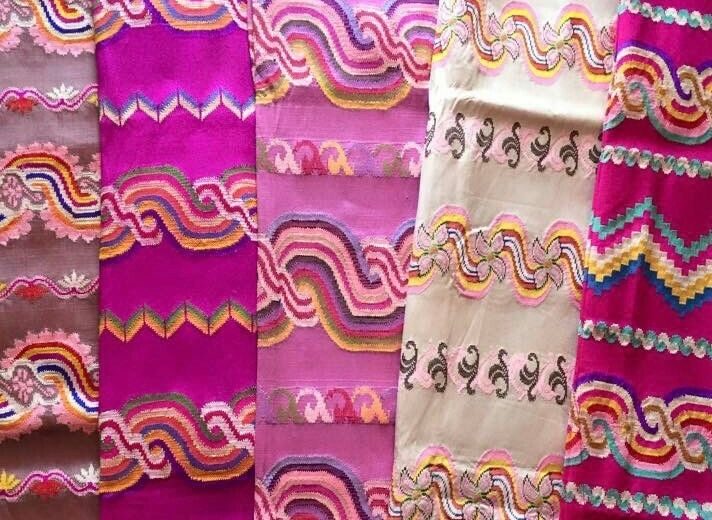
Kurar (كورار, kūrār)) is a type of Arabic embroidery of weaving gold, silver and silk threads to create ribbons used to decorate clothing.
Each ribbon is made by a group of at least three women, the width of ribbon depending on the number o…
No licensed photograph yet
Four in five rooms open without one. Add a photograph with a declared licence and your credit sits under it, permanently.
Kurar (كورار, kūrār)) is a type of Arabic embroidery of weaving gold, silver and silk threads to create ribbons used to decorate clothing.
01 · What it is
Textile
Hand-loomed weaving, dyeing, embroidery, or cloth-making craft tradition.
02 · Where & name
Geography awaiting source
Add a cited source naming the region or community that carries it.
03 · How it is doing
□□□□ (Not yet assessed)
Documented in open cultural records, but no cited field assessment of its current vitality has been added here yet.
04 · Proof & reuse
3 cited sources
Every claim links to a public record below. Free to quote, teach, and share under CC BY-SA 4.0.
Common Questions Answered on Record
What is kurar and what does it mean?
Kurar (كورار, kūrār)) is a type of Arabic embroidery of weaving gold, silver and silk threads to create ribbons used to decorate clothing. Hand-loomed weaving, dyeing, embroidery, or cloth-making craft tradition.
Where did kurar originate and where is it practised?
No verified geographic place has been linked on record yet — editors can add a cited place from the edit page.
Is kurar still practised today and what is its cultural significance?
□□□□ (Not yet assessed): Documented in open cultural records, but no cited field assessment of its current vitality has been added here yet.
How do I cite or reference kurar in research and Wikipedia?
Cite as: "kurar." folkroom, https://folkroom.org/art-forms/kurar, text CC BY-SA, with attribution.
kurar — folkroom Archival DossierCanonical URI: https://folkroom.org/art-forms/kurarScan QR code for primary sources, interactive World Atlas coordinates, and CC BY-SA 4.0 citation files (.bib / .ris).
The tradition & historical record
1 min read · 3 sources
Kurar (كورار, kūrār)) is a type of Arabic embroidery of weaving gold, silver and silk threads to create ribbons used to decorate clothing.
Each ribbon is made by a group of at least three women, the width of ribbon depending on the number of weavers. After preparing threads, a group of women (2 to 8), sitting in one row, weave threads through their fingers and crossing arms with next women. One woman, sitting opposite, collects threads and tightens them with a special needle, creating the ribbon.
When the whole length has been made, the ribbon is smoothed and polished with special "stones" and finally sewn to the rim of a dress. It takes about three days' work to make one length.
Contemporary art is vanishing and kurar ribbons are being replaced by industrial-made decorations.
The text above is adapted from the Wikipedia article “Kurar (embroidery)”, available under the Creative Commons Attribution-ShareAlike 4.0 licence.
kurar is Arabic embroidery, according to the structured record cited below. This entry was generated automatically from that record and has not yet been reviewed by a person familiar with the tradition. 1
The source record links this tradition to 1 external register, which can be verified through the citation. 1