Opening room…
Skip to content
Head-to-Head Archival Dossier · Craft
Bunraku Puppet Theatre vs Koodiyattam: Side-by-Side Archival Comparison
Side-by-side comparison of Bunraku Puppet Theatre (Osaka, Japan) and Koodiyattam (Thrissur, Kerala, India) across cultural family, chronology, materials, instruments, and living vitality.
12-Point Archival Comparison Table: Bunraku Puppet Theatre vs Koodiyattam
Study & Syllabus Export Tools · CC BY-SA 4.0
| Dimension | 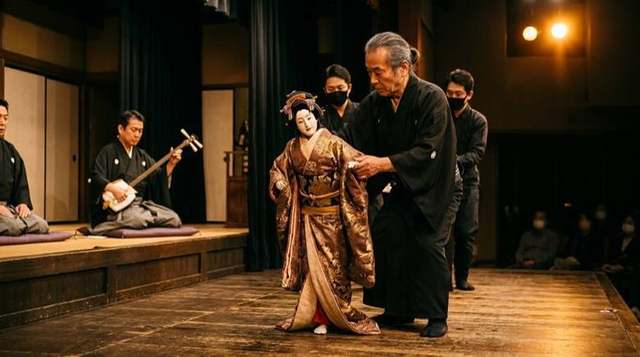 Bunraku Puppet Theatre | 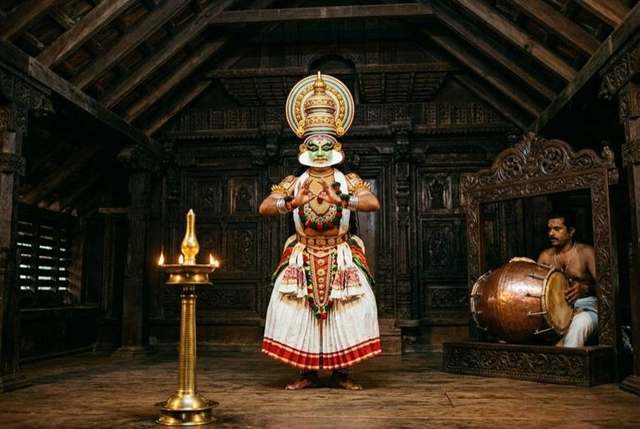 Koodiyattam |
|---|---|---|
| Tradition Name | Bunraku Puppet Theatre | Koodiyattam |
| Native Script / Endonym | 人形浄瑠璃文楽 | കൂടിയാട്ടം |
| Cultural Family | Craft | Craft |
| Primary Geography & Origin | Osaka, Japan | Thrissur, Kerala, India |
| World Region | Asia | Asia |
| First Attested / Era | 17th century | 10th century |
| UNESCO & Inventory Status | Representative List (2008) | Representative List (2008) |
| Vitality Assessment | ■■■□ Stable | ■■□□ Fading |
| Instruments & Accompaniment | Futozao Shamisen, Hyōshigi wooden clappers | Mizhavu copper pot drum, Edakka, Kuzhithalam cymbals |
| Materials & Medium | Japanese cypress (hinoki), Nishijin silk brocade, Whalebone springs | Regional performance / craft media |
| Practitioner Lineages | National Bunraku Theatre · Bunraku Kyōkai | Ammannur Chachu Chakyar Smaraka Gurukulam · Margi |
| Cited Archival Sources | 11 verified sources | 9 verified sources |
Key Differences Between Bunraku Puppet Theatre and Koodiyattam
- Geography & Origin: Bunraku Puppet Theatre is rooted in Osaka, Japan (attested 17th century), whereas Koodiyattam originates in Thrissur, Kerala, India (attested 10th century).
- Classification & Form: Bunraku Puppet Theatre belongs to the Craft family (Three-puppeteer classical narrative drama from Osaka accompanied by a single tayu chanter and futozao shamisen lute.), while Koodiyattam is documented under Craft (Two-thousand-year-old Sanskrit temple drama of Kerala performed inside Koothambalam theatre halls by Chakyar actors and Nangiar actresses.).
- Instruments & Materials: Bunraku Puppet Theatre relies on Futozao Shamisen, Hyōshigi wooden clappers, Japanese cypress (hinoki), Nishijin silk brocade, Whalebone springs; by contrast, Koodiyattam uses Mizhavu copper pot drum, Edakka, Kuzhithalam cymbals.
- Heritage Recognition & Vitality: Bunraku Puppet Theatre is assessed as STABLE (Representative List (2008)), while Koodiyattam is assessed as FADING (Representative List (2008)).
Shared Cultural & Historical Parallels
- Both Bunraku Puppet Theatre and Koodiyattam belong to the Craft domain and transmit repertoire across generations through master-disciple lineage rather than commercial mass production.
- Across Japan and India, both traditions demonstrate how local communities safeguard ancestral craft and performance knowledge through guild, temple, or village stewardship.
Frequently Asked Questions
What is the main difference between Bunraku Puppet Theatre and Koodiyattam?
Bunraku Puppet Theatre is a craft tradition from Osaka, Japan (Three-puppeteer classical narrative drama from Osaka accompanied by a single tayu chanter and futozao shamisen lute.), whereas Koodiyattam is a craft tradition from Thrissur, Kerala, India (Two-thousand-year-old Sanskrit temple drama of Kerala performed inside Koothambalam theatre halls by Chakyar actors and Nangiar actresses.).
Where did Bunraku Puppet Theatre and Koodiyattam originate?
Bunraku Puppet Theatre originated in Osaka, Japan (17th century). Koodiyattam originated in Thrissur, Kerala, India (10th century).
What instruments or materials are used in Bunraku Puppet Theatre vs Koodiyattam?
Bunraku Puppet Theatre uses Futozao Shamisen, Hyōshigi wooden clappers, Japanese cypress (hinoki), Nishijin silk brocade, Whalebone springs. Koodiyattam uses Mizhavu copper pot drum, Edakka, Kuzhithalam cymbals.
Are Bunraku Puppet Theatre and Koodiyattam recognized by UNESCO?
Bunraku Puppet Theatre heritage status: Representative List (2008). Koodiyattam heritage status: Representative List (2008).